

Blog


Every british homeowner knows that garden buildings are more than just storage sheds. Over £5 billion is spent annually across the United Kingdom on these versatile outdoor spaces, reflecting a desire for solutions that go beyond basic utility. With choices ranging from sleek home offices to classic summerhouses, understanding the true meaning behind garden building terminology can shape smarter decisions and help you maximise the value and enjoyment of your property.
Table of Contents
- What Garden Buildings Really Mean in the UK
- Types of Garden Buildings and Their Key Differences
- Essential Features and Structural Terms Defined
- UK Planning, Building Regulations and Permitted Uses
- Cost Implications and Common Buyer Mistakes
Key Takeaways
| Point | Details |
|---|---|
| Garden Buildings Enhance Functionality | UK garden buildings are versatile spaces that improve residential living and can significantly increase property value. |
| Understanding Types is Essential | Familiarity with various garden building types helps homeowners select structures that best meet their needs. |
| Regulations Are Key | Homeowners must navigate local planning regulations to ensure compliance and avoid penalties for their garden buildings. |
| Budget for Long-term Costs | It is critical to factor in ongoing maintenance and unexpected expenses when planning a garden building investment. |
What Garden Buildings Really Mean in the UK
In the United Kingdom, garden buildings represent far more than simple outdoor structures. These versatile spaces have deep cultural roots, evolving from historical architectural traditions to modern lifestyle solutions. Unlike basic storage sheds, garden buildings in the UK reflect a sophisticated approach to maximising residential space and enhancing property functionality.
Historically, British garden buildings have served multiple purposes across different eras. Historical garden design demonstrates how these structures were integral to estate landscapes, functioning as ornamental pavilions, utility spaces, and architectural statements. Medieval and Victorian gardens frequently incorporated elaborate garden buildings that showcased architectural skill and social status.
Modern UK garden buildings now encompass a wide range of configurations, from compact home offices to expansive entertaining spaces. They represent intelligent solutions for homeowners seeking to extend living areas without traditional construction. These structures can serve professional, recreational, and personal needs while adding significant value to residential properties. Contemporary garden buildings are designed with precision engineering, utilising advanced materials that ensure durability, thermal efficiency, and aesthetic appeal.
Pro tip: When considering a garden building, prioritise multi-functional design that can adapt to changing lifestyle needs and potentially increase your property’s market value.
Types of Garden Buildings and Their Key Differences
Garden buildings in the United Kingdom encompass a diverse range of structures, each designed to serve specific functional and aesthetic purposes. Garden structure types vary significantly, from practical storage solutions to sophisticated living spaces that extend residential functionality beyond traditional building constraints.
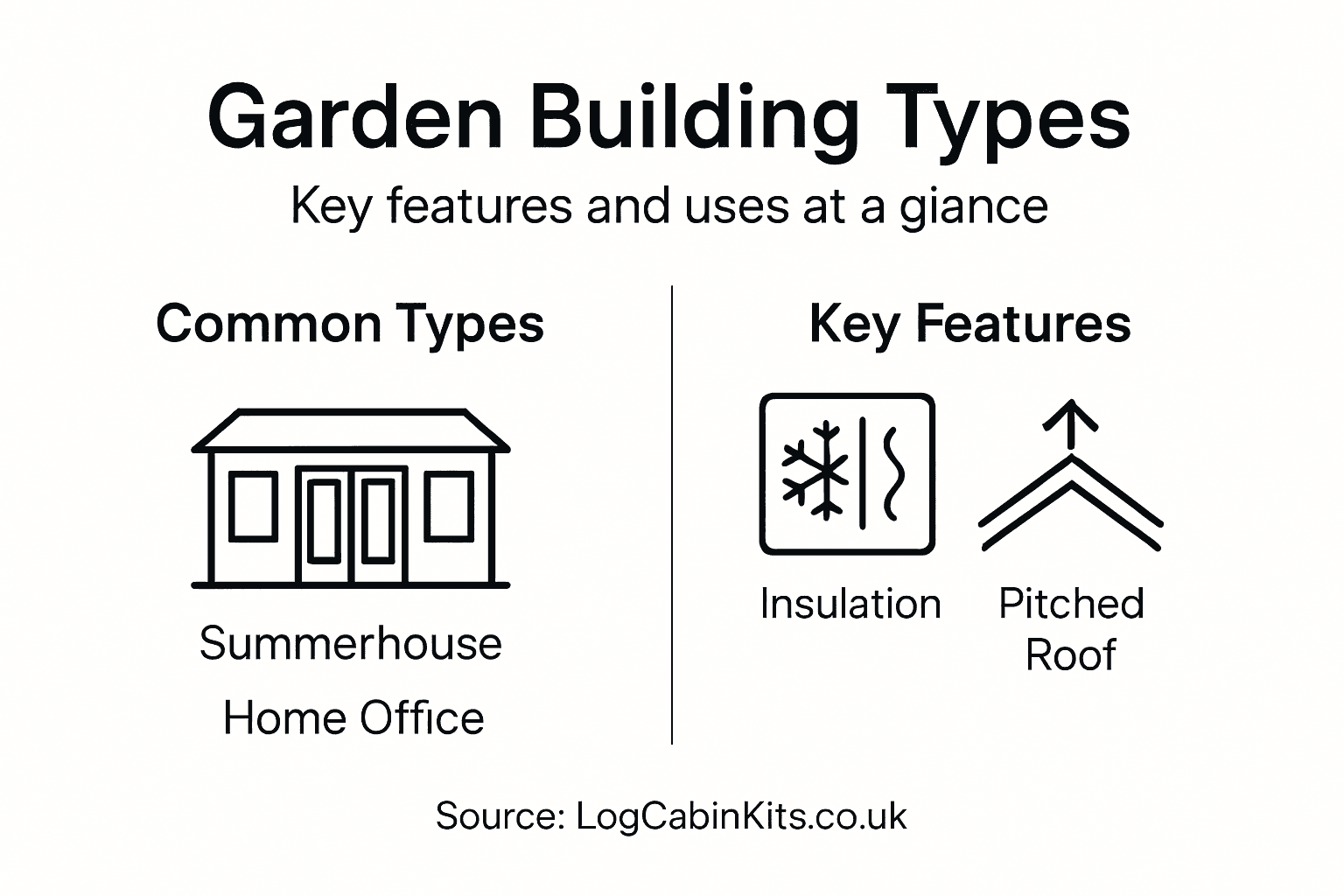
The most common garden building categories include workshops, summerhouses, home offices, greenhouses, and leisure rooms. Workshops typically feature robust construction with sturdy workbenches and tool storage, ideal for DIY enthusiasts and craftspeople. Summerhouses, by contrast, emphasise comfort and aesthetic appeal, often featuring large windows and lightweight construction that creates a seamless connection between indoor relaxation and outdoor garden environments.
Home offices represent a growing category of garden buildings, reflecting the increasing trend of remote working. These structures are engineered to provide professional-grade work environments with robust internet connectivity, superior insulation, and ergonomic design. Greenhouses offer another specialist category, designed specifically for plant cultivation and featuring specialised glazing, ventilation systems, and environmental controls that support horticultural activities.
Pro tip: Select a garden building that not only meets your current requirements but also offers flexibility to adapt to future lifestyle and professional changes.
Here’s a comparison of common UK garden building types and their unique practical advantages:
| Building Type | Typical Use | Key Advantage | Durability Potential |
|---|---|---|---|
| Workshop | DIY, crafts, storage | Supports heavy-duty equipment | High with proper materials |
| Summerhouse | Leisure, relaxation | Enhances garden enjoyment | Moderate to high |
| Home Office | Remote work, studies | Professional work environment | High with insulation |
| Greenhouse | Horticulture | Optimal for plant cultivation | High if maintained |
| Leisure Room | Entertainment, hobbies | Flexible recreational space | Varies by construction |
Essential Features and Structural Terms Defined
Understanding the fundamental structural components of garden buildings requires familiarity with key architectural terminology specific to UK construction standards. Structural building regulations provide critical guidelines that define essential features and ensure safety, durability, and compliance in garden building design.
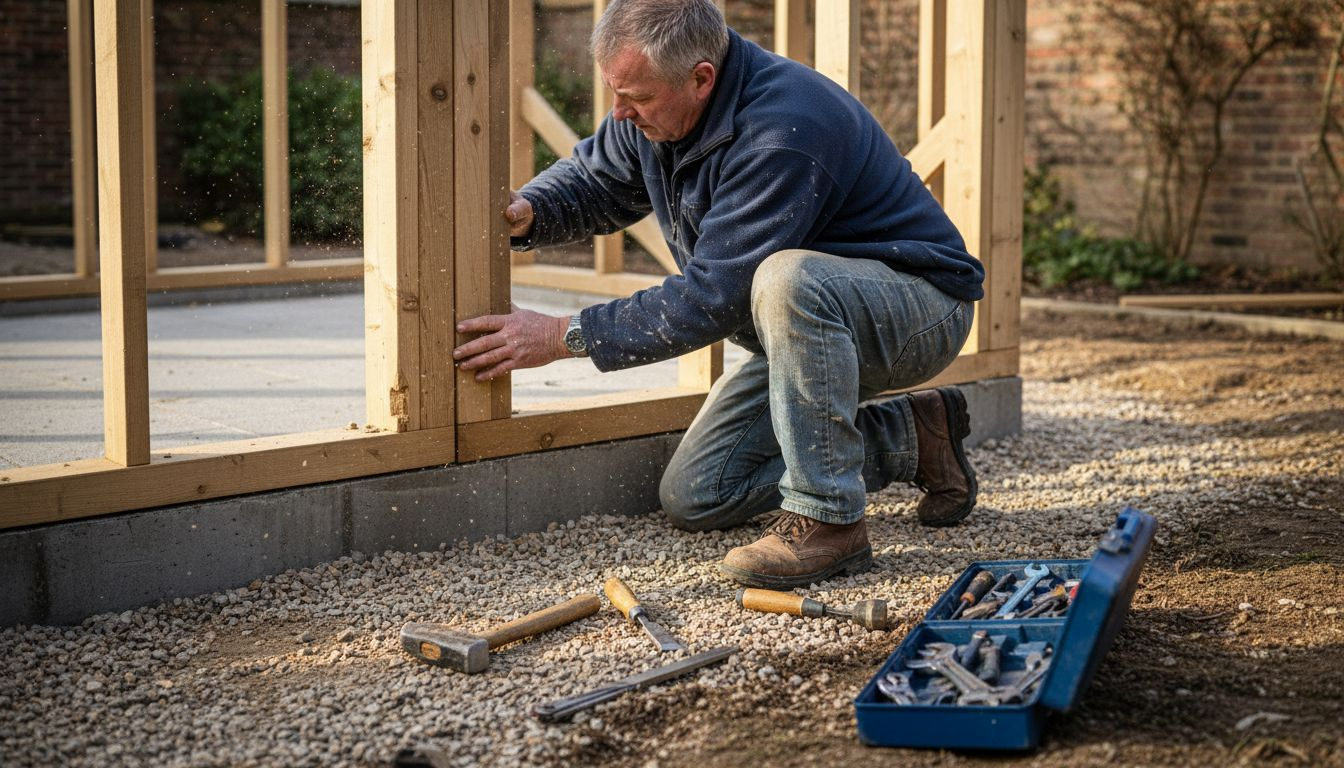
The primary structural elements include foundations, walls, roof systems, and load-bearing components. Foundations represent the critical base that supports the entire structure, typically constructed using concrete or reinforced ground anchors designed to withstand local soil conditions and potential environmental stresses. Walls can be categorised into primary load-bearing structures and secondary partition walls, with materials ranging from timber frame constructions to insulated panels that provide thermal efficiency and structural integrity.
Roof systems are equally crucial, with different designs serving specific functional purposes. Pitched roofs offer superior water drainage and additional headroom, while flat roofs provide modern aesthetic appeal and potential additional usable space. Structural elements such as beams, joists, and columns work in concert to distribute weight, resist lateral forces, and maintain the building’s overall stability. Insulation, waterproofing, and ventilation systems represent additional critical features that transform a basic structure into a comfortable, functional garden building.
Pro tip: Consult professional structural engineers to ensure your garden building meets all local building regulations and provides optimal long-term performance.
UK Planning, Building Regulations and Permitted Uses
Navigating the complex landscape of UK garden building regulations requires a nuanced understanding of local planning guidelines and permitted development rights. Permitted development regulations establish critical parameters that determine when homeowners can construct garden buildings without formal planning permission.
In the United Kingdom, most garden buildings fall under specific size and placement restrictions. Typically, these structures must be single-storey with a maximum height of 2.5 metres, located at least 2 metres from any property boundary, and occupy less than 50% of the garden area. Permitted development rights allow homeowners to build garden structures without full planning applications, provided they meet strict criteria related to dimensions, location, and intended use. These regulations aim to balance homeowner flexibility with neighbourhood aesthetic and environmental considerations.
Crucial factors influencing planning requirements include the building’s intended purpose, total floor area, proximity to residential boundaries, and potential impact on neighbouring properties. Residential garden buildings used for home offices, leisure spaces, or storage typically require different approvals compared to structures intended for commercial or agricultural purposes. Local planning authorities maintain discretionary powers to request additional documentation or impose specific conditions, making it essential for homeowners to consult their local council before commencing any garden building project.
Pro tip: Always verify current local planning regulations with your specific municipal council, as permitted development rights can vary between different local authority jurisdictions.
The following table clarifies important planning regulation criteria for UK garden buildings:
| Regulation Factor | Standard Limitation | Key Consideration |
|---|---|---|
| Maximum Height | 2.5 metres | Measured from ground level |
| Garden Coverage | Less than 50% of garden | Excludes existing outbuildings |
| Boundary Proximity | Minimum 2 metres | Distance from any property boundary |
| Usage Purpose | Residential only | Commercial use often requires permission |
| Storeys Allowed | Single-storey only | No residential sleeping accommodation |
Cost Implications and Common Buyer Mistakes
Understanding the financial landscape of garden building investments requires careful consideration of multiple factors beyond the initial purchase price. Garden market statistics reveal substantial variations in pricing influenced by design complexity, material quality, and regulatory compliance requirements.
The most frequent buyer mistakes emerge from inadequate budget planning and overlooking long-term maintenance costs. Homeowners often underestimate expenses related to foundations, insulation, electrical work, and potential planning permission fees. A typical garden building might range from £5,000 for a basic timber structure to £30,000 for a fully equipped, professionally installed home office. Critical cost considerations include material durability, thermal efficiency, potential future utility upgrades, and the building’s potential impact on property valuation.
Material selection represents another crucial financial decision. Cheaper initial investments can lead to higher long-term maintenance expenses, while premium materials might offer better longevity and reduced repair costs. Timber quality, roof construction, window specifications, and foundation types dramatically influence both upfront costs and future performance. Professional installation typically adds 20-35% to the total project cost but can prevent expensive rectification work caused by improper construction techniques.
Pro tip: Always budget at least 15-20% above your initial cost estimate to accommodate unexpected expenses and ensure comprehensive project completion.
Make Smart UK Garden Building Decisions with Expert Guidance and Bespoke Options
Understanding key garden building terminology and regulations is vital but can feel overwhelming when planning your ideal outdoor space. This article highlights challenges like navigating planning permissions, selecting durable materials, and ensuring multi-functional design that grows with your lifestyle. If you want to avoid common mistakes and create a garden building that matches both your professional and personal needs with confidence, expert support is essential.
Discover how LogCabinKits.co.uk simplifies this process by offering bespoke, custom garden buildings designed and crafted to meet precise UK standards for insulation, structural integrity and aesthetic appeal. Explore our range of garden buildings engineered for durability and comfort so you can optimise your outdoor space while respecting all planning and building regulations.
Take the next step toward your perfect garden retreat or functional home office today Visit LogCabinKits.co.uk to browse designs tailored to UK requirements and benefit from expert advice that makes your investment secure and future-proof. Don’t wait let your garden building transform your home life now.
Frequently Asked Questions
What are the different types of garden buildings?
Garden buildings can vary widely, including workshops, summerhouses, home offices, greenhouses, and leisure rooms. Each type serves distinct purposes, from practical storage and DIY use to providing a comfortable workspace or recreational space.
What key features should I consider when building a garden structure?
Essential features to consider include foundations, wall construction, roof systems, insulation, waterproofing, and ventilation. These components ensure durability, comfort, and compliance with building regulations.
Do I need planning permission for a garden building?
Most garden buildings fall under permitted development rights, allowing homeowners to construct them without formal planning permission. However, requirements vary based on size, height, and intended use, so it’s essential to consult your local council.
How can I maximise the value of my property with a garden building?
Choosing a flexible, multi-functional design that caters to various needs, like a home office or leisure space, can enhance your property’s value. Additionally, using high-quality materials and ensuring compliance with local regulations will contribute to a long-lasting investment.


