
Garden building heights explained: the UK enthusiast’s guide
TL;DR:
- Getting your garden building height wrong is a common and costly mistake among UK homeowners, often resulting in enforcement notices or demolition.
- Understanding permitted development limits and building regulations is crucial for designing a garden structure that complies with legal requirements and maximizes usable space.
Getting your garden building height wrong is one of the most common and costly mistakes UK homeowners make. With garden building heights explained poorly in most online resources, it’s easy to see why so many people end up with enforcement notices, unhappy neighbours, or structures they’re forced to tear down. The rules aren’t complicated once you know them, but the details matter enormously. This guide walks you through exactly what you need to know, from permitted development limits to building regulations, so you can plan your dream log cabin or garden room with total confidence.
Table of Contents
- Understanding UK garden building height restrictions
- Building regulations and fire safety requirements
- Common pitfalls and enforcement issues with building heights
- Comparing garden building heights: practical examples and limits
- Planning permission and legal protections for garden buildings
- Our honest take on building height rules
- Ready to plan your perfect garden cabin?
- Frequently asked questions
Key Takeaways
| Point | Details |
|---|---|
| Height limits vary by boundary proximity | Buildings within 2 metres of a boundary must not exceed 2.5 metres in height, otherwise taller heights are allowed depending on the roof style. |
| Building regulations depend on size and materials | Garden buildings between 15-30m² require regulations if near boundaries and built of combustible materials; larger buildings always require approval. |
| Excessive height risks enforcement | Ignoring height limits often causes neighbour complaints and can lead to costly demolitions or penalties. |
| Planning permission needed for large or living accommodation buildings | Using a garden building as separate living space or exceeding height limits triggers planning permission requirements. |
| Legal certificates offer compliance protection | A Lawful Development Certificate can legally confirm your garden building meets permitted height and use rules. |
Understanding UK garden building height restrictions
UK planning rules set clear limits on how tall a garden building can be, and where it sits on your plot matters just as much as the height itself. These aren’t vague guidelines either. They’re firm rules tied to your building’s roof type and its distance from any boundary.
Here’s what the core permitted development rules actually say about maximum garden building height:
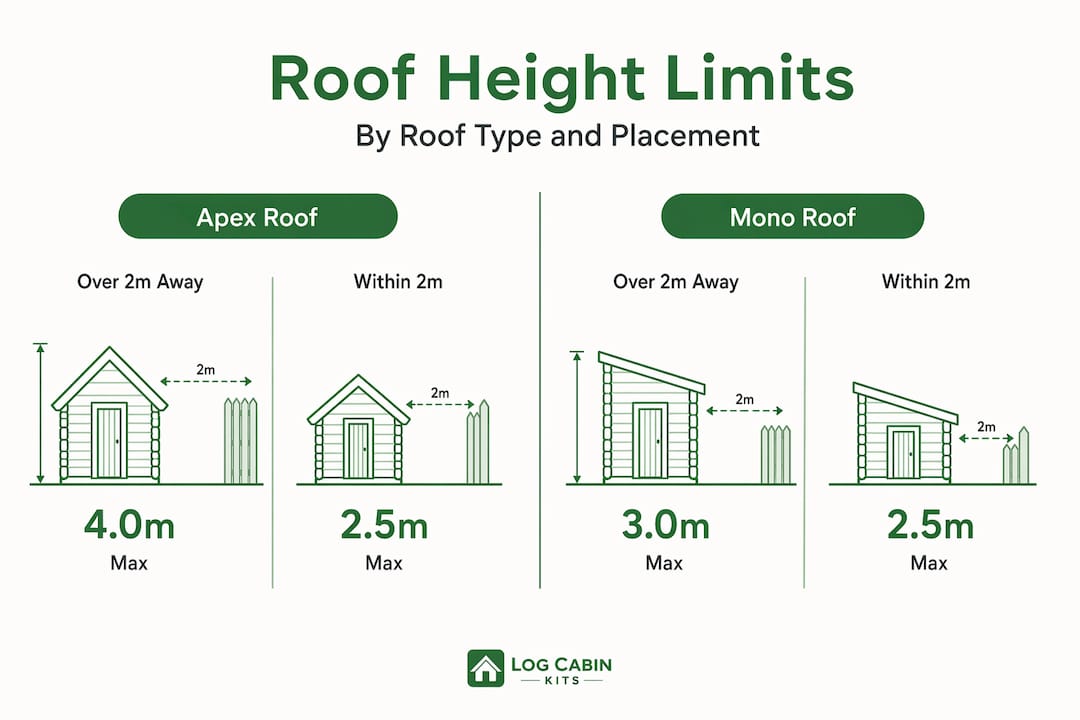
- Within 2 metres of any boundary: Maximum height of 2.5 metres, regardless of roof type
- More than 2 metres from a boundary, dual-pitched roof: Maximum height of 4 metres
- More than 2 metres from a boundary, any other roof type: Maximum height of 3 metres
- Position on plot: The building must sit behind the principal (front) elevation of your house
- Total coverage: All outbuildings combined must cover less than 50% of your garden area
- Self-contained accommodation: Using the building as a dwelling always requires full planning permission, no exceptions
Understanding permitted development rights is the foundation of all of this. These rights allow you to build without applying for formal planning permission, as long as your project stays within the limits above. The moment you push past them, you’re in planning permission territory.
It’s also worth noting that permitted development rights can be removed entirely in certain areas. If your property is in a conservation area, a National Park, or an Area of Outstanding Natural Beauty, stricter rules apply. Always check with your local planning authority before you commit to a design. Our planning permission guide covers these scenarios in more detail.
Building regulations and fire safety requirements
Planning rules and building regulations are two separate things, and it’s easy to confuse them. Planning rules govern whether you’re allowed to build. Building regulations govern how it must be built, covering structural safety, fire risk, and electrical standards.
Here’s how building regulations apply based on your garden building’s size:
- Under 15m²: Generally exempt from building regulations, provided there’s no sleeping accommodation and the building sits at least 1 metre from any boundary
- Between 15m² and 30m²: Building regulations apply if the building is within 1 metre of a boundary and uses combustible materials. Use non-combustible materials and you may be exempt
- Over 30m²: Full building regulations approval is required, no matter what materials you use or where it sits on your plot
- Electrical installations: These must comply with Part P regulations in every single case, regardless of building size or planning status
- Fire safety: Any wall within 1 metre of a boundary needs to meet fire resistance standards, typically 30 minutes minimum
This matters especially for bespoke log cabins, which are almost always built from timber. Timber is a combustible material, so the 1-metre boundary rule is directly relevant for many of the most popular builds. Check our full breakdown of building regulations requirements and fire safety in garden buildings before finalising your design.
Pro Tip: If you’re planning a log cabin between 15m² and 30m², positioning it more than 1 metre from any boundary can simplify your compliance significantly and potentially save you the time and cost of a full building regulations application.
Common pitfalls and enforcement issues with building heights
Height restrictions for garden buildings are where things go wrong for a surprising number of people. The mistakes are usually innocent, but the consequences can be severe.
The most frequent problem is underestimating how strictly neighbours and local councils monitor new structures. A building that looks perfectly reasonable to you might block a neighbour’s light or overlook their garden, triggering a formal complaint. And once a complaint is lodged, the council has a duty to investigate.
“A 3.3-metre tall garden annexe was ordered demolished after its owner was given just three months’ notice, following neighbour complaints about lost daylight and the structure exceeding permitted height limits.”
That’s not a rare edge case. It happens regularly across the UK, and retrospective planning applications for buildings that exceed height limits fail more often than you’d expect. Councils are under no obligation to approve what you’ve already built.
Common pitfalls to avoid:
- Measuring height incorrectly: Height is measured from natural ground level, not from a raised base or decking. If you build on a raised platform, that platform height adds to your building’s overall height
- Ignoring the boundary rule: Many people measure to the fence, not to the legal boundary, which can differ
- Assuming permitted development rights apply: If previous owners removed these rights, you won’t know unless you check
- Skipping the Lawful Development Certificate: This document is your legal proof that your building complies. Without it, you’re relying on memory and goodwill if a dispute ever arises
Getting a Lawful Development Certificate before or after you build is genuinely worth doing. It’s formal recognition from your local authority that your building meets the rules. Learn more about planning permission for garden log cabins and how to protect your investment properly.
Comparing garden building heights: practical examples and limits
Seeing the numbers side by side makes it much easier to visualise what’s actually achievable in your garden. The table below shows the permitted development height limits for different roof types and boundary distances.
| Roof type | Distance from boundary | Maximum height allowed |
|---|---|---|
| Dual-pitched (apex) | More than 2 metres | 4.0 metres |
| Single-pitched (mono) | More than 2 metres | 3.0 metres |
| Flat roof | More than 2 metres | 3.0 metres |
| Any roof type | Within 2 metres | 2.5 metres |
| Any roof type | Conservation area | Check with local authority |
What does this look like in practice? A traditional log cabin with an apex roof, positioned 2.5 metres from the nearest boundary, can reach a generous 4 metres. That’s enough for a comfortable loft-style storage area above your main room, or simply a very airy, light-filled interior. The same cabin shifted to sit 1.8 metres from the fence drops its maximum allowable height to 2.5 metres. That’s a significant loss of headroom and usable volume.
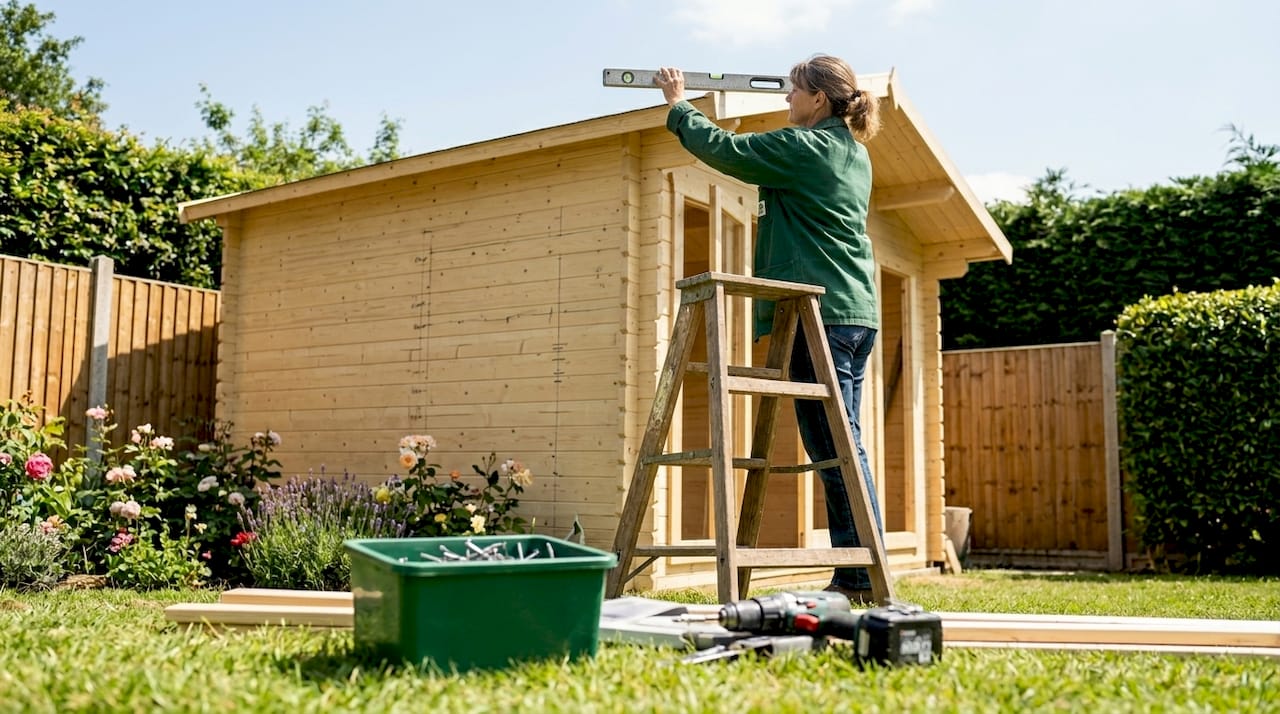
Mono-pitched roofs, which slope in one direction only, are capped at 3 metres away from boundaries. They’re a popular choice for lean-to-style garden rooms, but you won’t get the height of a dual-pitched design. Flat roofs sit in the same 3-metre bracket and tend to suit modern, contemporary builds rather than traditional cabin styles.
Pro Tip: If maximising interior height is a priority for your garden building, a dual-pitched roof positioned at least 2 metres from every boundary gives you the greatest headroom under permitted development. It’s not just about aesthetics; it genuinely changes how spacious the building feels inside.
The optimal garden structure height really comes down to how you plan to use the space. A gym or workshop benefits enormously from a full 4-metre apex. A quiet reading room or small home office works perfectly well at 2.5 metres.
Planning permission and legal protections for garden buildings
Knowing when you need formal planning permission is just as important as knowing the height rules themselves. Here’s how to think through it step by step.
- Confirm your permitted development rights are intact. Check with your local planning authority, especially if you’re in a conservation area, an AONB, or if the property has had restrictions placed on it previously.
- Verify your building stays within height limits. Use the table above. If your design exceeds the limits for your boundary distance and roof type, you’ll need to apply for planning permission.
- Check the proposed use. If the building is for a home office, gym, hobby room, or storage, permitted development usually applies. If it’s sleeping accommodation or a self-contained living space, you’ll need full planning permission regardless of height.
- Apply for planning permission if needed. While planning applications have an 84.3% approval rate, refusals do happen, most commonly because of excessive height and its impact on neighbouring properties.
- Obtain a Lawful Development Certificate. Even if you’re confident your build qualifies under permitted development, a certificate costing £103 in 2026 provides official, documented proof that your building complies. This is particularly valuable when you come to sell your home.
- Consult early. Talking to your local planning authority before you finalise your design costs nothing and can save you from expensive changes later.
Our guides on log cabins and planning permission and planning permission for garden buildings go into even more detail if you want to dig deeper into any of these steps.
Our honest take on building height rules
Here’s something most articles won’t tell you. The height limits in UK planning rules are actually quite generous when you use them well. Four metres for a dual-pitched roof building is substantial. Many people don’t realise they could have a beautifully proportioned log cabin with real interior presence without ever needing a planning application.
The problem isn’t the rules. It’s that most people plan their garden building backwards. They fall in love with a design, order it, and then check whether it’s allowed. That’s where things go wrong. If you start with the rules and design around them, you’ll almost never run into trouble.
We’ve seen customers who were convinced they could fit a 5-metre apex cabin close to their fence, and others who assumed a simple flat-roofed office would be straightforward. Both assumptions caused problems. The sweet spot is choosing a dual-pitched design, placing it thoughtfully on your plot, and then building the interior layout around the space you have. You’ll be amazed how much you can achieve within 4 metres of height and the standard footprint rules.
The Lawful Development Certificate is the other thing people skip and regret. It’s not just a piece of paper. It’s the difference between a worry-free building you can sell with confidence and a structure that a future buyer’s solicitor flags as unverified. At £103, it’s one of the best-value investments you can make in any garden project.
Ready to plan your perfect garden cabin?
Understanding how tall can garden buildings be is the first step. Making that height work for your space is where the fun really begins. At Log Cabin Kits, we specialise in bespoke and custom garden log cabins designed to make the most of your permitted development allowances.
Whether you’re after a compact home office or a full-sized garden retreat with an apex roof reaching the 4-metre limit, we can help you design something that fits your garden, your budget, and your plans perfectly. Browse our range of custom log cabins and see what’s possible, or get in touch with our team for tailored advice on your specific plot and requirements. We’re here to make the whole process straightforward and genuinely enjoyable.
Frequently asked questions
What is the maximum height for a garden building within 2 metres of a boundary?
The maximum height allowed is 2.5 metres for any garden building within 2 metres of a boundary under UK permitted development rules, regardless of roof type.
Do garden buildings over 15 square metres always require building regulations approval?
No. Buildings between 15 and 30 square metres require building regulations only if they sit within 1 metre of a boundary and are built with combustible materials such as timber.
Can a garden building be used as self-contained living accommodation without planning permission?
No. Using it as a dwelling always requires full planning permission and falls outside permitted development rights, regardless of the building’s height or size.
What legal steps can protect my garden building from future enforcement regarding height?
Obtaining a Lawful Development Certificate provides official proof from your local authority that your building complies with permitted development height rules, giving you protection against future enforcement action.
Are electrical installations in garden buildings subject to building regulations?
Yes. All electrical installations in garden buildings must comply with Part P Building Regulations regardless of the building’s size, position, or planning status.