


Snagging list explained: your complete UK new-build guide

A snagging list is a written, itemised record of every minor defect and unfinished item in a new-build property that you want the developer to fix. The moment you get a completion date, your next step is to request a Pre-Completion Inspection (PCI) so you can walk through the property and document problems before you legally own it.
Here is what you need to know straight away:
- A snagging list covers everything from scratched paintwork and misaligned doors to faulty sockets and leaking pipes.
- The developer is responsible for fixing valid snags under their defects liability period, usually two years.
- You can do it yourself or hire a professional inspector.
- Professional snagging surveys in the UK cost between £250 and £600, depending on property size, with re-inspections typically running £125–£200.
Pro Tip: Request your PCI in writing as soon as you receive your completion notice. Developers registered with the New Homes Quality Board are required to allow one.
Key takeaways
A snagging list is your written record of defects in a new-build property, and submitting it before completion gives you the strongest possible position to get repairs done at the developer’s cost.
| Point | Details |
|---|---|
| Request a PCI first | Ask for a Pre-Completion Inspection in writing as soon as you receive your completion date. |
| Document every snag clearly | Each item needs a description, exact location, dated photograph, and a priority rating. |
| Know your warranty rights | Developers registered with the NHQB must address snags under the NHQC; NHBC covers defects for two years. |
| Professional surveys cost £250–£600 | A professional inspector brings independence and a formal report; re-inspections run £125–£200. |
| Keep all correspondence in writing | A paper trail protects you if the developer delays or disputes repairs. |
Table of Contents
- What exactly is a snagging survey, and how does it differ from other surveys?
- Who is responsible for fixing snags in the UK?
- When should you carry out a snagging inspection?
- Room-by-room snagging checklist: what to look for
- How to record each snag and present your list to the developer
- Should you hire a professional snagging inspector?
- What happens after you submit your snagging list?
- Common mistakes buyers make and red flags to watch for
- A simple snagging checklist template you can use today
- A note from the author on why snagging is worth your time
- Sources
What exactly is a snagging survey, and how does it differ from other surveys?
A snag is any defect, unfinished item, or deviation from the agreed specification in a new-build property. It might be cosmetic (a paint drip, a scratched window frame), functional (a door that won’t close properly, a socket with no power), or occasionally a safety concern (a missing smoke alarm, an exposed cable).
A snagging list is the written record of all those snags. A snagging survey is a formal inspection carried out to produce that list, usually by a professional inspector. The Pre-Completion Inspection (PCI) is the specific walkthrough you do before legal completion, ideally with the developer present.
This is quite different from a homebuyer’s survey or a RICS Level 2/Level 3 survey. Here is a quick comparison:
| Survey type | Focus | When | Who carries it out |
|---|---|---|---|
| Snagging survey | Finishes, fittings, workmanship | Before or just after completion | Professional snagger or buyer |
| RICS Level 2 (Homebuyer) | Condition and visible defects | Before exchange | RICS-qualified surveyor |
| RICS Level 3 (Full structural) | Structure, fabric, hidden defects | Before exchange | RICS-qualified surveyor |
| Pre-Completion Inspection | Snags before handover | Before legal completion | Buyer (and/or professional) |
A professional snagging survey inspects finishes, fittings and workmanship to produce an itemised, photographic report you can hand directly to the developer. It is not a structural survey and does not replace conveyancing. Think of it as a quality-control check on the builder’s work, not a legal document.
Typical items fall into three broad categories:
- Cosmetic: scratches, paint runs, uneven grouting, gaps in skirting boards
- Functional: stiff or misaligned doors, dripping taps, non-working sockets, poor drainage
- Safety-related: missing or incorrectly fitted smoke alarms, exposed wiring, inadequate ventilation
Who is responsible for fixing snags in the UK?
The developer is responsible for putting right any defects that fall within the agreed specification and the defects liability period. Your role is to find them, document them clearly, and report them promptly.
Two bodies set the rules for most new-build buyers in England:
- New Homes Quality Board (NHQB): the independent body that oversees the New Homes Quality Code.
- New Homes Quality Code (NHQC): the code of practice that registered developers must follow. Under the NHQC, developers must allow buyers a PCI and address valid snags within agreed timescales. Where repairs cannot be completed before handover, the developer must provide a written schedule.
- NHBC (National House Building Council): provides the Buildmark warranty, which most new-build buyers receive. The first two years cover defects the developer must fix. Years 3–10 cover major structural damage only.
The NHBC warranty and the NHQC are separate things. The Code governs how the developer behaves; the warranty is an insurance-backed product that kicks in if the developer fails to act or goes bust.
A few important points:
- Snagging is not a legal process and does not replace your conveyancer’s work.
- If your developer is not registered with the NHQB, the Code does not apply, though you still have rights under consumer law.
- Keep all correspondence in writing. A phone call is easy to deny; an email is not.
When should you carry out a snagging inspection?
Timing matters more than most buyers realise. There are three windows, and using all three gives you the strongest position.
- Pre-Completion Inspection (PCI): This is the best moment. Walk through the property before you sign anything. Snags found here can be fixed before you move in, and the developer has a clear obligation to act. Buyers often arrange a PCI before completion and a fuller snagging survey after moving in; the PCI is not a substitute for a full post-move check, but it is the most powerful starting point.
- Just after handover (day one to week two): Once you have the keys, do a thorough walkthrough before you unpack. You will spot things you missed during the PCI, and the defects liability period has now started.
- Within the defects liability period (typically two years): Some snags only appear after you have lived in the property for a while, particularly around heating, plumbing, and seasonal movement. Report these in writing as soon as you notice them.
Pro Tip: Take dated photographs at every stage. Use your phone’s timestamp function or rename files with the date. If a dispute arises later, photographic evidence with a clear date is far more persuasive than a written description alone.
Room-by-room snagging checklist: what to look for
A thorough snagging check covers every part of the property, inside and out. Professional inspectors commonly find dozens to hundreds of items, so do not rush this.
Exterior checks
- Roof: missing, cracked or slipped tiles; ridge tiles properly bedded; no visible gaps
- Gutters and downpipes: securely fixed, no sagging, joints sealed, outlets clear
- Drainage: gullies clear, inspection covers flush and secure, no pooling water
- Walls and render: no cracks, staining, or gaps around window and door frames
- Windows and doors: frames square, seals intact, locks and handles working, no scratches on glass
- Paving and paths: level, no cracked slabs, drainage falls correct
- External finishes: brickwork pointing complete, no mortar smears, paintwork even
Interior checks
| Area | What to check |
|---|---|
| Walls and ceilings | Cracks, uneven plaster, paint runs, gaps at coving |
| Doors | Alignment, latches, handles, draught seals, hinges |
| Floors | Level, no squeaks, tiles grouted, carpet edges secured |
| Kitchen | Units level, doors aligned, worktop joins sealed, appliances working |
| Bathrooms | Seals around bath/shower, taps tight, flush working, extractor fan on |
| Electrics | All sockets live, switches working, consumer unit labelled |
| Plumbing | No drips under sinks, water pressure adequate, boiler commissioned |
| Heating/insulation | Radiators heat evenly, thermostat responds, loft hatch accessible |
Common snags buyers miss include gaps behind radiator pipes, silicone seals that are already peeling, and kitchen plinths that are not properly clipped in. Check every single socket and light switch. It takes five minutes and saves arguments later.

How to record each snag and present your list to the developer
A vague description like “bathroom not right” achieves nothing. Each entry on your list needs enough detail that a tradesperson can find the problem without asking you to come back.
- Write a short, clear description: “Silicone seal around bath on left side has a 15cm gap at the tap end.”
- Give the exact location: room name, wall (north/south/east/west if helpful), or fixture reference.
- Take a photograph: frame the whole area first, then a close-up. Put a coin or pen in shot for scale.
- Note the date and time you found it.
- Assign a priority: urgent (safety or water ingress), functional (affects daily use), cosmetic (appearance only).
- Number each item so you and the developer can refer to it easily.
When you submit, use email so there is a written record. A good subject line is: “Snagging list — [your address] — [date].” Attach the list as a PDF and include all photographs labelled to match item numbers.
Pro Tip: Keep the original files and a copy of every email you send. If you speak to anyone by phone, follow up with an email summary: “As discussed today, you confirmed item 12 will be repaired by [date].” This creates a paper trail without any fuss.
The Chartered Institute of Building (CIOB) emphasises that itemised descriptions with photo evidence and exact locations reduce ambiguity and speed up repairs. The less the developer has to interpret, the faster things get done.
Should you hire a professional snagging inspector?
You can absolutely do your own snagging. But a professional brings things you probably cannot replicate on your own.
Reasons to hire a professional:
- Independence: a professional snagger works for you, not the builder, and produces an itemised report, often within 48 hours of the inspection.
- Experience: they know where builders cut corners and what to look for behind fittings, above ceilings, and around drainage.
- Evidence weight: a formal photographic report carries more authority with a developer than a handwritten list.
- Thermal imaging: some inspectors offer this as an add-on to spot insulation gaps and cold bridges invisible to the naked eye.
Reasons you might skip it:
- Cost: surveys run £250–£600 for most properties, which is a real outlay on top of moving costs.
- Scope: a snagging survey is not a structural survey and does not replace conveyancing.
UK snagging survey costs range from £250 to £600, with smaller two-bedroom homes generally cost less, and larger four or five-bedroom properties cost more. Re-inspections to check completed repairs typically cost an additional moderate fee.
When choosing an inspector, look for:
- Membership of the RPSA (Residential Property Surveyors Association) or RICS
- A sample report you can review before booking
- Professional indemnity insurance
- Clear pricing with no hidden extras
- References or verified reviews via a platform like Checkatrade
Red flags: inspectors who cannot show a sample report, who pressure you to book immediately, or who offer suspiciously low prices with no clear credentials.
What happens after you submit your snagging list?
Once the developer receives your list, the clock starts. Here is what to expect:
- Acknowledgement: the developer should confirm receipt and give you a schedule of works.
- Repairs: under the NHQC, developers registered with the NHQB must address valid snags and, where repairs cannot be completed immediately, provide timescales. For non-emergency items, 30 days is a common benchmark.
- Re-inspection: once repairs are done, check each item against your original list and photographs before signing anything off.
The NHBC Buildmark warranty covers defects the developer is responsible for during the first two years. After that, years 3–10 cover only major structural issues. If the developer delays or disputes items:
- Put your complaint in writing, referencing specific items by number.
- Contact the NHQB if your developer is registered with them.
- Contact your warranty provider (usually NHBC) if the developer fails to act.
- Seek independent legal advice if the matter is significant.
Keep every piece of correspondence. A well-documented file is your strongest asset if things escalate.
Common mistakes buyers make and red flags to watch for
Most snagging problems come down to poor documentation or missed timing, not the snags themselves.
Mistakes to avoid:
- Vague descriptions (“wall looks odd”) that give the developer room to argue
- Blurry or poorly lit photographs that prove nothing
- Not requesting a PCI, or accepting a rushed one without taking notes
- Forgetting exterior and site items (drainage, paving, boundary fences)
- Signing off repairs without checking them against the original list
Red flags that suggest bigger problems:
- Developer refuses to allow a PCI without explanation
- Warranty documents are missing, incomplete, or from an unrecognised provider
- Repeated reworks on the same item with no lasting fix
- Pressure to complete quickly with no time to inspect
Pro Tip: If a developer refuses your PCI request, note the refusal in writing immediately and contact the NHQB. Registered developers are obligated to allow one under the New Homes Quality Code.
A simple snagging checklist template you can use today
Copy this table into a spreadsheet or print it out. Add rows as needed.
A few tips for using this template:
- Fill in the date column the moment you find each item, not later.
- Save a dated copy before you send it to the developer.
- Send a copy to your conveyancer so they have a record.
- Update the Status column as repairs are completed and verified.
A note from the author on why snagging is worth your time
Snagging gets treated as a chore, and that is understandable. You have just bought a new home and the last thing you want is to spend a weekend with a clipboard. But the buyers who skip it, or rush it, are the ones who end up chasing repairs for months.
The PCI is the moment where you have the most leverage. Once you complete and move in, the developer’s urgency drops. A clear, numbered, photographic list submitted before completion puts you in a much stronger position than a vague complaint made six months later.
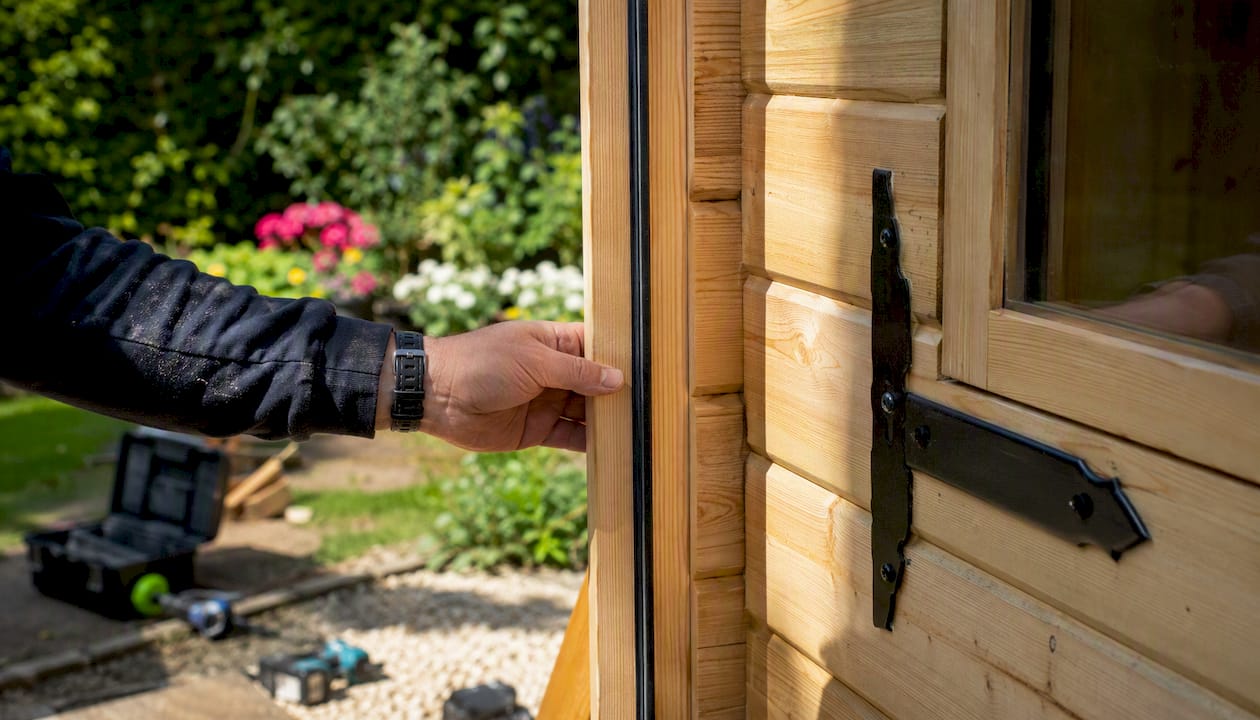
This applies beyond new-build houses too. If you have ordered a bespoke garden building, the same logic holds. Check panel joints, door and window seals, factory finishes, and fixings carefully on delivery. At Logcabinkits, our bespoke log cabin designs are built to a precise specification, and a quick snagging check on delivery means any small issues get sorted quickly. Our installation guide also covers common things to check during assembly, which doubles as a useful snagging reference.
The effort is small. The protection it gives you is significant.
Sources
These are the organisations and resources worth bookmarking:
- Snaggingfinder
- New Homes Quality Board (NHQB)
- Snagging construction works - Housesurveys guide
- Snagging survey guidance | RPSA
- Is a snagging survey worth it? | Fitzgerald Surveying