

What is a Green Homes Grant? Closed scheme explained

The Green Homes Grant was a government voucher scheme for homeowners and landlords in England, and it is now closed to new applications. It covered up to two-thirds of the cost of eligible energy efficiency improvements, up to a maximum of £5,000 per household. Low-income households could receive government funding covering the full cost, up to a defined maximum. The scheme opened on 30 September 2020 and closed to new applications in March 2021. Official guidance has since been withdrawn from GOV.UK.
If you’re looking for help with home energy improvements today, the current options are the Warm Homes Plan, the Warm Homes: Local Grant, the Boiler Upgrade Scheme, and the Energy Company Obligation (ECO). Each is explained below.
Table of Contents
- Who could apply and how did the vouchers work?
- Which measures did the vouchers cover?
- When did the scheme run and when did it close?
- Why did the scheme close so quickly?
- What has replaced the Green Homes Grant?
- Practical next steps for homeowners and landlords today
- Key takeaways
- Why home comfort improvements still matter
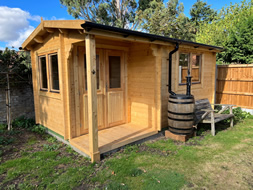
- Thinking about adding an insulated garden building?
- Useful sources
Who could apply and how did the vouchers work?
Eligibility covered a fairly broad group:
- Homeowners with a freehold property or a qualifying leasehold in England.
- Residential landlords with privately rented properties in England.
- Low-income households receiving certain qualifying benefits, who could access 100% funding up to £10,000 under the local authority strand.
The application process worked like this: you chose a registered installer, agreed the scope of work, and applied for a voucher. The voucher was then issued in your name, tied to your specific property and the agreed measures. Once the work was done and signed off, the installer submitted the voucher for payment directly to the scheme administrator.
Vouchers were not transferable. The scheme’s customer terms and conditions made clear that they were property-specific and applicant-specific. Repayment could be sought in certain circumstances — for example, if the work was not completed to the required standard or if the terms were breached.
Which measures did the vouchers cover?
The scheme split eligible measures into two categories: primary measures and secondary measures. You had to install at least one primary measure before you could use any voucher funding on secondary measures.
Primary measures (insulation and low-carbon heating):
- Loft insulation
- Cavity wall insulation
- Solid wall insulation (internal or external)
- Under-floor insulation
- Air source heat pumps
- Ground source heat pumps
- Solar thermal panels
Secondary measures (glazing, heating controls, and other efficiency upgrades):
- Double or triple glazing (only when replacing single glazing)
- Secondary glazing
- Draught-proofing
- Heating controls and thermostats
- Hot water tank insulation
A typical upgrade package might have combined solid wall insulation as the primary measure with new heating controls and draught-proofing as secondary measures. The voucher covered up to two-thirds of the combined cost, subject to the £5,000 cap. Small improvements like upgrading doors and windows can make a real difference to a home’s overall heat retention, which is why the scheme included glazing and draught-proofing alongside the bigger-ticket insulation jobs.
When did the scheme run and when did it close?
The timeline was short. Here are the key dates:
| Event | Date |
|---|---|
| Voucher applications opened | 30 September 2020 |
| Scheme closed to new applications | March 2021 |
| GOV.UK collection status | Closed — archived |
The GOV.UK closed collection for the scheme confirms the scheme is no longer accepting applications and includes information on repayment circumstances for vouchers already issued. If you received a voucher before the closure date, the terms around repayment still apply — check the archived GOV.UK guidance for the specific conditions that could trigger a repayment request.
Why did the scheme close so quickly?
The short answer: it was rushed, poorly administered, and reached far fewer homes than promised. The National Audit Office (NAO) reviewed the scheme and found serious problems with both its design and delivery.
“The scheme was set up too quickly, with insufficient time to test the digital system, recruit enough installers, or build the administrative capacity needed to process applications at scale.” — NAO Green Homes Grant report
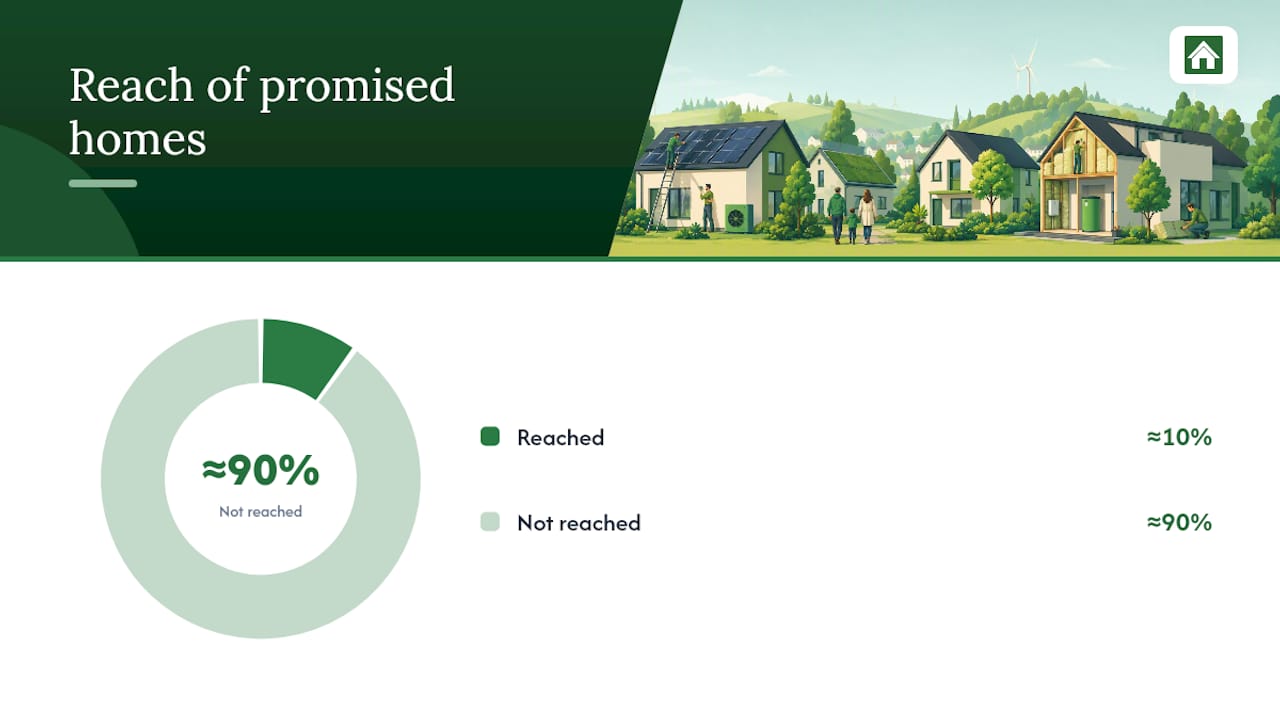
The NAO reported a high administrative cost per upgraded home, and the scheme covered significantly fewer homes than initially projected. BBC reporting confirmed the scheme reached only around 10% of the 600,000 homes originally promised.
The practical problems on the ground were significant:
- The digital application system was built on a 12-week timetable and was not ready for the volume of applications.
- Manual processing backlogs built up quickly, leaving homeowners and installers waiting weeks for decisions.
- Installers faced payment delays that caused cashflow problems, and some small businesses left the market entirely.
- The complexity of the primary/secondary measure rules confused applicants and slowed uptake.
- Contractor confidence collapsed as delays mounted, reducing the pool of registered installers willing to take on new jobs.
Remaining funds were reallocated to local authority-run insulation programmes, which had been producing steadier results because they could use existing local networks and target properties more precisely.
What has replaced the Green Homes Grant?
Several programmes now exist for homeowners and landlords in England. None is a direct like-for-like replacement, but together they cover most of the same ground.
| Scheme | Who it targets | What it covers |
|---|---|---|
| Warm Homes: Local Grant | Low-income households in privately owned or rented homes | Insulation, heating upgrades, low-carbon heat |
| Boiler Upgrade Scheme | Homeowners replacing fossil fuel boilers | Heat pump installation grants |
| Energy Company Obligation (ECO) | Low-income and fuel-poor households | Insulation, heating, energy efficiency measures |
| Local authority schemes | Varies by council | Varies — check your local council website |
Warm Homes Plan and Warm Homes: Local Grant
The Warm Homes: Local Grant is delivered through local authorities and targets low-income households in poor-quality privately owned or rented homes. Policy guidance published in July 2026 sets out the funding priorities, cost caps, and delivery approach. The wider Warm Homes Plan signals a longer-term, multi-year investment commitment — presenting a deliberate contrast to the short-burst approach of the Green Homes Grant.
Boiler Upgrade Scheme
This scheme offers grants to help homeowners replace gas or oil boilers with heat pumps or biomass boilers. It’s worth checking current grant values on GOV.UK, as these are updated periodically.
Energy Company Obligation (ECO)
ECO requires large energy suppliers to fund energy efficiency improvements for low-income and fuel-poor households. It’s one of the longest-running schemes in this space and is delivered through energy companies and approved installers.
- Check eligibility on GOV.UK or through the Energy Saving Trust.
- Your local authority may also have its own funding pot — worth a direct call or a check of their website.
Practical next steps for homeowners and landlords today
If you want to improve your home’s energy efficiency now, here’s a straightforward plan:
- Check your EPC — Your Energy Performance Certificate tells you which measures would have the biggest impact. Loft insulation and cavity wall insulation are usually the most cost-effective starting points. Find your EPC on the GOV.UK register.
Pro Tip: The Energy Saving Trust’s free advice line can help you identify which schemes you’re eligible for and which measures to prioritise — it’s an independent service and costs nothing to use.
Key takeaways
The Green Homes Grant was a short-lived English voucher scheme that closed in March 2021 after reaching only a fraction of its target homes; current alternatives include the Warm Homes: Local Grant, the Boiler Upgrade Scheme, and ECO.
| Point | Details |
|---|---|
| Scheme is closed | The Green Homes Grant closed to new applications in March 2021; guidance has since been withdrawn from GOV.UK. |
| Headline funding | Up to £5,000 for most households; up to £10,000 (100% of costs) for low-income qualifying households. |
| Why it failed | The NAO found rushed delivery, high admin costs, and significantly fewer homes upgraded than initially promised. |
| Current alternatives | Warm Homes: Local Grant, Boiler Upgrade Scheme, and ECO are the main routes; check GOV.UK and the Energy Saving Trust for eligibility. |
| Logcabinkits | Insulated garden buildings from Logcabinkits can form part of a staged approach to improving comfort and reducing heating demand at home. |
Why home comfort improvements still matter
The Green Homes Grant came and went quickly, but the underlying goal — making homes warmer, cheaper to run, and less carbon-intensive — hasn’t changed. What has changed is the delivery model. The shift towards local authority programmes and longer-term investment commitments like the Warm Homes Plan suggests the government has learned something from the voucher scheme’s short, chaotic run.
The NAO’s framing is worth taking seriously: retrofit works best when it’s planned, not rushed. That applies to policy, and it applies equally to individual homeowners. A phased approach — starting with the measures that cut bills the most, then adding improvements over time — tends to deliver better results than trying to do everything at once under the pressure of a closing grant window.
One thing the Green Homes Grant debate rarely touched on is the role of the wider property. Improving your main house’s insulation is the obvious priority, but the spaces around it matter too. A poorly insulated garden building that you heat through winter adds to your energy use just as surely as a draughty loft. Thinking about your whole property, not just the four walls of the house, gives you a more complete picture of where heat is being lost and where investment makes sense.
Thinking about adding an insulated garden building?
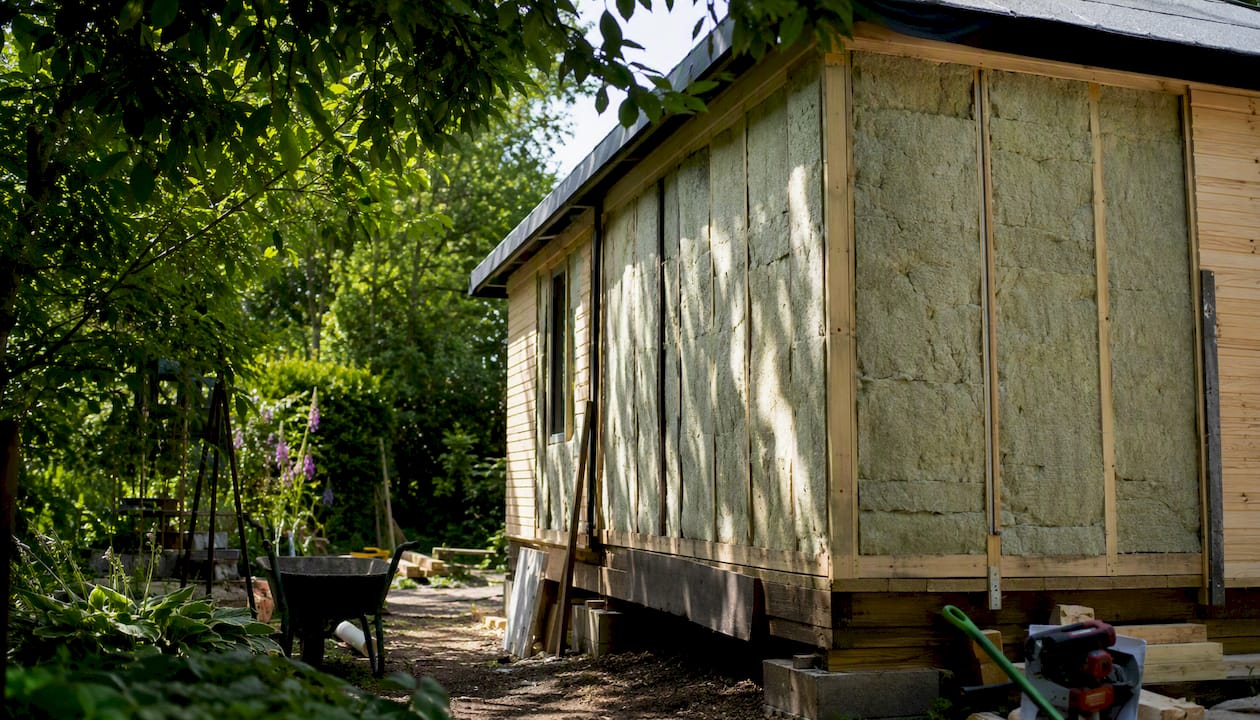
If you’re planning home improvements and want to make the most of your outdoor space at the same time, a well-insulated garden building can be a genuinely useful addition. Fully insulated garden offices from Logcabinkits are built to retain heat properly, so you’re not pouring energy into a cold, draughty space every time you use it. That’s a practical consideration whether you’re working from home, using the space as a studio, or simply wanting a room that’s comfortable year-round.

Logcabinkits offers a range of bespoke garden log cabins with options for insulation, double glazing, and custom layouts — so the building works for your garden and your budget, not the other way around. You can also use the cabin selection wizard to find the right size and style for your space, or get in touch for a bespoke design quote if you have something specific in mind.
Useful sources
| Source | What it covers |
|---|---|
| Green Homes Grant: make energy improvements to your home (closed) — GOV.UK | Official scheme guidance including funding amounts, eligibility, and closure status. |
| Green Homes Grant voucher scheme (closed) — GOV.UK collection | Archived collection confirming closure and repayment conditions. |
| Green Homes Grant scheme: customer terms and conditions — GOV.UK | Full voucher mechanics, eligibility rules, and repayment circumstances. |
| Green Homes Grant Voucher Scheme — NAO report | Independent value-for-money review; findings on delivery failures and costs. |
| Green Homes Grant — NAO press release | Concise summary of the NAO’s main conclusions. |
| Green Homes Grant scheme to insulate houses axed — BBC | News reporting on delivery shortfall and fund reallocation. |
| Warm Homes: Local Grant policy guidance (July 2026) — GOV.UK | Current guidance on the main replacement programme for low-income households. |
| Government launch announcement — GOV.UK | Original announcement setting out the £2 billion package and policy aims. |