
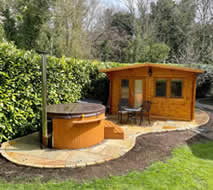
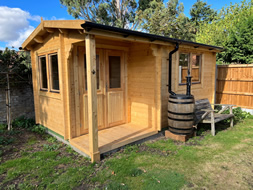
The role of trees near log cabins: what homeowners need to know
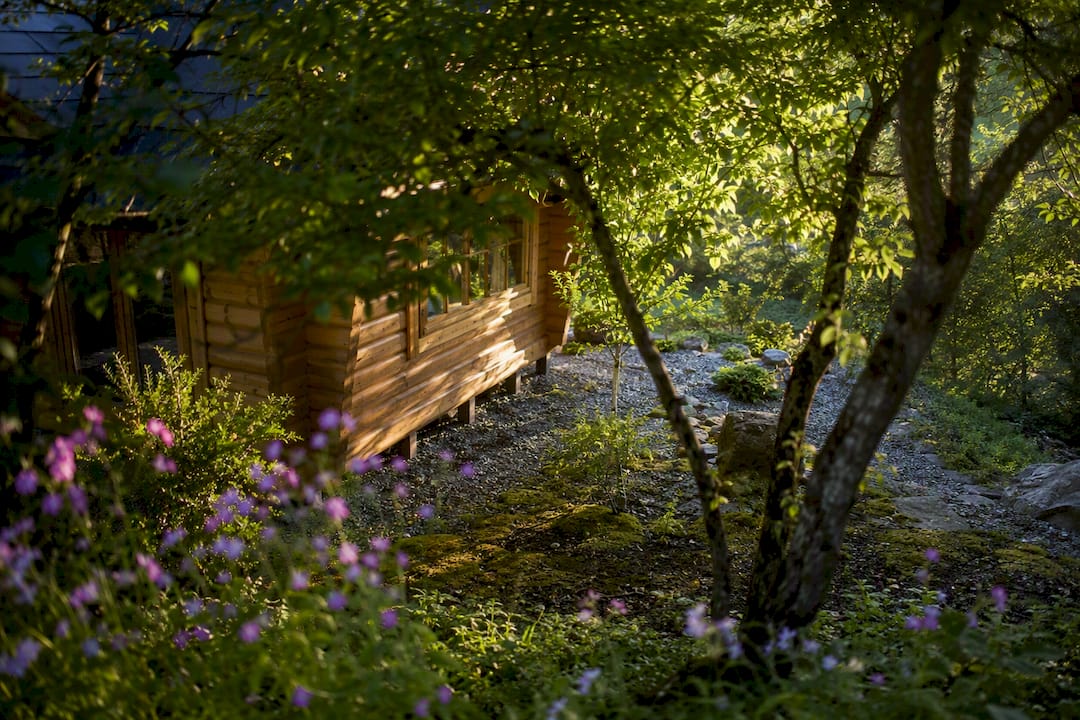
Trees near your log cabin bring real benefits: cleaner air, welcome shade, and a garden that feels alive with birds and insects. They also bring one genuine risk worth understanding, which is root-related soil movement on certain soil types. The Woodland Trust notes trees can cut air pollution by a significant amount, but on shrinkable clay, root activity is linked to roughly 70% of UK subsidence claims. Get the siting right, following NHBC guidance, and you get the best of both worlds.
The headline figure: Nearly 70% of subsidence claims in the UK trace back to tree roots interacting with shrinkable clay soil. It’s a big number but it is also avoidable with the right planning.
Key Takeaways
Trees benefit a log cabin’s air quality, shade, and biodiversity, but on shrinkable clay soil, root-related soil movement causes most structural problems, making careful siting and foundation choice essential.
| Point | Details |
|---|---|
| Ecological upside is real | Trees can cut air pollution significantly and support cooling, shelter, and wildlife around your cabin. |
| Subsidence risk is soil-specific | Nearly 70% of UK subsidence claims involve tree roots interacting with shrinkable clay soil. |
| Distance rules depend on species | High-water-demand trees like oak, poplar, willow, and elm need far more clearance than smaller species. |
| Foundation choice matters | Raft, trench fill, or helical pile foundations can reduce risk where a tree’s influence is strong. |
| Bespoke design solves tricky plots | Logcabinkits offers custom siting advice and adjustable footprints for gardens with mature trees. |
Table of Contents
- What role do trees play near log cabins?
- How can you design a cabin that sits well with trees?
- Can tree roots really damage a log cabin?
- How far should a log cabin be from trees?
- Which foundations work best when building near trees?
- How often should you check on trees near your cabin?
- What’s the step-by-step plan for siting a cabin near trees?
- How does Logcabinkits help with tricky, tree-lined plots?
- A designer’s view on trees and cabins
- Get bespoke siting advice for your garden
- Where to read more
- Sources
What role do trees play near log cabins?
Trees do a lot of quiet work around a garden building. They filter the air, cool the space in summer, and give a cabin somewhere to sit rather than just stand. Around a small timber structure, that effect is easy to notice. A cabin tucked near a mature tree stays noticeably cooler on a hot afternoon than one sitting in open sun all day.
Here’s what trees actually give you:
- Cleaner air, with phytoncides released by trees shown to support human immune and nervous system health
- Shade that cuts down on interior overheating in summer, especially useful for a garden office or studio
- Wind shelter, which reduces heat loss in winter and eases pressure on roofing
- Habitat for birds, bats, and insects that make the whole garden more interesting to sit in
- Leaf litter that feeds soil life, keeping the ground around your cabin healthier over time
Pro Tip: If you’re planning a cabin for year-round use, position it where deciduous trees give summer shade but let winter sun through once the leaves drop. You get cooling and free heat from the same tree.
How can you design a cabin that sits well with trees?
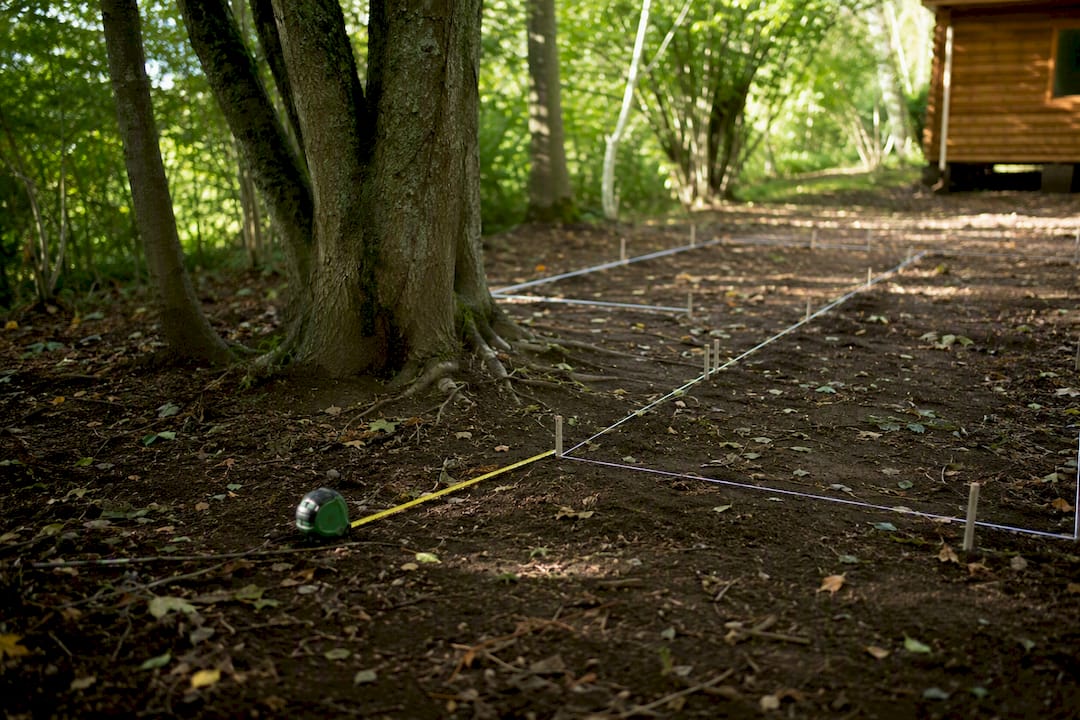
The best-looking cabins don’t fight their surroundings, they work with them. Architects and eco-cabin designers tend to aim for “visual harmony”, meaning the building borrows from what’s already there rather than standing out against it. A cabin with a natural timber finish, understated roofline, and a colour that weathers like bark will always look more at home under a canopy than a bright white structure ever could.
A few things help this along:
- Choose cladding and roofing that will weather naturally rather than fight the woodland palette, similar to the approach in Scandi-style cabins
- Position windows to frame the tree line rather than face straight into a boundary fence
- Use overhangs to manage rain drip from branches above without needing thick eaves
- Plant native understorey shrubs or a wildflower edge rather than a hard-edged flower bed
Pro Tip: Keep paths and decking flexible near root zones. Floating deck boards on adjustable pads cope with gentle ground movement far better than a solid concrete path ever will.
Can tree roots really damage a log cabin?
Yes, and it’s worth understanding exactly how. The main mechanism is soil shrinkage. On clay-rich ground, tree roots draw out moisture during dry spells, and the soil beneath a foundation shrinks with it. That’s subsidence. Oddly, removing a large tree doesn’t automatically solve the problem either. Once the roots are gone, the soil slowly rehydrates and can swell back up, a process called heave, which causes its own kind of structural stress.
Most trees near buildings cause no damage at all. Risk only really climbs when you combine shrinkable clay soil with a thirsty species planted too close.
Species matter a great deal here. Some trees pull far more water from the ground than others:
- High risk: oak, poplar, willow, and elm, all known for heavy water demand
- Lower risk: smaller ornamental and slower-growing species, generally safer close to a build
- Beyond roots, trees bring maintenance headaches too, including gutter blockages from leaf fall, sap staining on timber cladding, and the chance of branch fall during storms
How far should a log cabin be from trees?
There’s a simple starting rule: leave at least 0.6 metres (2 feet) of clearance between any garden building and a tree trunk. That’s the bare minimum for airflow and access, not a safety guarantee against root movement.
For anything more than a small ornamental tree, a better rule of thumb is to treat the tree’s mature height as its rough zone of influence. A tree that will eventually reach 15 metres tall can, in theory, affect soil moisture that far away on clay ground, according to RHS guidance on trees near buildings.
A few practical points worth checking before you commit to a spot:
- On clay soils, always favour distance over convenience, since the risk profile changes completely compared with sandy or well-drained ground
- Check your supplier’s warranty terms, as many require a minimum clearance from mature trees before cover applies
- If a site has multiple trees or mixed soil types, get a soil test and species identification done before finalising your layout
Pro Tip: When in doubt on a tricky plot, a short chat with an arboriculturist before you order your cabin can save a lot of grief later. It’s a small cost against a much bigger potential headache.
Which foundations work best when building near trees?
Standard concrete strip foundations aren’t always the right answer once a mature tree is nearby. NHBC guidance recommends adjusting foundation depth and design based on how much influence a tree has over the soil, and there are several options worth discussing with your installer or a structural engineer.
- Trench fill foundations, deepened beyond the tree’s zone of influence
- Raft foundations, which spread load across the whole footprint and cope better with gentle ground movement
- Helical or screw piles, which avoid deep excavation entirely and reduce the chance of severing root systems
- Bridging or reinforced slabs, used where some movement is expected but needs to be absorbed rather than resisted
On difficult clay sites, the safest builds are usually the ones that assume some ground movement will happen, and design around it, rather than the ones that try to prevent it entirely.
Good drainage plays a bigger part here than people expect. Ground that drains well is less attractive to roots searching for moisture, which lowers the risk to your foundations. If you’re unsure whether your plot needs anti-heave precautions or a root barrier, that’s a conversation worth having with a structural engineer before groundworks start.
How often should you check on trees near your cabin?
A simple seasonal glance is enough most of the time. Walk round after autumn storms and again in spring, and look for anything that’s changed. For larger, established trees, a professional survey every few years is sensible, particularly on clay soils where slow-moving problems are easy to miss.
Watch for:
- A trunk leaning more than it used to, or new cracks appearing near the base
- Large dead branches sitting in the canopy
- Cracks appearing in nearby walls, paths, or window frames
- Ground that looks slightly heaved or sunken close to the roots
Pruning needs care too. Some trees are protected by Tree Preservation Orders, and cutting them without permission can land you in serious trouble, so always check before reaching for a saw. On the cabin side, clearing gutters regularly and checking for leaks stops small tree-related issues turning into rot, something covered in more detail in this guide to guttering.
What’s the step-by-step plan for siting a cabin near trees?
- Before you buy: Check your soil type, identify nearby tree species, and sketch a rough root-influence zone for anything mature.
- Check supplier terms: Confirm your warranty conditions around tree clearance before placing an order.
- At build stage: Choose the right foundation for your ground, fence off root protection zones, and confirm your drainage plan.
- First six to twelve months: Watch for any settling, cracking, or drainage issues as the ground and cabin settle in.
- Ongoing: Book a professional tree survey every few years for anything sizeable, and keep gutters and drainage clear year-round.
Following this order means most problems get caught while they’re still cheap and easy to fix, rather than after they’ve become a much bigger job.
How does Logcabinkits help with tricky, tree-lined plots?
Not every garden is a flat, open square, and plenty of the best spots for a cabin sit close to an established tree line. That’s exactly where bespoke design earns its keep. Logcabinkits can adjust footprints, move window and door positions to work with existing shade, and recommend foundation approaches suited to your soil type rather than a one-size-fits-all base.
Services worth knowing about:
- Bespoke siting advice tailored to gardens with mature trees or awkward boundaries
- Custom foundation recommendations based on your soil and drainage
- Adjustable footprints and window layouts to make the most of natural shade
- Guidance on wood treatment and maintenance suited to a shaded, leafy setting, covered in this wood treatment care guide
If your plot has a tricky corner near an oak or a stand of willow, that’s a conversation worth having before you order anything.
A designer’s view on trees and cabins
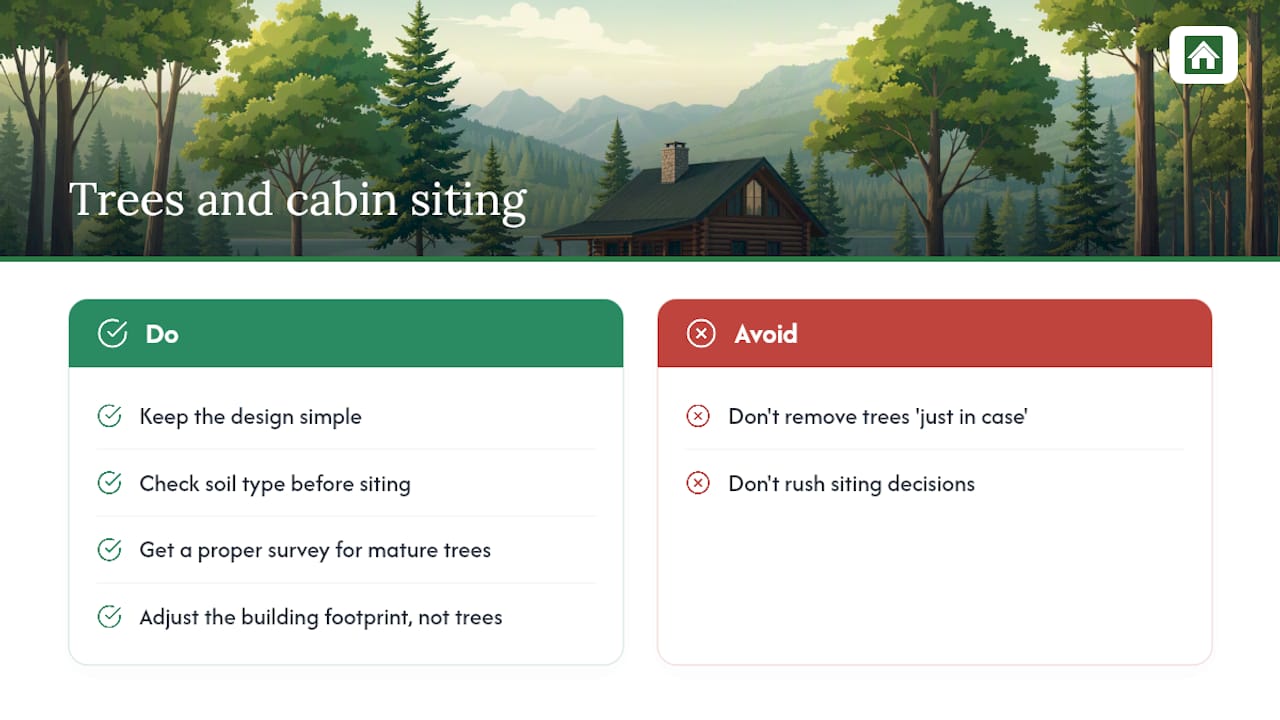
Most siting problems aren’t really about trees being dangerous, they’re about rushed decisions. I’ve seen plans redrawn twice because nobody checked the soil type first, and both times a bit more distance and a better foundation solved it without losing a single tree. The instinct to remove a tree “just in case” is usually the wrong one. Keep the design simple, get a proper survey if the tree is mature, and let a bespoke footprint do the adjusting instead of the tree.
Get bespoke siting advice for your garden
If you’ve read this far, you already know a tricky tree-lined garden doesn’t rule out a beautiful cabin, it just needs a bit more thought at the planning stage. That’s exactly what Logcabinkits specialises in: adjusting footprints, foundations, and window layouts around the trees you want to keep, rather than asking you to compromise your garden to fit a standard design.

Browse the full range of garden log cabins, or if your plot has a mature tree, sloped ground, or an awkward boundary, head straight to the bespoke cabin design page and tell us what you’re working with. You can also try the cabin selection wizard to narrow down options before you request a bespoke quote.
Where to read more
For deeper technical detail, see the Woodland Trust on tree benefits, RHS advice on trees near buildings, and NHBC standards on foundations. For siting help, browse our guide on log cabins near nut trees or speak to a certified arborist for a professional survey.