
A log cabin air source heat pump: is it right for your garden room?
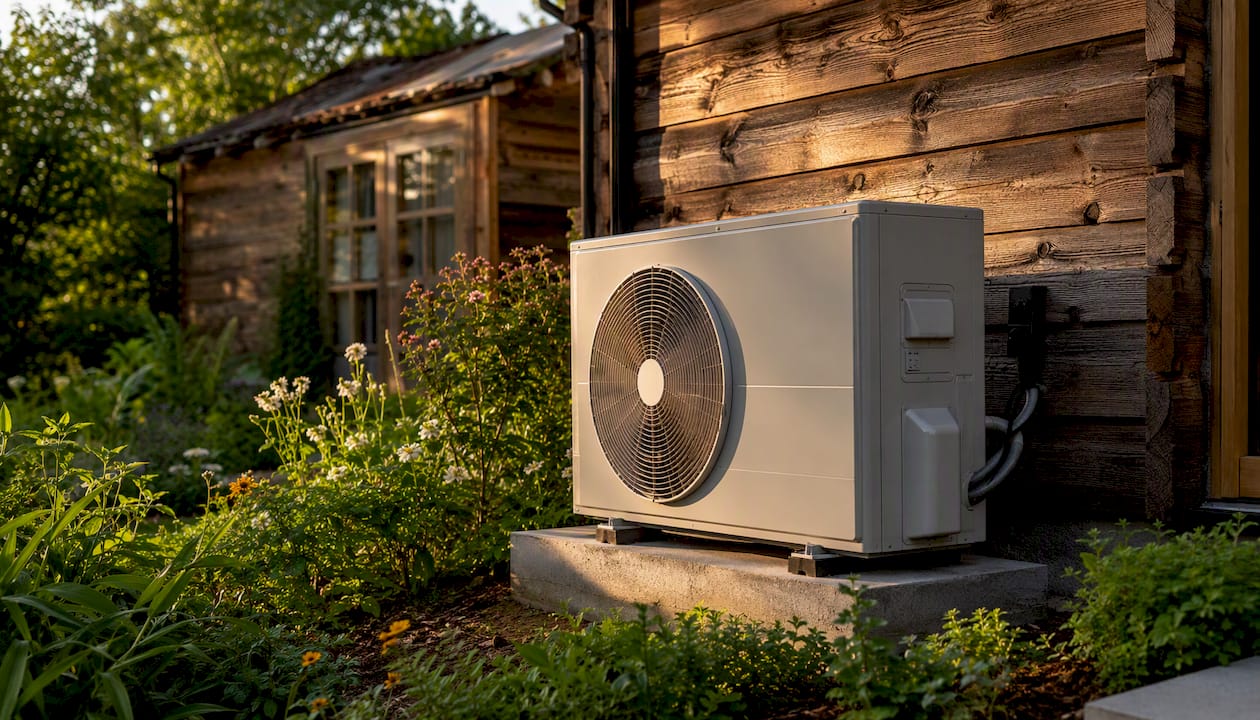
Yes, an air source heat pump works well for most insulated log cabins used regularly throughout the year, and the right type for a single-room cabin is almost always an air-to-air mini-split rather than a full house-style system. Your first move should be booking a professional heat-loss calculation using the MCS 018 methodology or something similar, so an installer knows exactly what size unit your cabin needs.
Before you book anyone, keep these three things in mind:
- MCS certification matters. Only use an installer registered under the MCS scheme.
- COP tells you the running cost story. Look for a seasonal COP of around 3 to 4.
- Planning rules apply to outbuildings too. Check permitted development conditions before you buy.
If you only use your cabin occasionally, say for a few hours a week, a heat pump might not be worth the upfront spend. Read on and we’ll walk you through why, and how to get it right if you do go ahead.
Key Takeaways
An air-to-air mini-split heat pump, correctly sized through a professional heat-loss calculation, is the right heating solution for most well-insulated, regularly used log cabins.
| Point | Details |
|---|---|
| Choose the right type | Pick an air-to-air mini-split for single-room cabins rather than a full air-to-water system. |
| Insulate first | Aim for at least 50mm of wall and roof insulation before fitting a heat pump. |
| Get a heat-loss calculation | Ask for an MCS 018 style calculation to avoid undersizing, the most common install failure. |
| Check planning and certification | Confirm Class G permitted development conditions and use an MCS certified installer. |
| Budget realistically | Expect £800 to £2,500 for a mini-split, and don’t count on Boiler Upgrade Scheme funding for a detached cabin. |
| Build for it from the start | Logcabinkits’ double-skin and bespoke cabin options are designed to pair well with a heat pump install. |
Table of Contents
- What type of air source heat pump suits a log cabin?
- What are the benefits and downsides of heat pumps in a cabin?
- Is your cabin insulated well enough for a heat pump?
- Why does sizing matter so much for a log cabin heat pump?
- What installation checks does a cabin heat pump need?
- How much does a cabin heat pump cost to install and run?
- What questions should you ask a heat pump installer?
- How do you keep running costs down after installation?
- What do we see most often with cabin heat pump installs?
- Ready to build a cabin that’s heat pump ready?
- Where to check the rules and technical details
- Frequently asked questions
- Sources
What type of air source heat pump suits a log cabin?
For a single-room log cabin, an air-to-air mini-split beats an air-to-water system almost every time. This is the setup you’ll recognise from hotel rooms: a wall-mounted indoor head paired with a small outdoor fan unit. It heats the room directly using refrigerant and a fan, with no radiators, no pipework running under floors, and no hot water cylinder to find space for.
Air-to-water systems, by contrast, heat water that then runs through radiators or underfloor pipes. They’re brilliant for houses and annexes with bathrooms and kitchens, but they’re overkill for a cabin that just needs warm air. Here’s how they stack up for a garden cabin:
- Installation complexity: mini-splits are far simpler, usually just brackets, a small hole for pipework, and an electrical connection.
- Hot water: only air-to-water systems provide it, and only if paired with a cylinder.
- Cost: mini-splits are considerably cheaper to buy and fit.
- Efficiency in small spaces: mini-splits respond fast in small volumes, with a typical COP of 3 to 4.
Pro Tip: If your cabin is really an annexe with a shower room, that’s a different job entirely. Talk to an installer about air-to-water options and factor in space for a cylinder.
What are the benefits and downsides of heat pumps in a cabin?
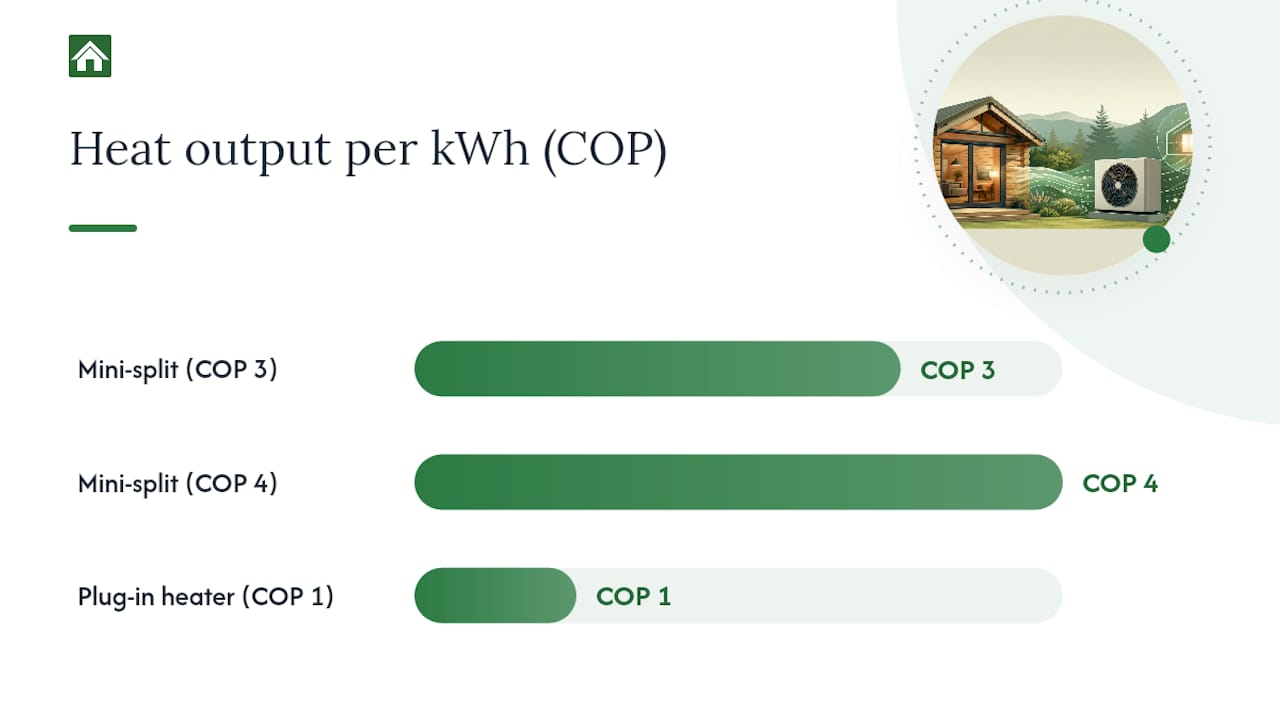
The benefits stack up quickly once your cabin is properly insulated. A mini-split with a COP of 3 to 4 turns one unit of electricity into three or four units of heat, which is far more efficient than a plug-in electric heater running at COP 1. The same unit cools the room in summer too, which matters a lot in a cabin with big glazed doors that turn into a greenhouse on a sunny afternoon. Response times are quick because the air volume is small, and most units dehumidify as a side effect, which helps protect timber and any stored equipment inside.
The downsides are real too. There’s an upfront cost that a fan heater simply doesn’t have. The outdoor unit makes some noise, and if your cabin sits close to a boundary fence, that noise can become a neighbour issue. Efficiency drops sharply if the cabin isn’t insulated well, because the pump ends up fighting a losing battle against draughts and cold walls.
- Undersizing is the single most common installer mistake, so insist on a proper heat-loss calculation before you agree a price.
Is your cabin insulated well enough for a heat pump?
A heat pump only performs as well as the building around it. Before you install one, walk through your cabin and check the basics: walls, roof, floor, doors, and windows.
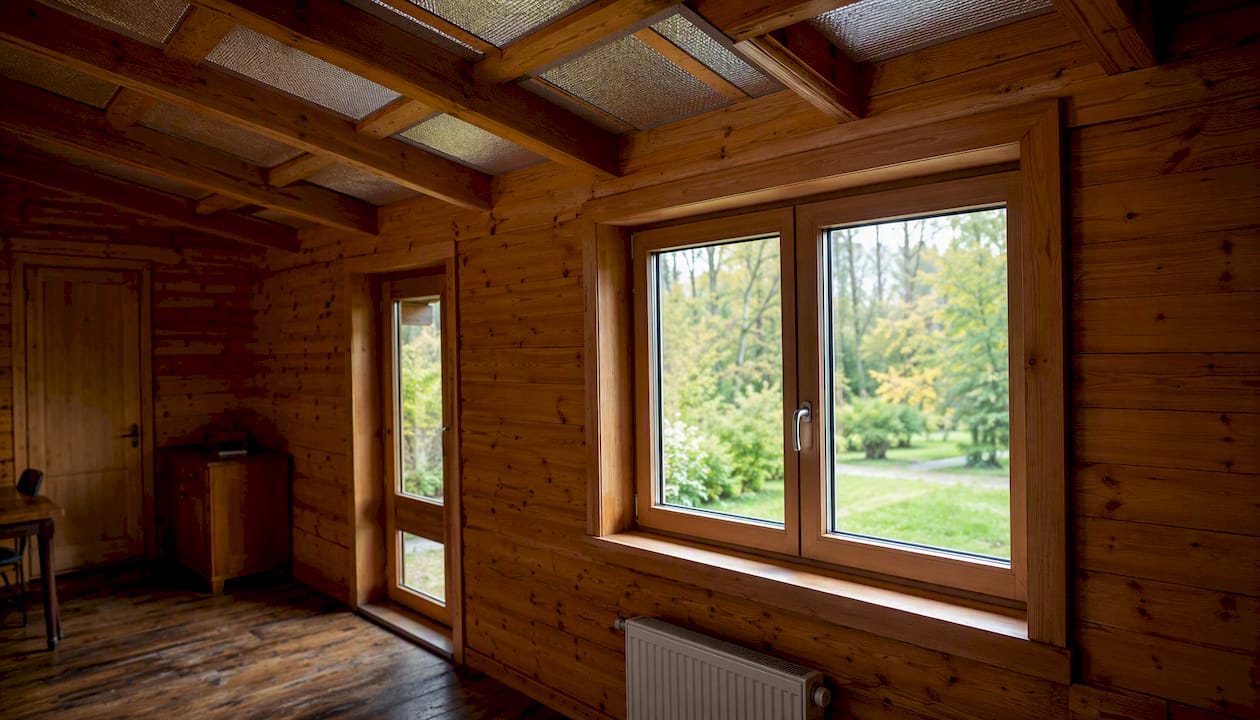
Garden room guidance generally points to at least 50mm of insulation in the walls and roof as a sensible baseline for a heat pump to work efficiently. Anything thinner, and you’re paying to heat air that leaks straight back out.
Work through this order of priority:
- Check wall thickness and insulation. Single-skin log walls with no insulation layer are the biggest energy drain.
- Look at the roof. Heat rises and escapes fast through an uninsulated roof panel.
- Check the floor. Cold rising from an uninsulated base makes a room feel chilly even with the heating on.
- Inspect doors and windows. Double glazing is close to essential; single glazing loses heat fast.
- Draught-proof gaps. Check seals around doors and where panels meet.
If your cabin still has single-skin walls, a heat pump probably isn’t worth fitting yet. Look at double skin log cabins instead, which come with an insulated cavity built in from the start, or read our guide on turning a log cabin into a year-round garden room before you spend money on heating.
Why does sizing matter so much for a log cabin heat pump?
Getting the size right is where most cabin heat pump installs go wrong, so it’s important to follow expert guidance on how to choose HVAC system for energy-efficient comfort. A heat-loss calculation works out exactly how much heat your cabin loses on a cold day, based on wall area, insulation, glazing, and floor size. Skip this step, and you’re guessing.
Installers who specialise in heat pumps consistently point to undersizing as the most common cause of poor performance and disappointing bills. A pump that’s too small runs flat out constantly and still can’t hit your target temperature on the coldest days.
As a rough guide: small, well-insulated cabins under around 20 square metres typically need somewhere between 2.5kW and 5kW. Larger, annexe-style cabins with more glazing or higher ceilings often need 5kW to 8kW. These are starting points, not a substitute for a proper calculation, because glazing area and wall build-up change the numbers significantly.
- Oversizing causes its own problem: the unit short-cycles, switching on and off repeatedly, which wears components faster and pushes running costs up over time.
What installation checks does a cabin heat pump need?
Where the outdoor unit sits matters more than most people expect. It needs clear space around it for airflow, an anti-vibration mount so it doesn’t rattle against a wall, and enough distance from any boundary fence to avoid annoying a neighbour with noise. Security is worth a thought too, since outdoor units left exposed can be a target.
On the regulatory side, most domestic ASHP installations fall under permitted development, but Class G of the relevant planning order sets out conditions on unit volume, distance from boundaries, and restrictions in listed or protected areas. Some local authorities, Lambeth Council among them, also expect MCS 020 compliance for noise before treating an install as permitted development. Always check with your local planning team before ordering.
On the electrical side, expect the installer to specify:
- A dedicated circuit for the unit, sized correctly for the load.
- Consumer unit capacity checked, since older boards may need upgrading.
- DNO notification, which some installers arrange, if your supply needs it flagged.
- F-Gas certified handling for anyone working on the refrigerant lines, which is a legal requirement, not optional extra.
Pro Tip: Ask your electrician for a written quote that separately lists the circuit, any consumer unit work, and cable routing to the outdoor unit. Vague, bundled quotes make it hard to compare installers fairly.
How much does a cabin heat pump cost to install and run?
Installed prices for air-to-air mini-splits suited to garden cabins typically fall between £800 and £2,500, depending on unit size and how much electrical work is needed. If you’re looking at an air-to-water system for an annexe with hot water, expect a higher cost that reflects the cylinder and installation complexity.
Running costs come down to your seasonal COP. With a SCOP of around 3.0, expect running costs in the region of 4 to 5 pence per kWh of heat delivered, which compares favourably against a plug-in electric heater running at COP 1.
Before you get excited about grants, know this: the Boiler Upgrade Scheme generally applies to your main home or a self-contained, council-taxed annexe. It does not usually cover a detached garden cabin unless that cabin genuinely functions as an independent annexe. Budget for the full cost yourself in most cases.
- When comparing quotes, ask each installer to state COP or SCOP, warranty length, and a predicted annual running cost side by side.
What questions should you ask a heat pump installer?
A good installer will happily answer these without hesitation. If they hedge or dodge, that’s a red flag.
- What size unit, in kW, are you quoting, and can I see the heat-loss calculation behind it?
- What’s the SCOP or COP of this specific model?
- What’s the sound power level in decibels, and where does that sit against manufacturer data?
- What warranty comes with the unit, and does it cover parts and labour?
- Are you MCS certified, and can I see your certification number?
- Is this a heating and cooling unit, or heating only?
Watch for installers who skip the heat-loss calculation entirely, quote vague specs with no numbers attached, or try to sell a cooling-only unit as a full heating solution. No MCS certification or F-Gas registration on show is another reason to walk away.
How do you keep running costs down after installation?
A little upkeep goes a long way. Clean or replace filters every few months, check the outdoor fan for debris, and make sure the condensate drain isn’t blocked. Anyone touching the refrigerant lines during servicing needs to be F-Gas certified, so ask your installer who handles that.
If your bills seem high, work through this before calling anyone out:
- Is the unit undersized for the room?
- Are there draughts around doors or windows letting heat escape?
- Is the thermostat set higher than it needs to be?
- Is the flow temperature set correctly for your unit?
Pro Tip: Ask your installer for a performance report after the first winter. It shows actual running hours and energy use, and flags problems early rather than after a second expensive season.
What do we see most often with cabin heat pump installs?
The cabins that pair best with heat pumps are the ones built with proper insulation from the start, ideally double-skin construction with tight door and window seals. Customers ask us most often about noise, planning permission, and whether their cabin is insulated enough, and we talk them through all three before they buy.
Ready to build a cabin that’s heat pump ready?
If you’re starting from scratch, the easiest way to avoid the insulation headaches above is to order a cabin that’s already built for it. Our garden log cabins come with double-skin wall options as standard, and if you need something specific, like extra insulation thickness, a particular cable route for the outdoor unit, or a multi-room layout with a dedicated plant space, our bespoke design service can build it into the spec from day one.
For larger installs needing more than one heated zone, take a look at our multi-room log cabins or apex roof cabins, both of which give installers more wall space to route electrics cleanly. Not sure what size or spec fits your garden and your heating plans? Run through our cabin selection wizard and get a shortlist matched to your space in a few minutes.
Where to check the rules and technical details
- Class G planning conditions for exact boundary distances and unit volume limits.
- Boiler Upgrade Scheme eligibility rules on GOV.UK, checked for main dwelling versus annexe status.
- Lambeth Council’s ASHP guidance as an example of local noise and MCS 020 requirements.
- RISERetrofit’s installation advice pack for clearance diagrams and cylinder requirements.
Look for MCS installer lists, manufacturer sound power data in decibels, and your council’s own planning pages before you commit to a quote.
Frequently asked questions
Can you fit an air source heat pump to any log cabin? Not any cabin. It needs decent insulation, ideally double-skin walls and double glazing, before a heat pump makes financial sense.
Do I need planning permission for a heat pump on a garden cabin? Often not, thanks to permitted development rights, but check the Class G conditions and your local council before ordering.
Will a cabin heat pump cool the room in summer too? Yes, most air-to-air units reverse cycle to cool as well as heat, which helps a lot in cabins with large glass doors.
Can I get a grant towards the cost? Usually not for a standalone garden cabin. The Boiler Upgrade Scheme generally excludes detached outbuildings unless they’re a genuine self-contained annexe.
How do I know what size unit I need? Ask your installer for a proper heat-loss calculation rather than a rough guess based on room size alone.
Sources
- The Town and Country Planning (General Permitted Development) (England) Order 2015: Class G (air source heat pumps)
- Boiler Upgrade Scheme – GOV.UK
- Air source heat pump install advice pack (RISERetrofit)