
Fire safety in garden cabins: what you need to know
TL;DR:
- Many garden cabin fires develop quietly over time due to hazards like heating appliances, improper fuel handling, and external fire sources. Proper fire prevention measures, including alarms, fire-resistant materials, safe landscaping, and clear emergency plans, significantly reduce risks. Consistent maintenance and thoughtful design from the start are essential for ensuring cabin safety and enjoyment.
Garden cabins are brilliant spaces. Whether yours is a home office, a hobby room, or a place to relax, it deserves the same care and attention as your main home. Yet fire safety in garden cabins is something many owners overlook, assuming that because the building is small and sits at the bottom of the garden, the risk must be low too. That assumption is wrong. Timber construction, heating appliances, and close proximity to garden bonfires or fire pits create very real hazards. This guide walks you through what to watch for, how to prevent fires, and how to be ready if the worst happens.
Key takeaways
| Point | Details |
|---|---|
| Heating is the biggest risk | Wood stoves, electric heaters, and fireplaces are the most common source of cabin fires. |
| Alarms save lives | Smoke and carbon monoxide detectors should be fitted and tested regularly in every cabin. |
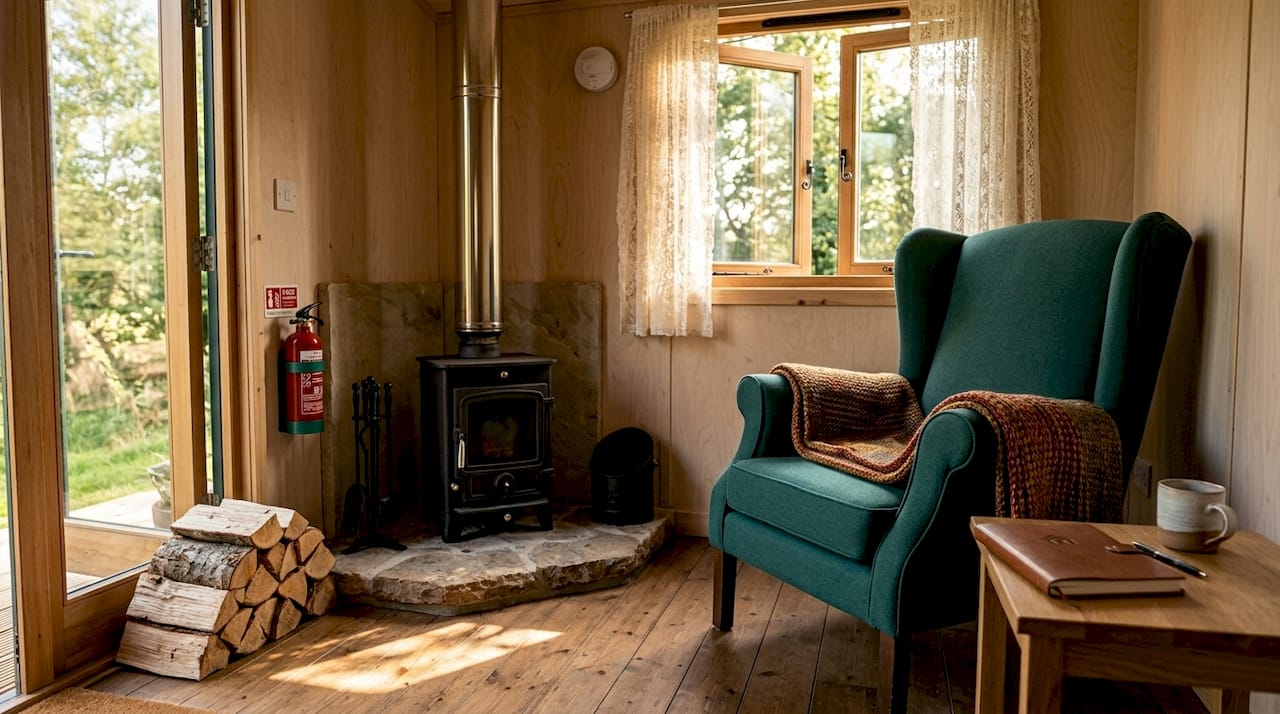
| Safe fuel handling matters | Never bring wood indoors that may still have smouldering embers inside. |
| Your garden is part of the plan | Cleared vegetation and trimmed trees around your cabin reduce fire spread dramatically. |
| Practise your emergency plan | Knowing exactly what to do in the first 60 seconds of a fire can make all the difference. |
Fire safety in garden cabins: the risks you may not see
Most cabin fires do not start dramatically. They build quietly. Fire risk often increases because owners miss gradual changes, such as creosote slowly coating a chimney flue or firewood being stacked a little too close to a heat source each week. Over months, those small changes add up.
The biggest internal hazards in any garden cabin tend to fall into three areas.
- Heating appliances. Wood-burning stoves, log burners, and electric fan heaters are all useful in a cabin, but each carries its own risks. Stoves need regular chimney sweeping to prevent creosote build-up. Electric heaters should never be left on unattended or placed near curtains, rugs, or timber walls. Choosing the right heating system for your cabin is a good first step toward getting this right.
- Fuel storage. This one catches people out more often than you might think. Bringing in smouldering wood believed to be cold caused the total loss of the Whitetail Cabin in May 2026. Hidden embers inside logs that seem cool to the touch can reignite once indoors. Always store firewood well away from the cabin itself.
- External fire sources. Garden bonfires can spread rapidly in residential areas and are a common cause of garden fires. Embers from barbecues or fire pits can travel further than you expect, especially on a breezy day.
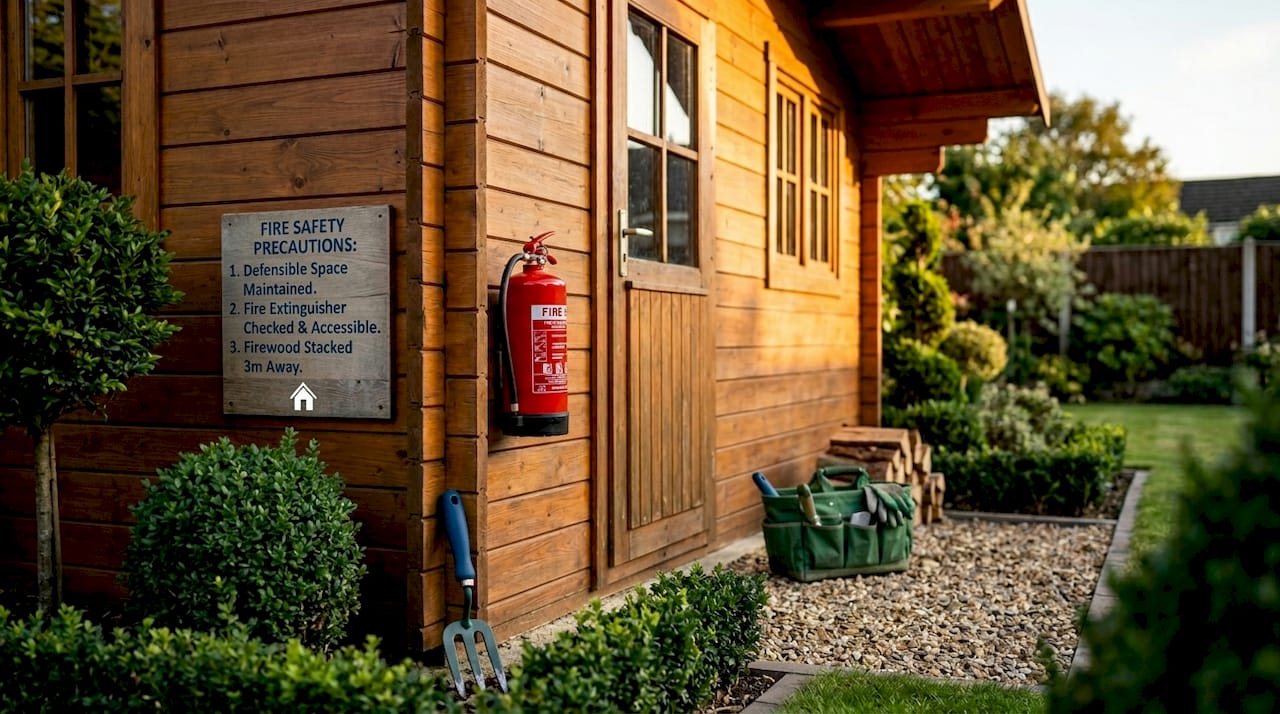
Pro Tip: Keep firewood stacked at least three metres from your cabin and check every log you bring inside for any warmth or smoke before placing it near a heat source.
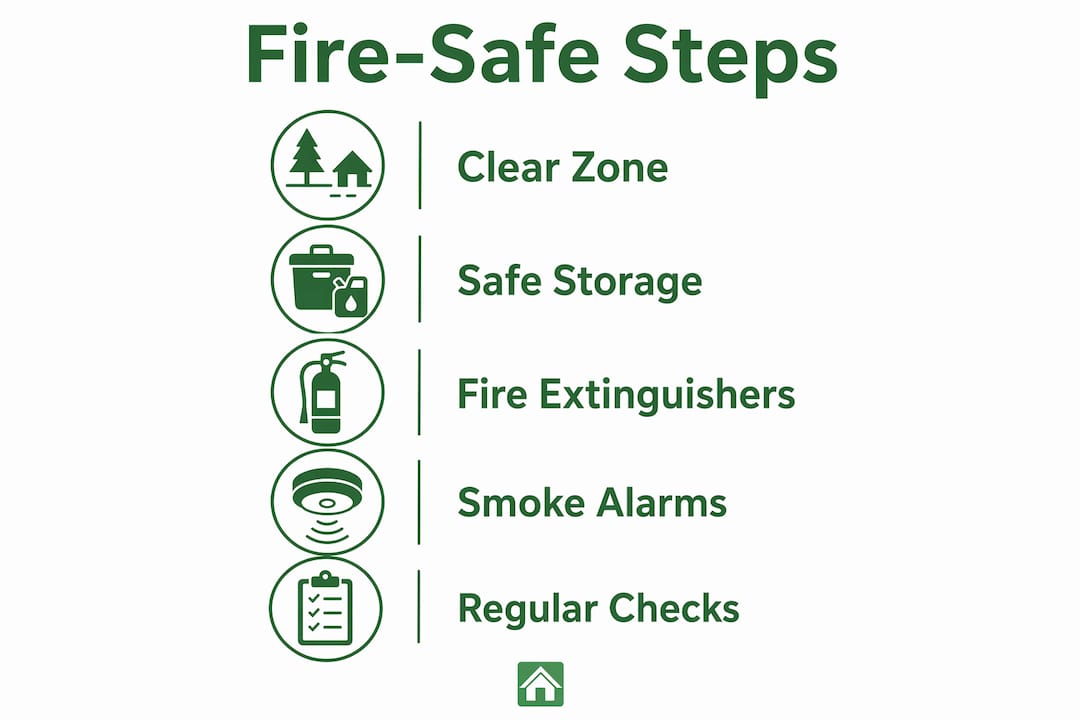
Defensible space, the clear zone around your cabin free from combustible clutter, is your first line of defence. It slows down any fire that starts outside and gives you time to react.
Fire prevention measures and safety equipment
Getting your cabin equipped properly does not take long, and it is far easier to do before a problem arises than after. Here is a logical order to work through.
-
Fit smoke and carbon monoxide alarms. Alarms should be installed in any cabin with combustion heating. Place a smoke alarm near the ceiling close to your heating appliance and a carbon monoxide detector at head height near any fuel-burning equipment. Test them monthly.
-
Install the right fire extinguisher. A 2A:10BC-rated extinguisher is the recommended minimum for small cabins. Mount it near the exit door so you can grab it on the way out, not on the way further in. Keep the pressure gauge in the green zone and replace the unit according to the manufacturer’s guidance.
-
Use fire-resistant materials around heat sources. Non-combustible hearth pads under wood stoves, metal flue pipes rather than plastic, and tiled or stone surfaces near fireplaces all help reduce ignition risk. Fire-resistant materials for cabins are worth the extra thought at the design or renovation stage.
-
Get your heating system installed properly. Any stove or fireplace should be fitted by a qualified engineer. In the UK, HETAS-registered engineers specialise in solid fuel appliances. DIY installation of a stove is a very common cause of cabin fires.
-
Schedule regular chimney inspections. Regular chimney cleaning to remove creosote is one of the most important habits a cabin owner can build. Once a year as a minimum, more if you burn wood regularly through winter.
-
Keep clearances in place. Tree branches should sit at least 10 feet from chimneys to reduce ember ignition risk. Firewood piles need a 10-foot minimum distance from any cabin wall too.
Pro Tip: Walk around your cabin once a month with fresh eyes. Ask yourself: has anything crept closer to the heat source since last time? A cushion, a rug, a stack of magazines. Small changes in habit are how most fires start.
You can find more detailed guidance on the Logcabinkits blog covering fire safety precautions that apply specifically to garden buildings.
Fire-safe landscaping around your cabin
Your cabin does not exist in isolation. The garden around it is either part of your fire safety plan or part of the problem.
The concept of “ladder fuels” is worth understanding here. Ladder vegetation refers to plants and shrubs that allow a ground-level fire to climb upward into trees and then onto rooftops. Replacing dense, dry foundation shrubs with low-growing, moisture-retaining plants or hardscaped areas removes that pathway entirely.
| Landscaping approach | Fire risk level | Notes |
|---|---|---|
| Dense dry shrubs against cabin walls | High | Remove or replace with non-combustible ground cover |
| Gravel or stone borders around the base | Low | Excellent option for reducing ignition near walls |
| Tall dry grass left uncut | High | Keep grass at 4 inches or shorter near the cabin |
| Fire-resistant plants (succulents, lavender) | Low to medium | Good aesthetics without the hazard |
| Overhanging tree branches near roof | High | Trim back and keep away from flue exit points |
The practical steps to fire-smart landscaping are straightforward.
- Clear dead leaves, pine needles, and dry debris from your roof and gutters regularly. Flying embers commonly land on accumulated debris and start fires from above, so a clean roof is worth a lot.
- Create a gravel or paving border at least one metre wide around the base of your cabin.
- Trim any overhanging branches annually, especially those near your chimney outlet.
- Avoid wooden garden furniture, stacked timber, or stored gas canisters being left immediately against the cabin walls.
Fire-smart landscaping does not mean ripping out everything beautiful in your garden. It means making considered choices about what grows where.
Emergency readiness and what to do if fire breaks out
Prevention is the goal, but being ready for the unexpected is just as important. Here is how to build a proper emergency plan for your cabin.
-
Map your escape routes. Walk through your cabin and identify every door and window that opens quickly. Make sure none of them are blocked by furniture or stored items. If your cabin has a single door, add a second exit point if at all possible.
-
Choose a meeting point. Agree with your household on a fixed spot away from the cabin, such as a garden gate or the far corner of the garden, where everyone should go immediately if an alarm sounds.
-
Teach extinguisher use before you need it. Demonstrating extinguisher use to guests or family members without actually discharging the unit improves emergency response noticeably. Show people the PASS technique: Pull the pin, Aim at the base of the fire, Squeeze the handle, Sweep side to side.
-
Keep the cabin access clear. Emergency services need a clear path to your cabin. Avoid blocking the garden gate or side passage with parked vehicles, large plant pots, or stored materials.
-
Inspect your equipment every six months. Check smoke alarm batteries, review the pressure gauge on your extinguisher, test CO detector function, and look over all electrical cables for wear or damage. Log what you check and when in a simple cabin fire safety checklist you can keep on a hook near the door.
If you do detect smoke or see fire near your cabin, get everyone out first. Do not attempt to retrieve possessions. Call 999 immediately, then move to your meeting point. If the fire is very small and contained and you have an extinguisher to hand, you can attempt to tackle it. However, if there is any doubt at all, leave it and wait for the fire service. The cabin can be replaced. You cannot.
My honest take on cabin fire safety
I’ve seen a lot of cabin owners who are genuinely careful people in every other area of their lives, but somehow treat fire safety as a one-off task. They fit a smoke alarm when they first build the cabin, feel good about it, and then forget about it for three years.
What I’ve learned is that consistency beats any single action. A well-maintained stove inspected twice a year is vastly safer than a brand new stove that never gets swept. A cleared garden maintained every autumn is better protection than expensive fire-resistant cladding installed once and then surrounded by overgrown shrubs.
The other thing I’d push back on is the idea that garden cabins are somehow inherently lower risk because they are smaller or sit away from the main house. Timber burns. Stored materials burn. Heating appliances in enclosed spaces are no less dangerous because the room is twelve square metres rather than forty. In some ways the compactness makes the risk higher, not lower.
Get the basics right, stay consistent, and your cabin will be a safe place to enjoy for many years. That is genuinely all it takes.
— Martin
Build your cabin with safety already built in
At Logcabinkits, we think fire safety should be part of the conversation from day one, not something you bolt on afterwards. Our range of quality timber garden cabins is built with durability and thoughtful design in mind, and we are always happy to talk through fire-safe layout ideas with you before you buy.

If you have a specific layout in mind, perhaps you want to incorporate a log burner, a dedicated hearth area, or particular material finishes that support fire safety, our bespoke cabin designs give you the freedom to plan that properly. You can also browse our full range online or get in touch directly and one of the team will be glad to help. Building smart from the start is always easier than retrofitting later.
FAQ
What are the biggest fire risks in a garden cabin?
Heating appliances such as wood-burning stoves and electric heaters are the most common source of garden cabin fires. External threats like garden bonfires and barbecue embers are also a significant hazard, particularly in summer.
What type of fire extinguisher do I need for my garden cabin?
A 2A:10BC-rated dry powder or CO2 extinguisher is the recommended minimum for small cabins. Mount it near the exit door and check the pressure gauge every six months.
Do I need a smoke alarm in a garden cabin?
Yes. Any cabin with a heating appliance should have both a smoke alarm and a carbon monoxide detector fitted and tested regularly. Early detection gives you time to get out safely.
How far should firewood be stored from my cabin?
Firewood should be stored at least three metres (approximately 10 feet) from any cabin wall. Never bring wood indoors unless you are certain there are no smouldering embers still present inside the logs.
Does UK fire safety regulation apply to garden cabins?
UK building regulations and fire safety guidance do apply to garden buildings used as habitable spaces. It is worth checking fire safety regulations for cabins before installing heating appliances or making significant changes to your cabin.