

Blog


Planning a bespoke garden cabin starts with careful assessment, not guesswork. British homeowners keen on innovative design know that understanding site specifics plus local regulations lays the groundwork for a successful project. From evaluating soil and sunlight to considering permitted development rules, every detail shapes your vision. This guide gives clear, practical steps for transforming your outdoor space with a customised cabin that combines comfort, style, and full compliance.
Table of Contents
- Step 1: Assess Your Site And Set Requirements
- Step 2: Define Cabin Purpose And Choose Design Features
- Step 3: Plan Layout And Select Materials
- Step 4: Review Legal Regulations And Secure Permissions
- Step 5: Verify Design Details And Finalise Specifications
- Step 6: Confirm Quality And Prepare For Build
Quick Summary
| Key Point | Explanation |
|---|---|
| 1. Conduct a thorough site assessment | Evaluating soil, sunlight, and vegetation ensures a suitable foundation for your garden cabin design. |
| 2. Define the cabin’s purpose clearly | Identifying your cabin’s use helps in choosing appropriate design features and layout that cater to your needs. |
| 3. Consider legal regulations early | Understanding planning permissions and local guidelines can prevent costly mistakes during the construction process. |
| 4. Prioritise material selection | Choosing sustainable and durable materials is essential for the cabin’s functionality, aesthetics, and longevity. |
| 5. Prepare thoroughly for construction | Ensure the site is ready and materials are inspected to facilitate a smooth and efficient installation process. |
Step 1: Assess your site and set requirements
Designing a bespoke garden cabin starts with a thorough site assessment – a critical first step that determines your project’s feasibility and potential success. Your goal here is to understand the unique characteristics of your garden space and establish clear requirements that will guide your cabin design.
Begin by conducting a comprehensive evaluation of your garden. Assess site conditions carefully by examining several key factors:
- Soil type and drainage: Check ground stability and water management
- Orientation and sunlight: Understand how sunlight moves across your garden
- Existing vegetation: Note trees, shrubs, and landscaping elements
- Terrain slope: Measure ground levels and potential grading requirements
Your site assessment should also consider practical constraints like planning permissions, proximity to property boundaries, and local building regulations. Take precise measurements of the available space, noting any potential obstacles such as utility lines, drainage systems, or existing structures.
A comprehensive site evaluation prevents costly design mistakes and ensures your garden cabin integrates seamlessly with your existing landscape.
Document your findings meticulously, creating a detailed sketch or digital plan that captures all critical site characteristics. This will serve as your primary reference when developing a cabin design that complements your garden’s unique environment.
Expert suggestion: Use a laser measuring device for precise garden measurements to ensure absolute accuracy in your site assessment.
Step 2: Define cabin purpose and choose design features
Defining the purpose of your garden cabin is the foundation of creating a truly personalised space that meets your specific needs. Your cabin can transform from a simple backyard structure into a multifunctional haven tailored precisely to your lifestyle and aspirations.
Start by exploring potential uses for your cabin – whether it’s a home office, art studio, relaxation retreat, or multi-purpose space. Modern cabin designs incorporate sustainability with adaptable features that support various functions:
- Home office: Ergonomic workspace with natural lighting
- Fitness studio: Open floor plan with exercise equipment
- Creative workshop: Customised storage and workbenches
- Relaxation space: Comfortable seating and peaceful ambience
Consider your design features carefully, focusing on elements that enhance functionality and aesthetic appeal. Think about essential components like window placement for natural light, insulation requirements, electrical needs, and interior layout. Your cabin should not just look good but work seamlessly with your intended purpose.
A well-designed cabin reflects your personality while meeting practical requirements, creating a space that feels both inspiring and comfortable.
Evaluate material choices that align with your design vision – timber frames offer warmth and natural aesthetics, while modern modular designs provide flexibility and efficiency. Prioritise features that support your primary cabin function while maintaining a cohesive design approach.
To help you clarify the best use of your garden cabin, here is a comparison of popular functions and how they influence design priorities:
| Intended Use | Core Design Focus | Typical Materials | Space Planning Highlights |
|---|---|---|---|
| Home office | Productivity, privacy | Insulated timber, glass | Desk zone, acoustic isolation |
| Art studio | Natural light, flexibility | Timber, hard flooring | Open plan, large windows |
| Fitness studio | Ventilation, durability | Rubber flooring, timber | Open space, storage for equipment |
| Relaxation retreat | Comfort, ambience | Soft finishes, timber | Cosy corners, garden views |
Expert suggestion: Create a mood board with design inspirations and functional requirements to visualise your ideal cabin before finalising the design.
Step 3: Plan layout and select materials
Transforming your garden cabin vision into a concrete plan requires careful consideration of layout and material selection. This crucial stage bridges your initial design concept with practical implementation, ensuring your cabin meets both functional and aesthetic requirements.
Begin by creating a detailed floor plan that maximises your available space. Spatial planning involves strategic decisions about room division, furniture placement, and movement flow. Consider these key layout elements:
- Zoning: Divide space into functional areas
- Natural lighting: Position windows for optimal daylight
- Storage solutions: Integrate built-in storage to maximise efficiency
- Electrical planning: Map out socket and lighting requirements
Material selection plays a pivotal role in your cabin’s durability, appearance, and performance. Timber remains the primary choice for garden cabins, offering natural insulation and aesthetic warmth. Look for sustainably sourced woods that provide excellent resistance to weathering and decay.
Your material choices will define the cabin’s character, longevity, and how well it integrates with your garden environment.
Consider complementary materials like high-quality insulation, weatherproof exterior cladding, and energy-efficient windows to enhance your cabin’s functionality. Each material choice should align with your intended use – whether it’s a tranquil home office or a vibrant creative studio.
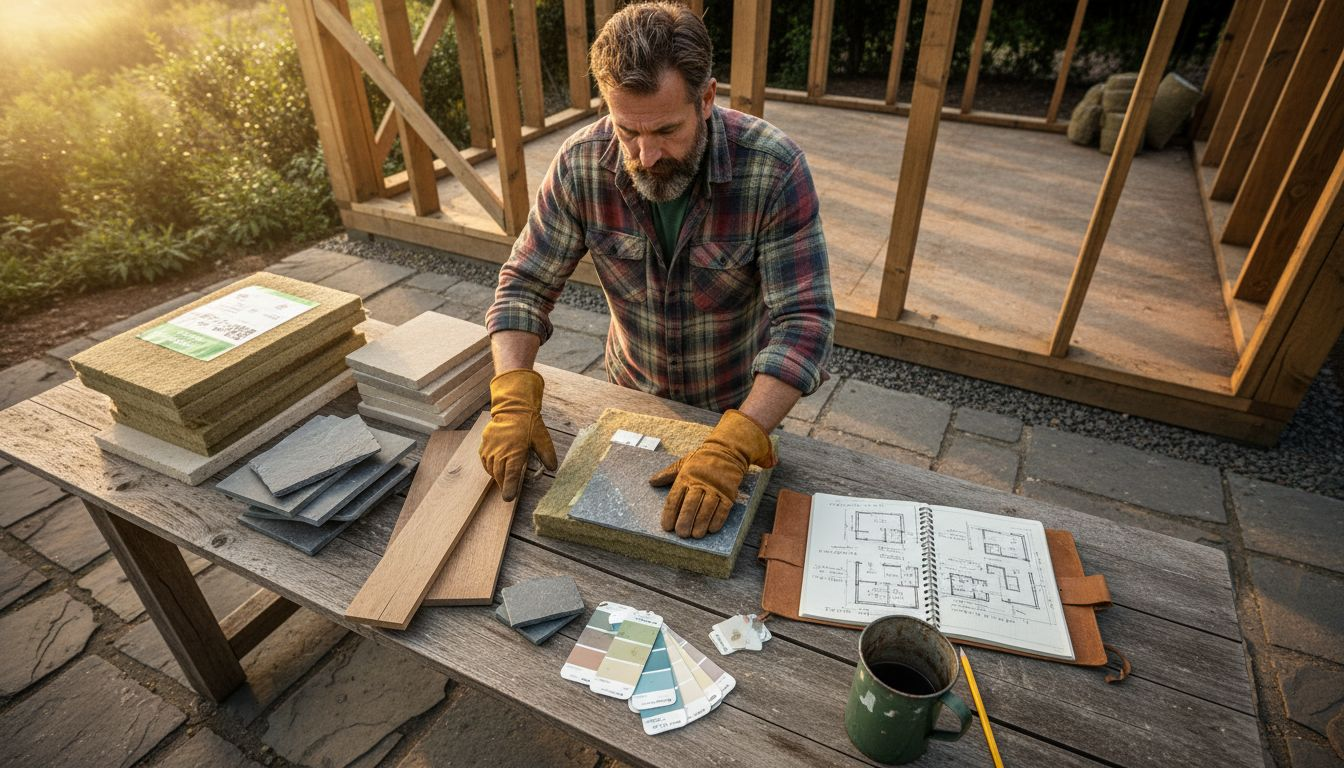
Expert suggestion: Request material samples and create a tactile mood board to visualise how different textures and colours will interact in your final cabin design.
Step 4: Review legal regulations and secure permissions
Navigating the legal landscape for garden cabin construction requires careful attention to local planning regulations and potential permission requirements. Understanding these nuanced rules will help you avoid costly mistakes and potential enforcement actions.
Garden buildings have specific legal guidelines that determine whether you need formal planning permission. Most garden cabins fall under permitted development rights, which means you can proceed without extensive bureaucratic processes if you meet certain criteria:
- Size limitations: Maximum height of 2.5 metres
- Location restrictions: Cannot be positioned forward of house’s principal elevation
- Coverage guidelines: Must not exceed 50% of garden land area
- Usage constraints: Cannot be used as permanent residential accommodation
Special considerations apply to properties in designated areas like conservation zones, listed buildings, or Areas of Outstanding Natural Beauty. These locations typically require additional formal planning permissions and may involve more complex approval processes.
Thorough research and early consultation can prevent significant legal complications and potential enforcement challenges.
Contact your local planning authority to confirm specific requirements for your property. Some councils have unique interpretations of standard guidelines, so direct communication ensures you receive accurate, location-specific advice.
Here’s a quick reference for legal and planning considerations affecting cabin projects in various property types:
| Property Context | Planning Permission Needed | Notable Restrictions | Who To Contact |
|---|---|---|---|
| Standard urban home | Rarely (permitted rights) | Height, location, area | Local council |
| Conservation zone | Frequently required | External appearance, size | Conservation officer |
| Listed building | Always required | Construction materials | Heritage authority |
| Area of Outstanding Natural Beauty | Usually required | Visual impact, placement | Planning department |
Expert suggestion: Request a pre-application consultation with your local planning department to clarify any potential grey areas in your garden cabin project.
Step 5: Verify design details and finalise specifications
The final stage of your garden cabin project involves meticulously reviewing and confirming every design aspect to ensure your vision translates perfectly from concept to reality. This critical phase bridges your initial planning with actual implementation, requiring careful attention to technical and aesthetic details.
Begin by creating a comprehensive technical specification document that captures every critical element of your cabin design. This should include:
- Dimensional specifications: Exact measurements of all structural elements
- Material quality grades: Precise timber and component specifications
- Technical performance requirements: Insulation, weatherproofing standards
- Finishing details: Colour schemes, hardware selections, interior configurations
Consult with professional designers or cabin manufacturers to review your specifications critically. They can identify potential structural challenges, recommend material improvements, and suggest optimisations that enhance your cabin’s functionality and durability.
Precision in your design documentation prevents costly modifications and ensures a smooth construction process.
Prepare digital and physical mock-ups to visualise how different design elements will interact. This might involve 3D rendering, scale models, or detailed technical drawings that allow you to explore spatial relationships and aesthetic harmony before final commitment.
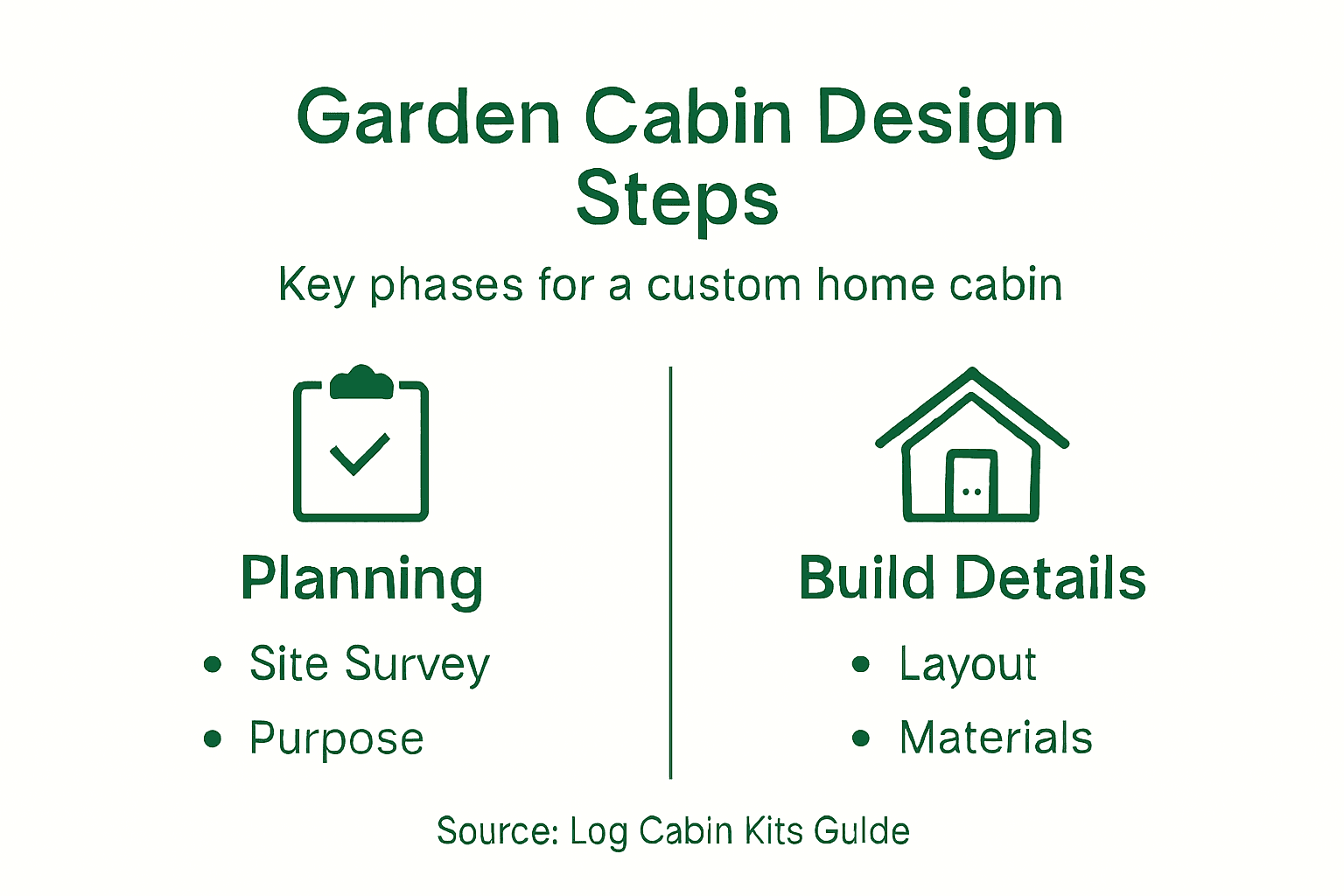
Expert suggestion: Request independent technical review of your cabin specifications to catch potential design or structural issues early in the planning process.
Step 6: Confirm quality and prepare for build
With your design finalised, the next crucial stage involves ensuring absolute quality and preparing your site for the garden cabin installation. This phase transforms your detailed plans into a tangible construction project, requiring meticulous preparation and attention to detail.
Preparing your garden for cabin installation involves several critical steps to guarantee a smooth build process. Your site preparation checklist should encompass:
- Ground preparation: Create a level, stable foundation
- Site clearance: Remove obstacles and vegetation
- Access management: Ensure clear pathway for delivery
- Utility assessment: Confirm electrical and water connections
Carefully inspect all delivered materials against your technical specifications, checking for any transportation damage or discrepancies. Quality verification means examining timber grades, checking component measurements, and confirming that every element matches your agreed design precisely.
Thorough preparation prevents delays and ensures your garden cabin installation proceeds without unexpected complications.
Coordinate closely with your installation team, providing them with detailed site access information and your technical specifications. Clear communication and site readiness are key to a successful and efficient build process.
Expert suggestion: Create a dedicated project folder with all technical documentation, site plans, and contact details to streamline communication during the installation.
Bring Your Bespoke Garden Cabin Vision to Life Today
Designing a bespoke garden cabin requires precision and thoughtful planning to address practical challenges like site assessment, legal permissions and selecting the perfect materials that blend functionality with charm. If you want to transform your garden into a personalised retreat that perfectly suits your lifestyle without compromise you need a trusted partner who specialises in custom builds tailored to your unique needs.
Explore the wide range of bespoke garden log cabins available at Log Cabin Kits. Our expertly crafted kits are designed to simplify the complex process outlined in the article including detailed specifications and site requirements. Start now and enjoy expert guidance on planning your space, selecting quality timber materials, and ensuring compliance with UK regulations. Visit our landing page to discover how easy it can be to create your dream garden cabin. Take action today and unlock the potential of your garden with a cabin built just for you.
Frequently Asked Questions
How do I assess my garden site for a bespoke cabin?
Begin by evaluating key factors such as soil type, drainage, sunlight orientation, existing vegetation, and terrain slope. Create a detailed sketch capturing all critical site characteristics to guide your design.
What should I consider when defining the purpose of my garden cabin?
Consider how you intend to use your cabin, whether as a home office, art studio, fitness space, or relaxation area. Evaluate design features like window placement, insulation, and interior layout that enhance functionality for your chosen purpose.
How can I effectively plan the layout of my garden cabin?
Create a detailed floor plan that maximises space by zoning functional areas, ensuring optimal natural lighting, integrating storage solutions, and mapping out electrical needs. This strategic planning allows for a seamless flow and enhances usability.
What legal regulations should I be aware of when building a garden cabin?
Ensure you understand local planning regulations, including size limitations, location restrictions, and usage constraints. Contact your local planning authority to confirm if any formal planning permissions are necessary for your project.
How do I verify material quality for my garden cabin?
Inspect all delivered materials against your technical specifications by checking timber grades and component measurements. Conduct this quality verification upon delivery to prevent complications during construction.


