
Blog
How to Create Outdoor Office for Your Garden Oasis


Choosing to set up a garden office is more popular than ever among British remote workers. With over 50 percent of British professionals seeking flexible workspaces outside the traditional home environment, the quality of your outdoor setup can make a real difference. Understanding each step in the process means you can avoid expensive mistakes and create a space that truly supports productivity and comfort right in your own garden.
Table of Contents
- Step 1: Assess Garden Space For Suitability
- Step 2: Select The Ideal Garden Office Building
- Step 3: Prepare The Site And Foundations
- Step 4: Install Utilities And Secure The Structure
- Step 5: Furnish And Customise Your Office Space
- Step 6: Test Functionality And Ensure Comfort
Quick Summary
| Essential Insight | Detailed Explanation |
|---|---|
| 1. Assess Garden Space First | Measure your garden layout to identify suitable positioning and environmental factors for your log cabin office. |
| 2. Choose the Right Cabin Design | Select a log cabin that meets your specific workspace needs and offers good natural light and insulation features. |
| 3. Prepare a Stable Foundation | Create a level base with the appropriate materials to ensure long-lasting stability for your garden office. |
| 4. Install Utilities Safely | Consult professionals for proper electrical installation while ensuring your space meets all safety regulations. |
| 5. Test Comfort and Functionality | Spend a full day working in your new office to identify any issues affecting comfort or productivity. |
Step 1: Assess garden space for suitability
Creating an outdoor office in your garden requires careful evaluation of your available space to ensure a successful and functional workspace. The process begins with a thorough assessment of your garden’s layout, dimensions, and potential challenges.
Start by measuring the precise area where you plan to position your garden log cabin office. Take detailed measurements of length, width, and consider the orientation relative to sunlight and existing landscape features. Site feasibility for garden buildings involves understanding local planning constraints and environmental conditions that might impact your outdoor workspace. Look for flat ground with minimal slope, good drainage, and adequate clearance from property boundaries. Consider factors like proximity to power sources, internet connectivity, and natural light exposure.
Evaluate the surrounding environment for potential distractions or disruptions. Check for noise levels, wind patterns, and visual privacy. Observe how sunlight moves across the space throughout different times of day to determine optimal positioning for your log cabin office. Consider existing vegetation, potential shade from trees, and how these elements might impact your working environment.
Professional Tip: Sketch a rough garden layout before purchasing your log cabin. Include measurements, potential obstacles, and note down sun paths to help you visualise the perfect outdoor office placement.
Your initial space assessment sets the foundation for a successful garden office transformation.
Step 2: Select the ideal garden office building
Choosing the right garden log cabin for your outdoor office is a critical decision that will impact your workspace comfort and productivity. This step involves carefully evaluating different garden office designs to find the perfect match for your specific requirements and garden environment.
Begin by considering your primary workspace needs. Will you require a compact studio or a more spacious work area? Essential elements of a garden office include factors like interior dimensions, window placement, insulation quality, and potential for customisation. Look for log cabins with robust construction that offer good natural light and proper thermal efficiency. Pay attention to roof styles some designs provide better headroom and water runoff than others.
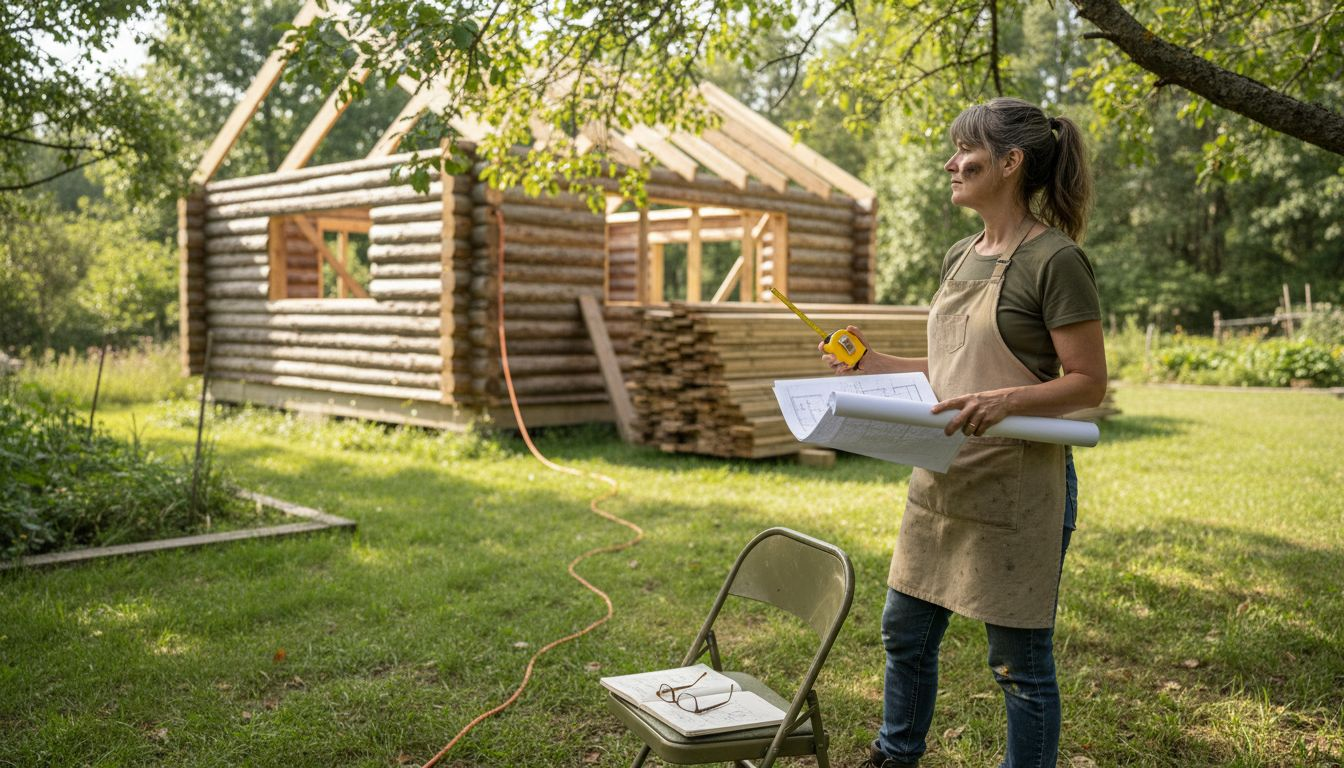
Evaluate the materials and construction quality of potential garden office buildings. Timber thickness, wood treatment, roof strength, and window quality are crucial factors. Consider log cabins made from sustainably sourced timber with weather resistant finishes. Check for features like double glazing, secure locking systems, and options for electrical installation. Your chosen building should not only look appealing but also provide a comfortable and secure working environment.
Professional Tip: Always measure your intended garden space precisely and allow at least 30 centimetres of clearance around your chosen log cabin for installation and maintenance access.
Selecting the right garden office building sets the foundation for a productive and inspiring outdoor workspace.
Step 3: Prepare the site and foundations
Preparing a solid foundation is crucial for creating a stable and long lasting garden office log cabin. This step involves carefully preparing the ground to ensure your outdoor workspace remains level, dry, and structurally sound for years to come.
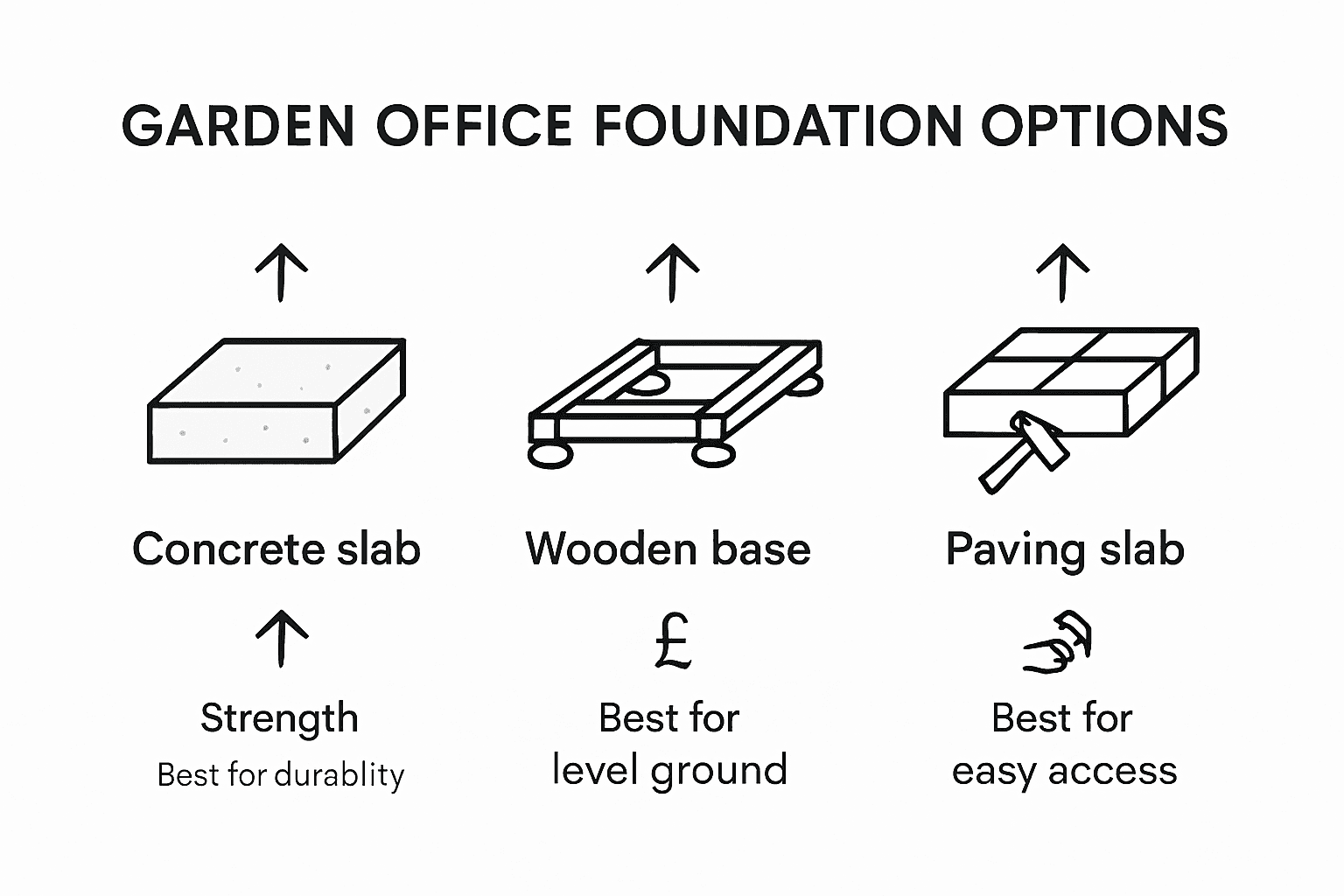
Start by thoroughly clearing the selected area of vegetation, rocks, and debris. Complete guide to planning a bespoke garden office recommends creating a level base that extends slightly beyond the log cabin’s footprint. You have several foundation options including concrete base, paved slabs, or purpose built wooden platforms. Each method has advantages concrete provides ultimate stability, paving slabs offer drainage and flexibility, while wooden platforms work well on slightly uneven ground.
Ensure proper ground preparation by first establishing a completely level surface. Use a spirit level and measuring tape to check flatness from multiple angles. Create a slight gradient away from the cabin to prevent water pooling. Consider laying a waterproof membrane beneath your chosen foundation to protect against ground moisture. When installing foundations, leave adequate ventilation space underneath the log cabin to prevent timber rot and allow air circulation.
Professional Tip: Invest in high quality landscape fabric underneath your foundation to prevent weed growth and improve drainage while providing an additional moisture barrier.
Here is a comparison of common garden office foundation types to help in your planning:
| Foundation Type | Key Advantages | Ideal Use Cases |
|---|---|---|
| Concrete Base | Maximum stability, longevity | Permanent offices, uneven ground |
| Paving Slabs | Good drainage, flexibility | Temporary structures, flat gardens |
| Wooden Platform | Quick install, adapts to slopes | Uneven ground, lighter buildings |
Careful site and foundation preparation guarantees a stable base for your dream garden office.
Step 4: Install utilities and secure the structure
Creating a functional and secure garden office involves more than just assembling a log cabin. This critical step focuses on integrating essential utilities and implementing robust security measures to transform your outdoor workspace into a professional environment.
Begin with electrical installation by consulting a qualified electrician to ensure safe and compliant power connections. Planning permissions for garden office security emphasises the importance of meeting building regulations when installing electrical systems. Run weatherproof cables underground from your main property, ensuring proper insulation and protection against moisture. Consider installing multiple power outlets, dedicated internet connections, and appropriate lighting fixtures that support productive working conditions.
Secure your garden office by implementing comprehensive safety features. Install high quality locks on doors and windows, preferably with multipoint locking systems. Add external security lighting with motion sensors to deter potential intruders. Consider additional protection such as window films, alarm systems, and reinforced glass. Ensure proper ventilation and insulation to create a comfortable working environment that protects both your structure and your equipment from temperature fluctuations and moisture damage.
Professional Tip: Always obtain necessary electrical and planning permissions before beginning utility installations to avoid potential legal complications and ensure your garden office meets all safety standards.
Careful utility installation and security implementation will transform your garden log cabin into a professional and protected workspace.
Step 5: Furnish and customise your office space
Transforming your garden log cabin into a personalised and functional workspace requires thoughtful design and strategic furnishing. This stage is about creating an environment that inspires productivity while reflecting your individual working style and aesthetic preferences.
Garden office layout ideas for UK homeowners suggest prioritising ergonomic furniture and intelligent spatial planning. Begin by selecting a high quality adjustable desk that fits your log cabin’s dimensions perfectly. Choose an ergonomic chair with proper lumbar support to prevent strain during long working hours. Consider modular furniture pieces that can be easily reconfigured to maximise your limited space and provide flexibility as your work requirements evolve.
Personalise your garden office to make it truly inspiring. Select a colour palette that promotes focus and creativity neutral tones work well for maintaining a professional atmosphere. Add personal touches through artwork, plants, and textural elements that make the space feel uniquely yours. Install good quality task lighting and consider acoustic treatments like soft wall hangings or rugs to improve sound quality and create a pleasant working environment. Ensure your technology setup includes proper cable management and charging stations to keep your workspace clean and organised.
Below is a summary of ergonomic essentials for an efficient garden workspace:
| Item | Importance | Benefit |
|---|---|---|
| Adjustable Desk | Supports custom height | Minimises strain on wrists and arms |
| Ergonomic Chair | Provides lumbar support | Reduces back pain during long hours |
| Task Lighting | Optimal visibility | Decreases eye fatigue, boosts focus |
| Cable Management | Organised workspace | Prevents trip hazards, tidy appearance |
Professional Tip: Invest in multipurpose furniture with built in storage to maximise space efficiency and maintain a clutter free garden office environment.
Your customised garden office will become a sanctuary of productivity and personal expression.
Step 6: Test functionality and ensure comfort
The final stage of creating your garden office involves comprehensive testing to guarantee a comfortable and fully functional workspace. This critical phase ensures your log cabin meets both practical working requirements and personal comfort standards.
Begin with a thorough electrical and technological assessment. Test all power outlets, internet connections, and lighting fixtures systematically. Verify that your technology setup supports seamless working conditions and that electrical systems function correctly under various load conditions. Inspiring garden office examples for UK homeowners highlight the importance of creating a reliable technological environment that supports professional productivity.
Conduct a comprehensive comfort evaluation by spending extended periods working in your new garden office. Check temperature regulation by monitoring thermal performance during different times of day and weather conditions. Assess acoustic qualities by testing sound insulation and identifying any potential noise disruptions. Evaluate ergonomic factors including desk height, chair comfort, and overall workspace layout. Make necessary adjustments to lighting, seating, and equipment positioning to optimise your working environment.
Professional Tip: Schedule a full day of work in your garden office before declaring it complete. This allows you to identify and resolve any subtle comfort or functionality issues that might not be immediately apparent.
Thorough testing transforms your garden log cabin from a structure into a genuinely functional workspace.
Transform Your Garden Into the Ultimate Outdoor Office
Struggling with finding the perfect garden space or choosing the ideal log cabin office that fits your needs and style? You are not alone. Many face challenges such as assessing site feasibility, ensuring a solid foundation, and creating a secure yet comfortable environment to boost productivity outdoors. Our bespoke and custom garden buildings at LogCabinKits.co.uk are designed to overcome these exact obstacles, offering quality timber cabins that combine durability with tailored features.
Ready to bring your garden office vision to life today Explore our diverse range of garden buildings that perfectly balance robust construction, smart layouts, and elegant design. Whether you want expert advice on site preparation or want to customise your workspace for ultimate comfort visit LogCabinKits.co.uk now to start creating a garden office that truly enhances your working lifestyle. Don’t wait to enjoy a productive workspace right in your own garden.
Explore our solutions and begin with garden office essentials crafted just for your needs.