
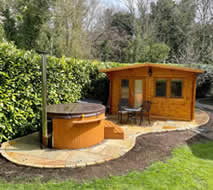
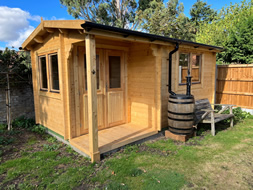
One of the most frequently misunderstood aspects of purchasing a log cabin, garden room, home office or timber building is the UK's 2.5-metre height restriction under Permitted Development rights. Many homeowners assume that any building under 2.5 metres high automatically complies with planning regulations, while others believe that all garden buildings must remain below this height.
In reality, the rules are more nuanced. The permitted height of a timber building depends on several factors, including its distance from neighbouring boundaries and the style of roof being used.
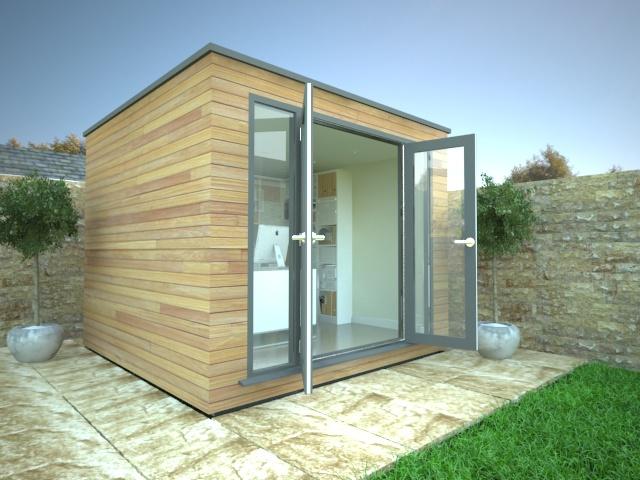
This guide provides a detailed explanation of how the 2.5m rule works and examines the differences between flat roof, pent roof and apex roof configurations.
The Foundation of the 2.5m Rule
In England, many detached garden buildings can be erected under Permitted Development rights without requiring planning permission. These rights apply to structures such as:
- Log cabins
- Garden offices
- Garden rooms
- Timber garages
- Workshops
- Studios
- Storage buildings
However, specific height limitations apply.
The most important rule states that if any part of the building is located within 2 metres of a property boundary, the maximum overall height of the structure must not exceed 2.5 metres.
This restriction applies regardless of roof style.
Understanding the Boundary Measurement
The 2-metre measurement is taken horizontally from the nearest point of the building to the boundary line.
The boundary may be:
- A garden fence
- A wall
- A hedge line
- The legal property boundary
If any part of the building falls within this 2-metre zone, the entire structure becomes subject to the 2.5-metre height restriction.
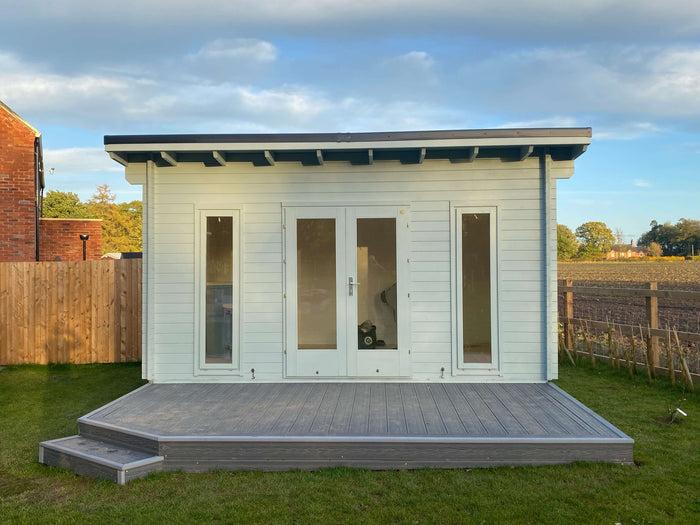
This often influences the design choice between flat roof and apex roof buildings, particularly in smaller gardens where space is limited.
How Building Height Is Measured
Height is measured from the highest natural ground level immediately adjacent to the building.
Measurements are generally taken to the highest point of the roof structure.
This means:
- Flat roofs are measured to the top of the roof.
- Pent roofs are measured to the highest edge of the roof.
- Apex roofs are measured to the ridge.
Artificially lowering ground levels to gain additional height may attract scrutiny from planning authorities.
Flat Roof Buildings and the 2.5m Rule
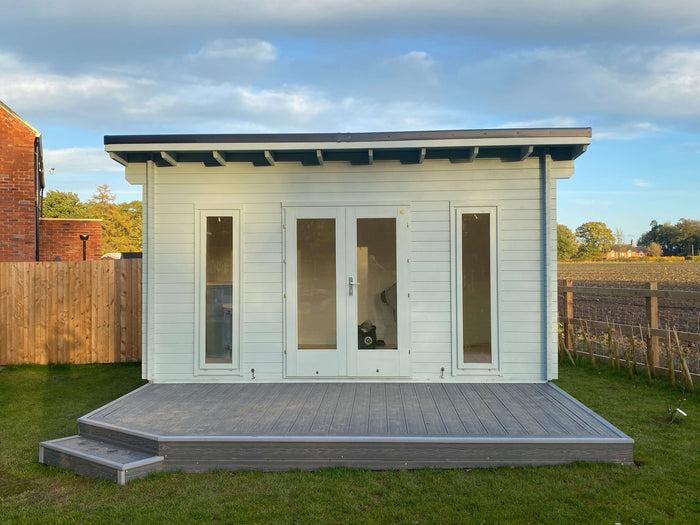
Flat roof buildings have become increasingly popular due to their contemporary appearance and their ability to maximise internal headroom while remaining within planning restrictions.
For buildings positioned within 2 metres of a boundary, flat roofs offer a significant advantage.
Because the entire roof structure remains at a uniform height, designers can often achieve generous internal ceiling heights while remaining below the 2.5-metre threshold.
A typical example may include:
- External height: 2.45m
- Internal ceiling height: approximately 2.2m to 2.3m
- Full-height glazing
- Contemporary appearance
This makes flat roof buildings one of the most popular choices for garden offices and modern garden rooms located near boundaries.
Pent Roof Buildings and Height Restrictions
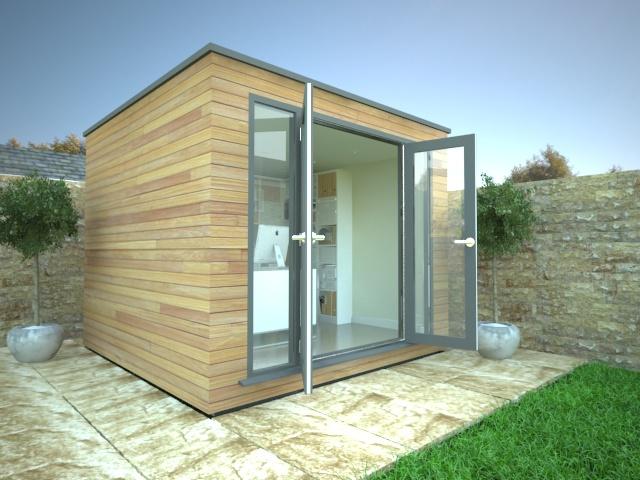
Pent roofs feature a single sloping roof plane, usually falling from front to rear or side to side.
They offer a modern appearance while providing improved rainwater drainage compared with true flat roofs.
When positioned within 2 metres of a boundary, the highest point of the pent roof must still remain below 2.5 metres.
For example:
- Front wall height: 2.5m
- Rear wall height: 2.3m
- Total roof height: 2.5m maximum
This arrangement creates a greater sense of interior volume while maintaining compliance with permitted development requirements.
Many manufacturers favour pent roof designs because they combine contemporary styling with efficient use of available height.
Why Apex Cabins Face Greater Challenges
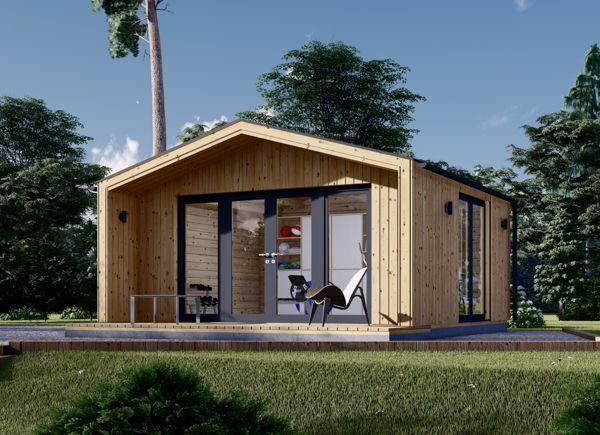
Apex roofs remain extremely popular due to their traditional appearance and excellent rainwater shedding characteristics.
However, apex cabins face unique challenges when trying to comply with the 2.5-metre restriction.
Because the roof rises towards a central ridge, valuable height is consumed by the roof pitch itself.
If the ridge must remain below 2.5 metres, wall heights often need to be reduced significantly.
This can lead to:
- Reduced internal headroom
- Smaller usable wall space
- Lower door heights
- More restrictive furniture placement
As a result, apex cabins located close to boundaries may feel noticeably smaller inside than similarly sized flat or pent roof buildings.
When the Building Is More Than 2 Metres from the Boundary
The regulations become much more flexible when a building is positioned more than 2 metres from every boundary.
Under Permitted Development rights, detached outbuildings may generally be constructed up to:
- 4 metres overall height for a dual-pitched roof building
- 3 metres overall height for any other roof type
This distinction significantly benefits apex roof structures.
An apex cabin located more than 2 metres from the boundary can often achieve a ridge height approaching 4 metres while remaining within Permitted Development allowances.
Comparing Roof Styles Under Permitted Development
| Roof Style | Maximum Height Within 2m of Boundary | Maximum Height Beyond 2m of Boundary |
|---|---|---|
| Flat Roof | 2.5m | 3m |
| Pent Roof | 2.5m | 3m |
| Apex Roof | 2.5m | 4m |
This comparison explains why larger garden buildings often benefit from being positioned further away from boundaries whenever site conditions allow.
Practical Examples
Example 1: Small Garden Office
A homeowner wishes to install a 4m x 3m office in the corner of a garden.
The building will sit 500mm from two boundary fences.
Because the structure is within 2 metres of the boundaries, the overall height cannot exceed 2.5 metres.
A flat roof or pent roof design will typically maximise usable internal space.
Example 2: Large Family Garden Room
A 7m x 5m building is planned for the centre of a large garden.
The nearest boundary is over 3 metres away.
In this scenario, an apex roof building may reach up to 4 metres in height under Permitted Development rights, creating a much larger and more impressive interior.
Example 3: Contemporary Studio
A modern studio is proposed along the rear boundary of a property.
The owner wishes to avoid planning permission.
A pent roof design with a maximum height of 2.5 metres is likely to provide the best balance of internal space, aesthetics and compliance.
The Impact on Interior Design
The height restrictions imposed by planning regulations can significantly influence the internal feel of a building.
Flat and pent roof structures often provide:
- Cleaner contemporary aesthetics
- Higher usable wall space
- Better integration of large glazing panels
- More efficient furniture placement
Apex buildings offer:
- Traditional styling
- Vaulted ceilings
- Greater architectural character
- Enhanced sense of volume when boundary distances permit
Why Modern Garden Rooms Often Use Flat Roofs
The growing popularity of contemporary garden rooms is closely linked to the 2.5m rule.
Modern flat roof designs allow homeowners to maximise usable internal space while remaining compliant with boundary restrictions.
Combined with large glazed doors, slim roof profiles and EPDM roofing systems, these buildings deliver impressive performance despite strict height limitations.
Final Thoughts
The UK's 2.5-metre height restriction is one of the most important factors influencing the design of modern timber buildings. While the rule applies equally to flat roof, pent roof and apex roof structures positioned within 2 metres of a boundary, the impact on usable interior space varies considerably.
Flat roof and pent roof buildings typically make the most efficient use of the available height and have become the preferred choice for many contemporary garden rooms and offices. Apex cabins remain an excellent option where sufficient distance from boundaries allows the additional ridge height available under Permitted Development rights.
Understanding how these regulations apply before selecting a building design can help homeowners maximise both compliance and usability while avoiding unnecessary planning complications.