

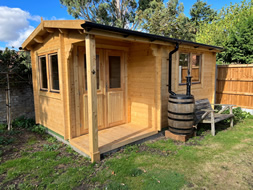
Painted Garden Room Maintenance: A Simple Yearly Routine

Looking after a painted garden room is easier than most people expect. Give it a gentle wash and a proper look-over once a year, clear the gutters in autumn, and touch up any worn paint before water gets in. Do that and the paint will protect the timber for years.
This guide walks you through it step by step. No fancy words, no special skills needed. Just a soft brush, a bucket and a dry weekend.
TL;DR
- Inspect and clean your garden room once a year, ideally in spring, and give it a quick check after storms.
- Wash painted timber with warm water, a little mild detergent and a soft brush. Skip harsh chemicals and high-pressure sprays.
- Fix small paint problems early. Flaking paint must be sanded back to a sound surface before you repaint.
- Only paint clean, dry timber in mild, dry weather.
- Clear gutters every autumn and keep plants and soil away from the walls.
Table of Contents
- Why painted timber needs a little care
- Your yearly routine at a glance
- How to clean a painted garden room
- What to check while youâre up close
- How to repaint when paint is peeling or worn
- Choosing a finish thatâs easy to live with
- Sun, rain and nearby plants
- Our view: plan the upkeep before you buy
- Found something youâd rather not fix yourself?
- Other buildings, same simple rules
- FAQ
- Sources
Why painted timber needs a little care
Paint is the raincoat for your cabin. It keeps water out of the timber, and dry timber doesnât rot. But sun, rain and frost wear paint down over time.
UV light can fade, grey and crack timber, while constant rain and damp can swell and warp it, according to Barrettineâs garden room care advice. Painted joinery can also go downhill quickly when the finish isnât looked after, as the SPABâs preventative maintenance guidance points out.
The good news is that paint rarely fails overnight. It shows signs first: dull patches, tiny cracks, a bit of bubbling. Spot these early and the fix takes an afternoon rather than a weekend.
Your yearly routine at a glance
Hereâs a simple calendar you can stick on the fridge.
| When | What to do | Time needed |
|---|---|---|
| Spring | Full walk-round inspection, wash the walls, check seals, doors and windows, check roof | Half a day |
| Summer | Touch up any worn paint in dry weather, keep vents clear, trim back plants | An hour or two |
| Autumn | Clear gutters and roof of leaves, check for condensation in double glazing | An hour |
| After storms | Quick look at roof, walls and gutters | 15 minutes |
| Every few years | Repaint or recoat, depending on the finish | A weekend |
How often should you inspect?
Once a year is a good habit, with a quick look after any big storm. For roofs, Historic Englandâs maintenance checklist suggests checking pitched roof coverings twice a year and after storms or high winds. A cabin is smaller than a house, but the same idea works: look in spring and autumn.
How often should you repaint?
Thereâs no single answer, because it depends on the paint, how many coats it has and how much sun and rain your cabin gets. Some points to guide you:
- Barrettine says protective finishes commonly need reapplying every one to two years, or at the first sign of wear. South-facing or very exposed walls may need it sooner. That advice is about its own protective treatment, so always follow the instructions on the product you use.
- The TDCA says low-build, highly permeable coatings typically resist weathering for up to 2 years, and medium-build coatings for interlocking profiles typically last up to 3 to 4 years.
- Whatever the label says, let the paint tell you. If it looks chalky, cracked or patchy, itâs time.
Want to know more about how finishes compare? Our guide on stain or paint for cabin timber goes through the choices.
How to clean a painted garden room
Cleaning is also your best inspection. As you wash each wall, youâll see exactly what condition the paint is in.
- Pick a dry, mild day. Avoid hot sun, which dries soap on the paint too fast.
- Clear the ground around the cabin. Move pots, furniture and anything leaning on the walls.
- Brush off loose dirt and cobwebs with a soft broom, working from the top down.
- Mix warm water with a little mild detergent. Conservation guidance from the Queensland Government recommends this for painted timber, applied with a soft brush.
- Test a small hidden patch first. Check the paint looks the same once itâs dry.
- Wash one wall at a time, then rinse with clean water.
- Let everything dry fully before you do anything else.
What to avoid
The same Queensland guidance advises against strong acids, strong alkalis, abrasive methods and high-pressure spray. Itâs tempting to blast a dirty cabin with a pressure washer, but that can force water into joints and strip paint. A soft brush takes a little longer and is kinder to your finish.
Donât over-clean either. Once a year is plenty. Scrubbing more often just wears the paint down.
What to check while youâre up close
Walk all the way round, then go inside. Hereâs a checklist.
Paint and timber
- Bubbling, flaking or peeling paint
- Dull, chalky patches where the finish is thin
- Dark or soft spots in the timber
- Green or black growth in shaded corners
- Gaps opening up at joints or corners
If you push a screwdriver gently into suspect timber and it sinks in easily, the wood is soft. Take that seriously and get it looked at before you paint over it.
Roof and gutters
Historic England says gutters should be cleared after heavy leaf fall, at least every autumn and preferably more often. On the roof, look for loose, slipped, broken or missing tiles and for moss. The RICS maintenance tips add that gutters and pipes should be checked for leaks when itâs raining. Stand outside with an umbrella for five minutes and watch where the water goes.

If your cabin has an apex roof, water runs off quickly down both sides, so keep the gutter ends and downpipes clear of leaves.
Windows, doors and seals
RICS suggests checking windows and doors once a year for rot in wooden frames. In autumn, look for condensation trapped between the panes of double glazing, which can mean a faulty unit.
Also look at the sealant around frames. Cracked or shrunken sealant lets water in behind the timber. A caulking inspection cycle is a handy way to plan when to check and renew seals around windows and doors.
Try the doors too. Do they open and close smoothly? Do the locks and hinges move freely? A drop of oil on hinges once a year saves a lot of sticking.
Ventilation and the ground
Air needs to move around and under a cabin. Keep vents clear of leaves and soil. RICS recommends keeping soil levels well below the damp-proof course, at least 150mm, on houses, and the idea carries over: donât let soil, mulch or turf build up against the base of your cabin walls.
Cut back climbing plants and shrubs too. They hold moisture against the paint and stop the wall drying out.
How to repaint when paint is peeling or worn
Hereâs the order that gives the best result.
- Deal with growth first. Dulux Tradeâs site instructions say to remove algae, moss and mould by scraping and brushing with a stiff-fibre brush, then apply a suitable fungicidal wash. Rinse after 24 hours and let it dry completely. Donât use wire brushes.
- Strip whatâs loose. Per Dulux Tradeâs application guidance, sound old paint can be overcoated if itâs clean and dry, but flaking or chalky paint must be stripped and sanded back to a sound surface.
- Sand and feather the edges. Little Greeneâs guidance for previously painted timber is to degrease, rinse and sand to a keyed surface with feathered edges, then repair and spot-prime bare patches before two topcoats (Little Greene exterior eggshell product guidance).
- Check the timber is dry. That same guidance specifies wood moisture below 15% and says not to paint damp or decaying wood. If you donât own a moisture meter, wait for a few dry days and donât paint anything that feels cold and damp.
- Prime bare wood, then apply two coats. Let each coat dry as the tin says.
Pick the right weather
Barrettine recommends applying exterior treatments only to clean, dry timber, avoiding rain, humidity above 80%, temperatures below 5°C or above 30°C, and windy days. Little Greeneâs paint needs at least 10°C and no rain or frost while drying. In the UK, that usually points to late spring or early autumn, on a run of settled days. Check the forecast for the next 48 hours before you open the tin.

Why the first coat matters
Dulux warns that failing to remove denatured wood, the grey, weathered surface fibres, is a common reason paint fails early. So donât skip the sanding. It feels like extra work, but itâs what makes the new coat stick.
Choosing a finish thatâs easy to live with
Not all coatings behave the same. The TDCA advises breathable, moisture-permeable coatings of 5 to 60 microns on exterior timber, rather than thick film-forming products that can trap moisture. It also says timber should be below 20% moisture content when coated, and that you should follow the coating makerâs recommendations for application and upkeep.
In plain words: choose a paint or stain made for exterior timber, let the wood breathe, and keep a note of what you used. When you next need to touch up, youâll know exactly whatâs on the walls. Our post on external finishes for garden rooms covers colours and styles, and the guide to painting a log cabin has more on the process.
Sun, rain and nearby plants
Every garden is different, so look at where yours takes a beating.
- South-facing walls get the most UV. Barrettine suggests giving these extra attention. Expect to touch them up first.
- Shady, damp corners grow algae and moss. Prune back branches so air and light reach the wall.
- Walls next to borders or lawns get splashed when it rains. A strip of gravel along the base helps water drain away.
- Overhanging trees drop leaves into gutters and onto the roof. Check these more often in autumn.
Make a habit of noting which wall always needs work first. Next year, start there.
Our view: plan the upkeep before you buy
We think the best way to enjoy a garden cabin is to choose one that suits your garden and your time. Thatâs why so many of our customers come to us for a bespoke build or a tweak to one of our standard cabins.
Want a factory-painted exterior so youâre not starting with a brush on day one? We can talk you through that. Need thicker walls, insulation or double glazing for year-round use? Those are options too. Want a layout that puts doors and windows exactly where the sun and shade suit you? Thatâs what custom design is for.
Our site says our cabins use durable, premium-quality timber and come with an anti-rot guarantee. Good timber and a good finish are a strong start. A yearly wash and a quick check keep that start going.
Our advice: whichever cabin you pick, put a spring and autumn check in your diary now. It takes very little time and helps you enjoy your garden building for longer.
Martin
Found something youâd rather not fix yourself?
If a gutter is too high to reach, or a door has dropped, or youâre thinking about a bigger cabin with a layout that works better, weâre happy to help. Our bespoke log cabin service lets you change sizes, wall thicknesses, doors and windows to suit your garden. Our site also lists a professional installation service, and delivery is free across the UK mainland.

Not sure where to start? Browse our garden log cabins, or get in touch and tell us what you need. Weâll point you in the right direction.
Other buildings, same simple rules
The routine in this guide works for most timber garden buildings. If youâre planning something different, take a look at our garden summer houses, our garden pavilions or our multi-room log cabins. Larger layouts have more walls and joints to look at, so allow a little extra time on your spring check. For more general tips, see our guide to garden building maintenance.
FAQ
Can I use a pressure washer on a painted garden room?
Itâs best not to. Conservation guidance from the Queensland Government advises against high-pressure spray on painted timber. A soft brush, warm water and mild detergent do the job without forcing water into joints or stripping paint.
When is the best time of year to repaint?
Pick a dry, mild spell. Barrettine advises avoiding rain, humidity above 80%, temperatures below 5°C or above 30°C, and windy weather. For many UK gardens, that means late spring or early autumn. Make sure the timber is clean and fully dry first.
Can I paint over peeling paint?
Not without preparation. Dulux Trade says sound old paint can be overcoated when itâs clean and dry, but flaking or chalky paint must be stripped and sanded back to a sound surface. Painting over loose paint just means the new coat will peel off with it.
How do I know if the timber underneath is damaged?
Look for dark, soft or crumbly patches, especially near the base, corners and window frames. If wood feels spongy, donât paint over it. Ask a qualified carpenter or builder to look at it, because damp or rotten timber needs repairing first.
Do I need to maintain the roof and gutters too?
Yes, and itâs quick. Historic England suggests clearing gutters at least every autumn and checking pitched roofs twice a year and after storms. Clear gutters keep water off the walls, which protects your paint.
Sources
- Maintaining a Garden Room: Essential Care Tips, Barrettine
- Preventative maintenance, SPAB
- What should I know about coated exterior timber cladding?, TDCA
- Maintenance Checklist, Historic England
- Maintenance tips, RICS
- Technical note: Inspection, cleaning and maintenance, Queensland Government
- Site work instructions, Dulux Trade
- Product application advice, Dulux Trade
- Little Greene Intelligent Exterior Eggshell Paint
- Caulking inspection cycle explained for homeowners
Recommended
- Garden Building Maintenance: Tips For Lasting Beauty
- How To Maintain Your Garden Cabin For Lasting Beauty
- Spring Log Cabin Maintenance Tips
- How To Paint A Log Cabin For Lasting Beauty And Protection
Note: This content was created using AI writing assistance and reviewed by our editorial team. Readers are encouraged to verify critical facts, professional advice, or time-sensitive information independently.