
What is a garden pod? Your complete UK guide
TL;DR:
- A garden pod is a prefabricated, insulated outdoor building that provides a year-round usable room in your garden. They arrive ready to assemble within days and can serve as offices, studios, gyms, or relaxation spaces. Most fall under permitted development rights and offer a faster, less disruptive alternative to traditional extensions.
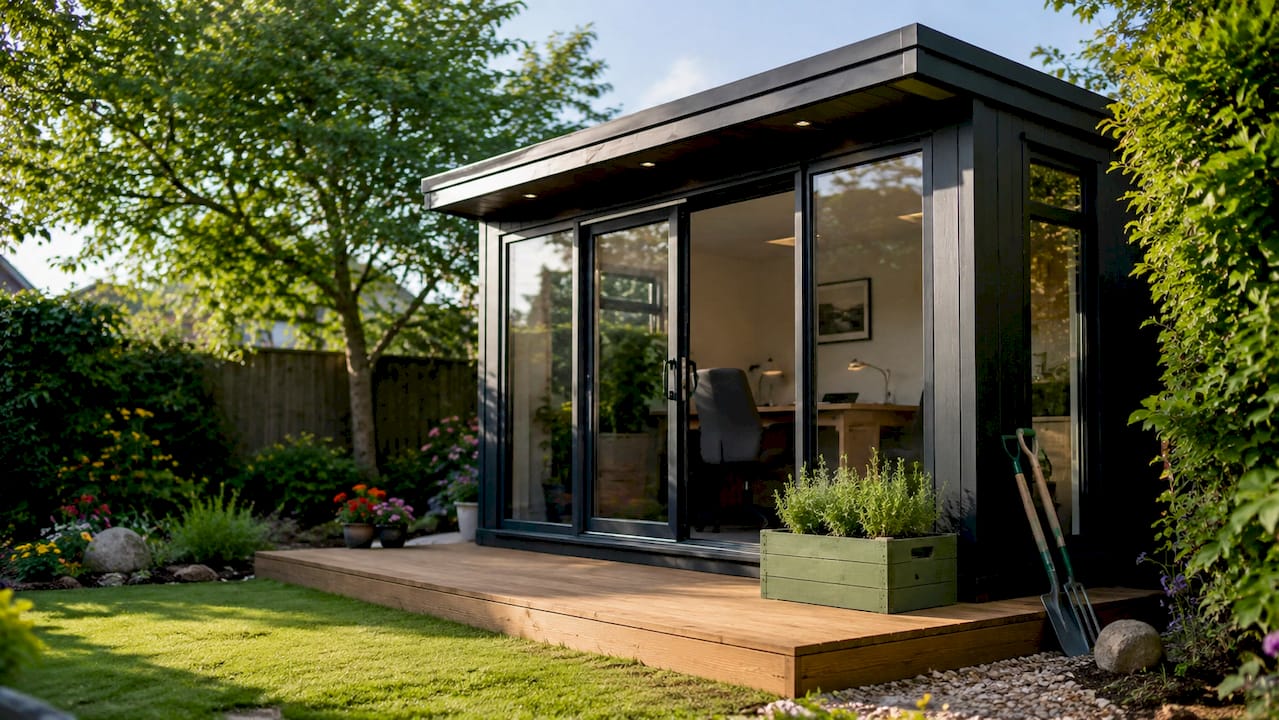
A garden pod is a small, standalone, prefabricated outdoor building designed to give you a fully usable room at the bottom of your garden. Unlike a traditional extension, a garden pod arrives ready to assemble and can be up and running within days. They’re growing fast in popularity across the UK, with homeowners using them as home offices, creative studios, gyms, and relaxation retreats. If you’ve been wondering what is a garden pod and whether one could work for your outdoor space, this guide covers everything you need to know.
What is a garden pod, and how does it differ from other garden buildings?
A garden pod is defined as a compact, insulated, self-contained garden structure built off-site and installed with minimal disruption. The industry often uses the term “garden room” interchangeably, though pods tend to be smaller and more modular in design. Both terms describe a building that sits in your garden and functions as a proper room, not just a storage space.
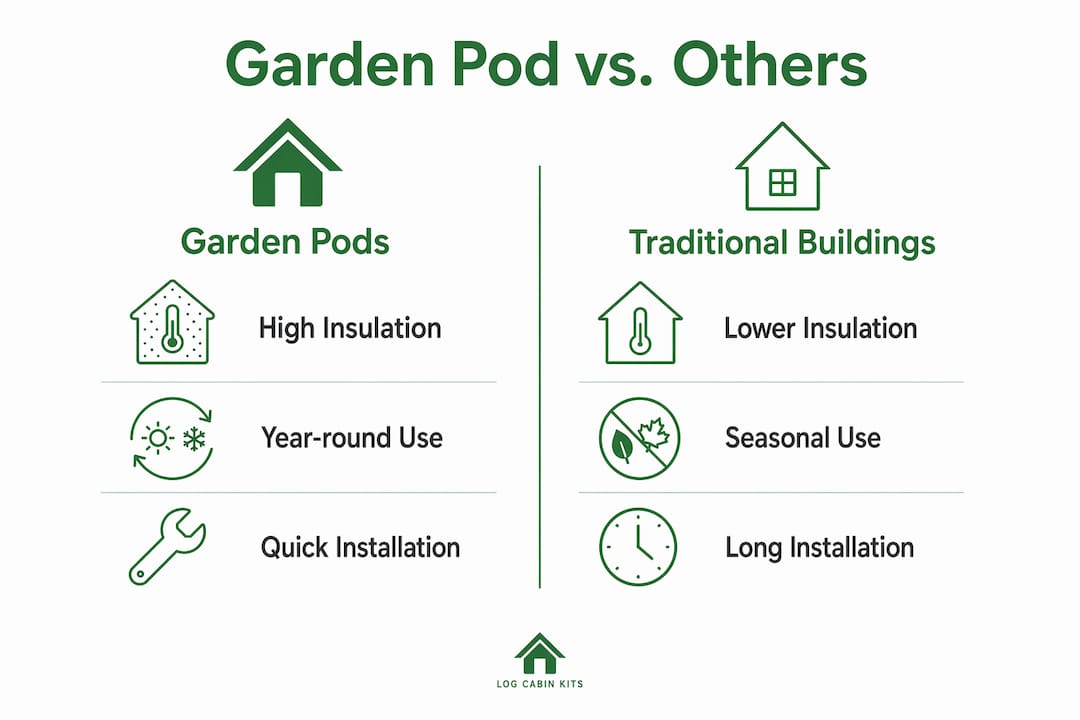
The key difference between a garden pod and a traditional garden building comes down to construction quality and year-round usability. A standard summerhouse or a basic timber cabin is typically uninsulated, making it uncomfortable from october through to april. A garden pod, by contrast, features full insulation throughout, with specifications such as 50mm floor insulation, 100mm wall insulation, and 150mm roof insulation, along with vapour barriers to regulate temperature in every season.
Prefabricated garden pods are installed quickly, often within days on a level, hardstanding base, contrasting with traditional extension builds that can take months. That speed matters enormously if you need usable space quickly without living on a building site.
Garden pod vs other garden structures: a quick comparison
| Structure | Insulation | Year-round use | Installation time | Planning permission |
|---|---|---|---|---|
| Garden pod | Full (floor, walls, roof) | Yes | Days | Usually not required |
| Summerhouse | Minimal or none | No | Days | Usually not required |
| Garden annex | Full | Yes | Weeks to months | Often required |
| House extension | Full | Yes | Months | Usually required |
Pro Tip: If you want a usable room without the disruption of a full build, a garden pod sits in the sweet spot between a basic summerhouse and a full extension.
How can you use a garden pod to enhance your home life?
Garden pods are genuinely versatile. The demand is shifting towards structures that blend indoor and outdoor space, offering entertainment areas, gyms, and multi-use family rooms well beyond just offices. That shift reflects how people actually live now, with more time spent at home and a greater need for flexible space.
Here are the most popular and practical ways people use garden pods in the UK:
- Home office. A dedicated garden office gives you a proper separation between work and home life. You close the door at the end of the day and genuinely switch off.
- Creative studio. Artists, musicians, and crafters use pods as quiet, dedicated workspaces away from household noise.
- Children’s playroom. A pod keeps toys, noise, and mess out of the main house. As children grow, the space evolves with them.
- Teenage retreat. That same playroom becomes a study space or social area for teenagers, giving them independence without leaving the property.
- Home gym. No commute, no membership fees, and no waiting for equipment. A pod gym is available whenever you want it.
- Entertainment room. A cinema setup, games room, or bar area that keeps the fun separate from the rest of the house.
- Relaxation space. Some owners pair a pod with outdoor wellbeing features to create a private retreat in the garden.
Garden pods improve remote workers’ productivity by providing ergonomic, distraction-free environments that resolve the common issues of shared living spaces. A dedicated room with a proper desk, good lighting, and a stable internet connection makes a measurable difference to focus and output.
One of the most underrated benefits of garden pods is how they evolve over time. A space that starts as a playroom can become a teenage study, then a home office, then a guest room. You’re not locked into one use.

Pro Tip: Plan your electrics for more than you think you’ll need. Adding extra sockets and a dedicated circuit from the start costs little extra but saves a lot of hassle later.
What do garden pods cost, and how does installation work?
Garden pod costs in the UK vary widely depending on size, specification, and finish. Entry-level pods start at around £3,350 for a basic insulated structure. Mid-range options typically fall between £20,000 and £38,000, covering a well-specified pod with full insulation, electrics, and quality cladding. Premium bespoke builds sit above £38,000 and can include custom layouts, high-end glazing, and specialist finishes.
The median renovation spending among UK homeowners increased by 13% to £17,000 in a 2024 survey of 1,848 homeowners, reflecting greater investment in quality outdoor structures. That figure shows garden pods are no longer a niche purchase. They sit firmly within the mainstream home improvement budget for many UK households.
| Cost bracket | Typical price | What you get |
|---|---|---|
| Entry-level | From £3,350 | Basic insulated pod, self-build kit |
| Mid-range | £20,000–£38,000 | Full spec, electrics, quality cladding |
| Premium | £38,000+ | Bespoke design, high-end glazing, custom finish |
Installation is straightforward once your base is ready. You need a level, solid hardstanding surface, either concrete or paving slabs. Most pods are delivered as a kit or in pre-built panels and assembled on site. The build itself typically takes a few days, not weeks. Garden pods generally fall under permitted development rights in the UK, avoiding the need for planning permission if standard criteria are met. Those criteria include height limits, proximity to boundaries, and the proportion of garden covered. Checking with your local authority before you order is always a sensible step.
Do garden pods add value to your property?
A well-built garden pod adds genuine value to your home, but the quality of construction is what determines how much. Surveyors and buyers look for technical quality in pods: FSC-certified cladding, vapour barriers, and professional electrical installations distinguish value-adding pods from those that simply take up garden space.
The four-season test is the clearest indicator of value. Fully insulated structures provide better property value than those usable for only six months of the year. A pod that sits cold and damp from november to march is a liability, not an asset. A pod you can use on a january morning with a coffee and a laptop is a genuine selling point.
“Year-round garden pods that provide comfort in both hot summers and cold winters command better property values and user satisfaction.” — Industry analysis, 2026
Garden pods differ from garden annexes in one important way. An annex is designed for independent living, with a kitchen and bathroom, and often requires planning permission. A pod is a single-room structure that adds flexible space without the complexity or cost of a full annexe build. For most homeowners, a pod delivers the right balance of usability and simplicity.
The market trend is clear. Buyers increasingly see a quality garden pod as a practical asset rather than a garden ornament. A bespoke, well-specified pod built from FSC-certified timber with integrated electrics and proper insulation will hold its appeal far longer than a basic structure built to a budget.
Key takeaways
A garden pod is the fastest and least disruptive way to add a fully usable, year-round room to your home without planning permission or months of building work.
| Point | Details |
|---|---|
| Garden pod definition | A small, insulated, prefabricated outdoor building installed within days on a level base. |
| Insulation matters | Full floor, wall, and roof insulation makes a pod usable all year, which directly affects property value. |
| No planning permission needed | Most pods fall under permitted development rights if standard height and boundary criteria are met. |
| Versatile uses | Pods work as offices, gyms, studios, playrooms, and entertainment spaces, and can change use over time. |
| Quality drives value | FSC-certified timber, vapour barriers, and professional electrics are what surveyors and buyers look for. |
Why I think garden pods are one of the best things you can add to a UK garden
I’ve seen a lot of garden buildings come and go over the years. What strikes me about garden pods is how honestly useful they are compared to the alternatives. A summerhouse looks lovely in july but sits empty by september. A full extension takes months, costs a fortune, and turns your home into a building site. A garden pod sits neatly between the two and actually delivers on its promise.
The thing I find most interesting is how the use case evolves. Customers who buy a pod as a home office often tell me it becomes the most-used room in the house within a year. It’s quiet, it’s separate, and it’s theirs. That psychological separation from the main house is something you genuinely can’t replicate by working at the kitchen table.
My honest advice is to spend more on insulation and electrics than you think you need to. The entry-level pods are fine for occasional use, but if you want a space that works in january as well as july, you need proper specification. Cutting corners on insulation is the single most common regret I hear from pod owners. Get it right from the start and you’ll be pleased with the result for years.
The trend towards bespoke and sustainable builds is also something I find genuinely encouraging. Customers are asking better questions now. They want to know about timber sourcing, vapour barriers, and energy efficiency. That’s a good sign. It means the market is maturing and people are buying pods that will actually last.
— Martin
Bespoke garden log cabins and pods from Logcabinkits
If you’re ready to add a garden pod or log cabin to your outdoor space, Logcabinkits makes the process straightforward. The range covers everything from compact garden rooms to large, multi-room log cabins, with bespoke options available if you want something tailored to your garden and your needs.
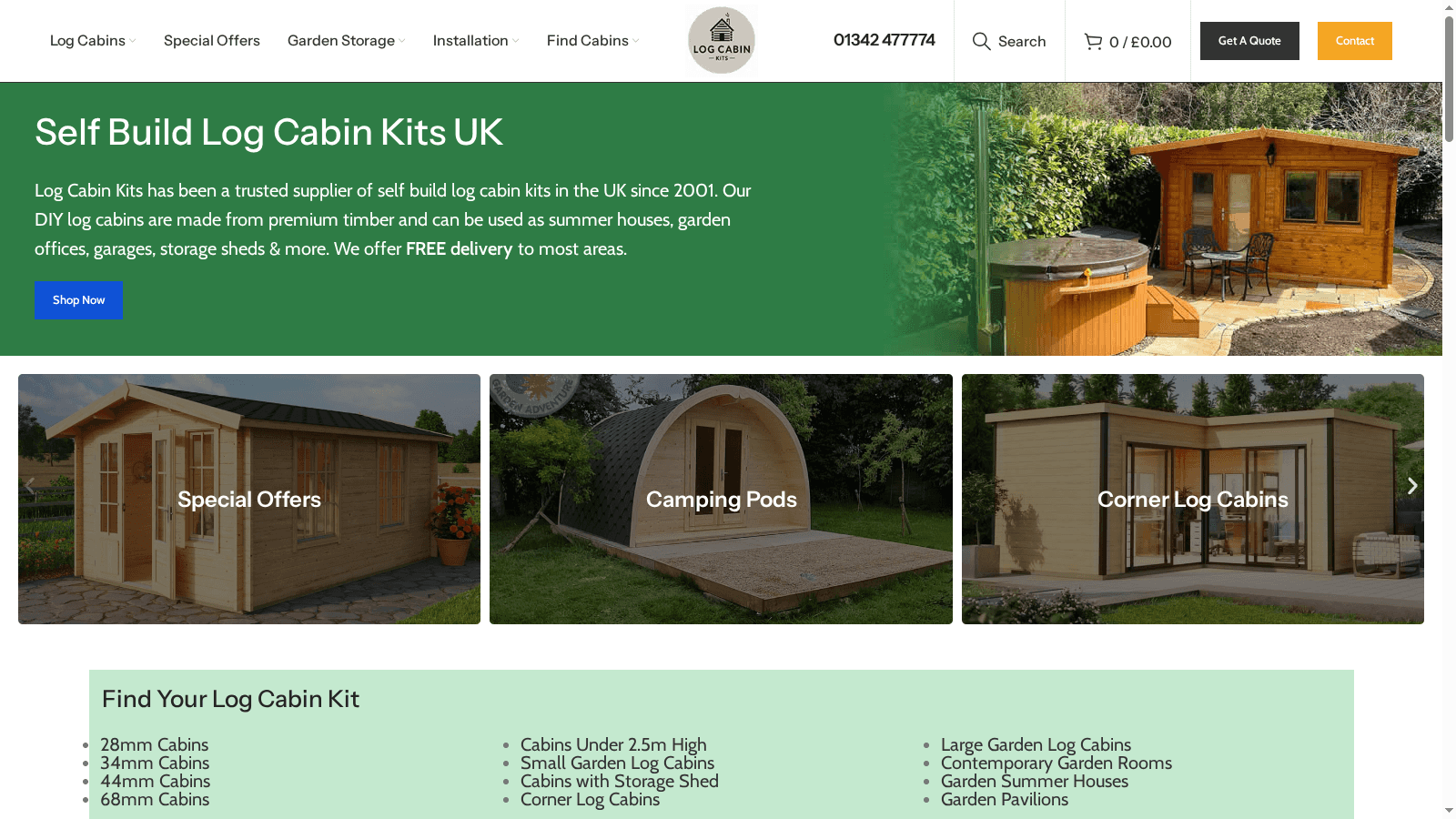
Logcabinkits specialises in bespoke garden log cabins built to your specification, with custom sizing, cladding choices, and layout options available. Whether you need a compact home office pod or a larger garden building with multiple rooms, the team can help you find the right fit. Browse the full range or get in touch to talk through your options.
FAQ
What is the garden pod definition in simple terms?
A garden pod is a small, prefabricated, insulated outdoor building installed in your garden. It functions as a proper room and is typically used as a home office, studio, or leisure space.
Do garden pods need planning permission in the UK?
Most garden pods fall under permitted development rights and do not require planning permission, provided they meet standard criteria on height, boundary distance, and garden coverage.
How long does it take to install a garden pod?
Installation typically takes a few days once a level, solid base is in place. This is significantly faster than a traditional extension, which can take several months.
Are garden pods warm enough to use in winter?
A fully insulated pod with 50mm floor, 100mm wall, and 150mm roof insulation is comfortable year-round. Pods without proper insulation are not suitable for winter use.
How much does a garden pod cost in the UK?
Prices start at around £3,350 for an entry-level kit. Mid-range pods with full specification typically cost between £20,000 and £38,000, with premium bespoke builds above that.