
Planning objections UK: a homeowner’s guide

A planning objection is a formal, written representation to your local planning authority (LPA) about a live planning application. It raises concerns that are material planning considerations, meaning they relate to land use and the public interest rather than private matters. Your objection becomes part of the public planning file, visible to the applicant and anyone else who looks.
Two things to do right now:
- Check whether your concern is a material planning consideration. If it is not, the council is unlikely to act on it, no matter how strongly you feel.
- Find the application on your local planning register and note the consultation deadline. Missing that date means your comments may not be considered before a decision is made.
You can search for applications on your council’s planning portal or through Planning Portal. Bear in mind that planning objections are not anonymous: in most English and Welsh LPAs, your name and comment text are published on the register, so write accordingly.
Key takeaways
A planning objection only carries weight when it raises material planning considerations tied to evidence and adopted policy.
| Point | Details |
|---|---|
| Definition of a planning objection | A formal, public representation to your LPA raising material planning considerations about a live application. |
| What counts as valid | Loss of light, overlooking, noise, highway safety, design, overdevelopment, heritage, flood risk, and biodiversity. |
| What does not count | Loss of property value, loss of a private view, private disputes, the developer’s identity, and construction inconvenience. |
| Best research move | Read past officer reports on your council’s register to find the policy references and reasoning that carry weight locally. |
| Logcabinkits bespoke option | Bespoke log cabin designs can be adjusted in height, materials, and layout to reduce planning risk from the outset. |
Table of Contents
- What counts as a valid planning objection in the UK?
- What the council will not normally take into account
- How to submit an effective planning objection, step by step
- How councils weigh objections and what happens next
- One research move that often changes the outcome
- The case for keeping it constructive
- Bespoke garden buildings designed to avoid planning problems
- Sources
What counts as a valid planning objection in the UK?
The planning system exists to manage development in the public interest. As Gov makes clear, decisions must be taken in accordance with the development plan unless material considerations indicate otherwise. That phrase, “material considerations,” is the key test.
Material planning considerations are not exhaustively listed in law. The Planning Portal gives typical examples, and local councils publish their own guidance. The points below are the ones that carry real weight:
- Loss of light or overshadowing. Provide measurements or a shadow diagram showing how the proposed building would affect your property at different times of year. Reference your council’s daylight/sunlight guidance if it has one.
- Overlooking and loss of privacy. Describe which windows or outdoor spaces would be affected and at what distance. A simple sketch with dimensions is more persuasive than a general complaint.
- Noise and disturbance. Relevant for commercial uses, plant equipment, or high-traffic developments. Cite the hours of operation and any local noise policy in your area’s Local Plan.
- Highway safety and parking. If the proposal increases vehicle movements or reduces visibility at a junction, say so with specifics. Reference your council’s parking standards or the National Planning Policy Framework (NPPF).
- Design, character, and visual impact. Explain how the proposal conflicts with the character of the street or conservation area. Cite the relevant Local Plan design policy by number if you can find it.
- Overdevelopment and density. Useful where a proposal covers too much of a plot or creates an overbearing presence. Compare the proposed footprint with neighbouring properties.
- Heritage, conservation, and trees. If the site is in a conservation area or near a listed building, the council must give special weight to preserving its character. Tree Preservation Orders (TPOs) are a separate but related consideration.
- Flood risk and biodiversity. Relevant where a proposal covers permeable ground or affects habitats. The NPPF has specific policies on both.
North Devon Council’s guidance lists these categories and confirms that non-planning matters are normally set aside.
Pro Tip: Find your council’s Local Plan on its website and search for the relevant policy number (for example, “DM4 — Residential Amenity”). Quoting a policy by name and number in your objection makes it much harder for an officer to dismiss.
What the council will not normally take into account
Some concerns feel very real but sit outside the planning system. Raising them in your objection does not make it stronger; it can actually dilute the points that do matter.
- Loss of property value. This is a private financial interest, not a planning consideration. If the design is genuinely poor, argue the design point instead.
- Loss of a private view. There is no legal right to a view in English planning law. If the proposal blocks light rather than just a view, that is a different matter and worth raising separately.
- Private neighbour disputes. Boundary disagreements, access rights, and party wall matters are dealt with under civil law, not planning law.
- The developer’s identity or motives. Who is building something and why they want to build it is irrelevant to whether the proposal is acceptable in planning terms.
- General dislike of the project. “I just don’t want it” carries no weight. Channel that feeling into a specific design or amenity argument if you can support it with evidence.
- Construction inconvenience. Temporary disruption from building work is not a planning consideration, though it may be covered by a Construction Management Plan condition if the application is approved.
The reframe to remember: almost every private concern has a planning equivalent. A worry about property value often reflects a genuine design or amenity issue. If you can describe the physical harm with evidence, you have a material point.
How to submit an effective planning objection, step by step
Getting your objection right is less about legal knowledge and more about being organised and specific. Here is a straightforward sequence.
-
Find the application. Go to your council’s planning register or use the Planning Portal search. Note the application reference number, the site address, and the consultation closing date. Set a reminder a few days before the deadline.
-
Read the actual documents. Download the validated drawings, the Design and Access Statement, and any supporting reports. Your objection must respond to what is actually proposed, not what you think might be proposed.
-
Structure your representation clearly. Open with your name, address, and the application reference. Write a one-sentence summary of your main concern. Then list numbered points, each following this pattern: issue → policy → fact → why it matters. Keep each point to a short paragraph.
-
Attach proportionate evidence. Dated photographs, a simple sketch with measurements, a neighbour’s supporting statement, or a short technical note all add weight. For highway concerns, a traffic count or a note from a highways engineer is worth including if you can get one. Always cite the Local Plan policy or NPPF paragraph that your evidence supports.
-
Submit through the route your LPA specifies. Most councils accept online submissions through their planning portal; some accept email or post. The Planning Portal FAQ confirms there is no single national online objection function, so always use your council’s own system. Save a copy and keep proof of submission.
Quick submission checklist:
- Application reference and site address included
- Your name and address included
- Each concern is a separate, numbered point
- Each point references a policy or standard
- Evidence attached (photos, sketches, statements)
- Submitted before the consultation deadline
Speaking at committee: if the application goes to a planning committee rather than being decided by an officer under delegated powers, you may be able to speak for a few minutes. Contact your council’s planning department to register. Most councils allow three minutes per speaker.
Pro Tip: If the applicant submits amended plans after you have objected, the council should re-consult you. Watch the application page for updates and submit a fresh response if the amendments do not resolve your concerns.
How councils weigh objections and what happens next
Understanding the decision-making process helps you set realistic expectations and choose the right tactics.
The decision-making hierarchy
Most applications are decided by a planning officer under delegated powers. The officer writes a report that sets out the proposal, lists the representations received, assesses each material consideration against the development plan and the NPPF, and reaches a recommendation. If the application is significant, controversial, or called in by a councillor, it goes to the planning committee, where elected members vote on the officer’s recommendation.
What “weight” means in practice
Officers assign weight to each material consideration based on how well it is evidenced and how directly it conflicts with adopted policy. A well-evidenced objection tied to a specific Local Plan policy carries more weight than a general concern. Numbers, measurements, and policy references all help. Buckinghamshire Council’s guidance confirms that anyone can comment and that comments are evaluated by whether they are material planning considerations.
Possible outcomes
- Approval: the application is granted, with or without conditions.
- Approval with conditions: the most common outcome for contentious applications. Conditions can restrict hours, specify materials, or require landscaping. If approval looks likely, Wealden District Council’s guidance suggests proposing specific, enforceable conditions rather than asking for outright refusal.
- Refusal: the council refuses permission, citing reasons linked to policy.
- Amended plans: the applicant modifies the proposal in response to concerns raised during consultation.
After the decision
If permission is granted and you believe the council made an error of law or process, you can apply for judicial review, though this is expensive and time-limited. If permission is refused, the applicant can appeal to the Planning Inspectorate; you will be notified and can submit further representations. Monitor the application page on the council register for updates, and read the officer’s report once it is published: it will explain exactly how your objection was considered.
Tactical tip: if you know a councillor who represents your ward, they can request that a delegated application be referred to committee. This does not guarantee a different outcome but it does give you a chance to speak.
One research move that often changes the outcome
Before you write a single word of your objection, spend twenty minutes on your council’s planning register looking at past decisions. This one step consistently produces stronger, more focused representations.
-
Go to your council’s planning register and search by street name or ward. Filter by application type (householder, full planning, and so on) to find cases similar to yours.
-
Open the officer’s report for each relevant decision. These are published documents. Read the policy references the officer used, the weight given to each concern, and the reasoning behind the recommendation.
-
Note the policy numbers and the language the officer used. If a previous report refused permission partly on grounds of “unacceptable impact on the amenity of neighbouring occupiers contrary to Policy DM4,” use that exact policy reference in your objection.
-
Check whether the decision was delegated or made by committee. Committee decisions sometimes reflect local political factors as well as pure policy; delegated decisions are almost always policy-driven. PlanningLens explains how to access planning history and officer reports through council portals.
Worked example: suppose you are objecting to a two-storey rear extension on the grounds of overshadowing. You search the register and find that three years ago an officer refused a similar extension two streets away, citing a 25-degree rule and a specific Local Plan policy. You quote that policy, reference the previous decision by application number, and attach a sketch showing your property falls within the same shadow zone. That objection is far harder to dismiss than “it will block my light.”
Pro Tip: Check whether previous similar applications were decided by committee or by delegated officers. If committee decisions in your area consistently refused on design grounds, that is a signal that design arguments carry political as well as policy weight locally.
The case for keeping it constructive
Most people who object to a planning application feel strongly about it, and that is completely understandable. But the objections that actually change outcomes tend to be calm, specific, and offer a way forward.
Officers read dozens of representations for every significant application. A submission that mirrors the structure of an officer’s report, cites the right policies, and proposes a workable condition rather than demanding outright refusal is simply easier to act on. Emotional language does not add weight; it can make an otherwise strong case look less credible.
The same principle applies to garden buildings, which is where many neighbourhood planning disputes begin. A well-designed structure, positioned thoughtfully and built to an appropriate scale, rarely attracts objections in the first place. When it does, the strongest defence is always the same: evidence, policy, and a constructive alternative.
Bespoke garden buildings designed to avoid planning problems
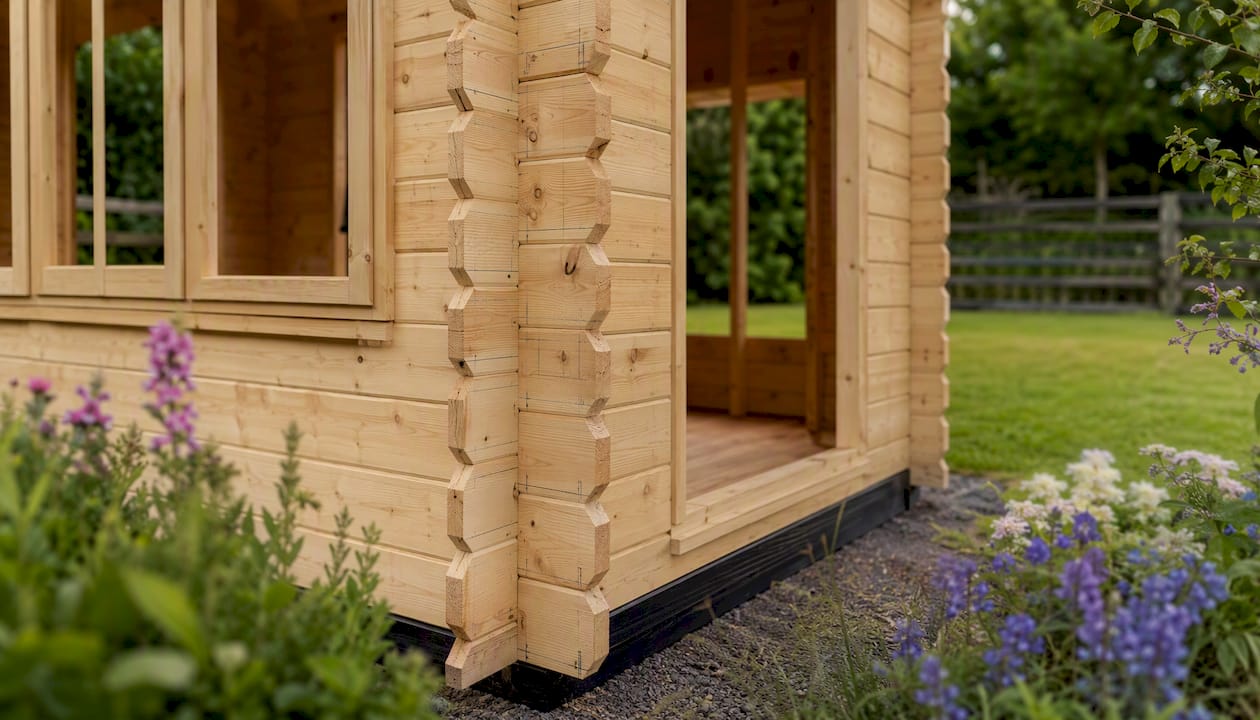
If your concern involves a neighbour’s proposed garden building, or you are planning one yourself and want to get it right, design choices make a significant difference. Height, roof form, materials, and window placement all influence whether a structure is likely to attract objections or sail through without a second glance.

Logcabinkits specialises in bespoke garden log cabins that can be adjusted to suit your plot and your local planning context. Lower ridge heights, solid side walls to protect neighbours’ privacy, and natural timber finishes that complement the surrounding area are all options. If you are in a conservation area or working within tight permitted development limits, a custom build is often the most practical route.
The planning permission guide for garden buildings covers permitted development rules in plain language, and the small log cabin planning permission guide goes into detail on the design parameters that keep most cabins within permitted development. Browse the full garden log cabins range or get in touch with the team to discuss bespoke adjustments that work with your local policy.
Sources
The sources below are the best starting points for finding an application, understanding the rules, and reading past decisions.
- Gov
- Comment on or object to a planning application — Buckinghamshire Council
- Planning objections are not anonymous — Planning Guard
This article is general information, not a substitute for advice from a qualified lawyer. Consult a qualified legal professional about your own circumstances before acting on anything here.