
How to Soundproof a Multi-Room Log Cabin: Creating Acoustic Privacy Between Offices, Games Rooms and Workshops
One of the most common questions asked by buyers considering a multi-room log cabin is whether noise will travel through the internal partition wall. It is an understandable concern. After all, one room may be intended as a quiet garden office while the adjoining room serves as a home gym, workshop, music room or family games space.
Fortunately, multi-room garden buildings offer several opportunities to significantly improve acoustic separation. While standard interlocking timber partition walls already provide a reasonable degree of sound reduction, additional upgrades can dramatically increase privacy and comfort.
This guide explains how internal timber partitions function, why sound travels through buildings and the most effective methods for reducing noise transmission between rooms.
How Internal Log Cabin Partition Walls Work
Most quality multi-room log cabins use the same interlocking timber construction system for internal partitions as they do for external walls.
These partitions typically consist of:
- Interlocking tongue and groove wall logs.
- Precision-machined corner joints.
- Continuous timber construction.
- Structural fixing points integrated into the building frame.
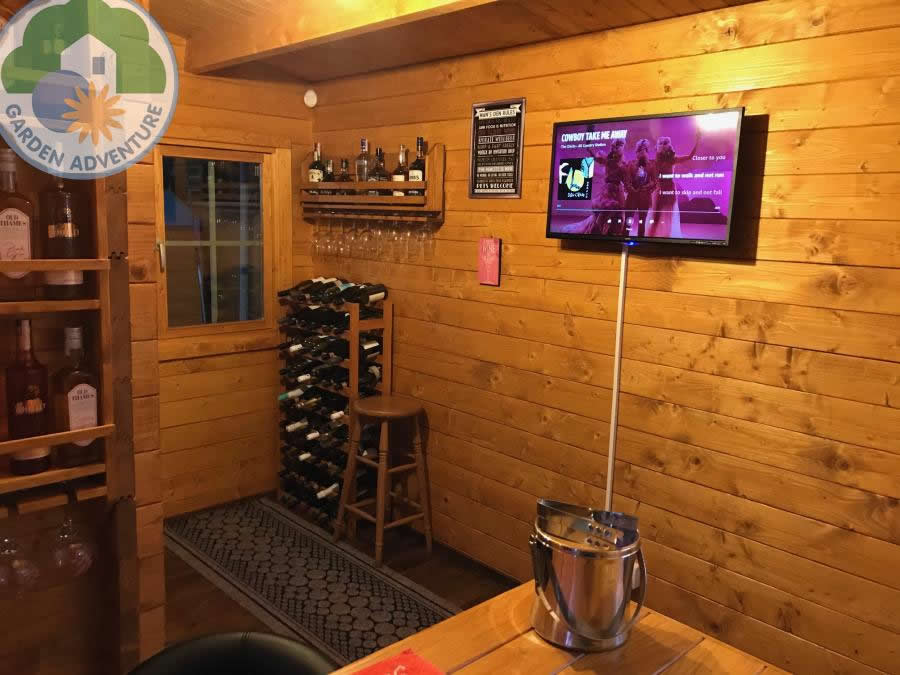
This construction method naturally provides greater mass than lightweight plasterboard partitions commonly found inside many homes.
As a result, standard log cabin partitions often perform better acoustically than people initially expect.
Why Sound Travels Between Rooms
To understand how soundproofing works, it helps to understand how sound moves through a structure.
Noise transmission generally occurs through two primary mechanisms:
- Airborne sound.
- Structure-borne vibration.
Airborne sound includes speech, music, television noise and conversation.
Structure-borne sound occurs when vibrations travel through solid materials such as walls, floors and framing systems.

Effective acoustic design aims to reduce both forms of transmission.
How Effective Are Standard Timber Partitions?
For many users, the standard partition supplied with a log cabin may provide adequate privacy.
Typical activities such as:
- General office work.
- Reading.
- Light exercise.
- Craft hobbies.
- Storage use.
often coexist comfortably without further modification.
However, more demanding applications may benefit from additional soundproofing.
Examples include:
- Video conferencing.
- Music practice.
- Power tool use.
- Gaming rooms.
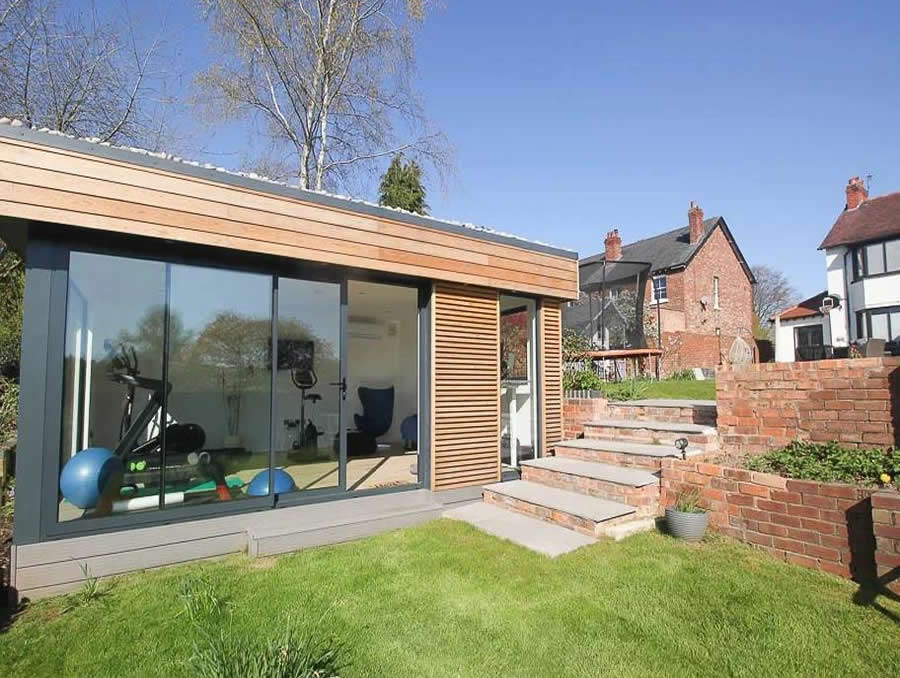
- Home gyms.
The Most Effective Soundproofing Strategy
The best acoustic performance is achieved by combining three key principles:
- Mass.
- Absorption.
- Decoupling.
Each plays an important role in reducing sound transmission.
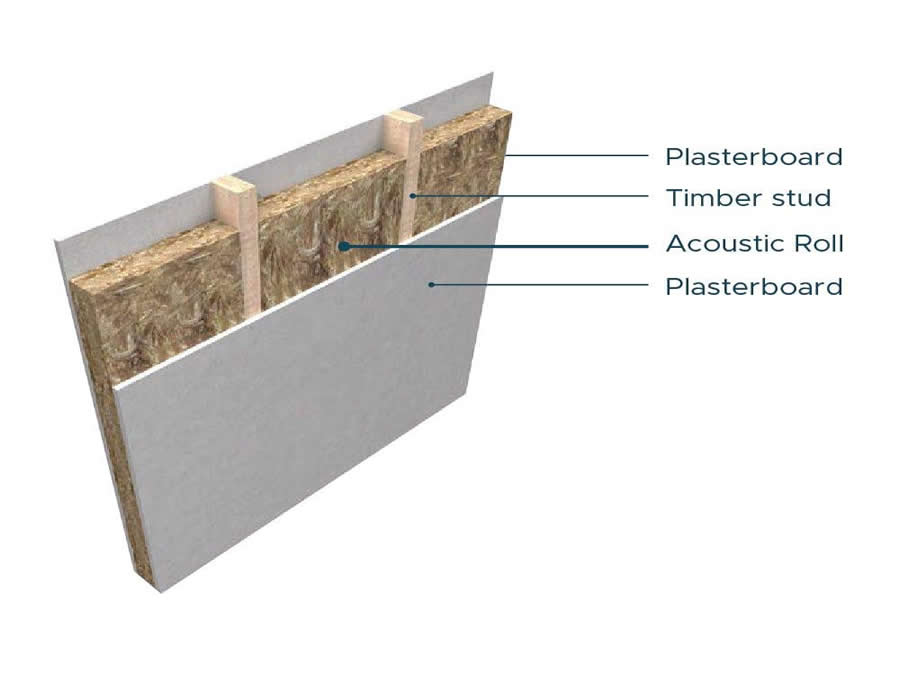
Step 1: Build an Independent Timber Stud Wall
One of the most effective upgrades is to construct a secondary timber stud wall alongside the existing log partition.
This approach creates separation between the original partition and the finished acoustic lining.
Benefits include:
- Reduced vibration transfer.
- Improved acoustic isolation.
- Additional space for insulation.
- Higher overall sound reduction.
The stud wall should be independent wherever possible rather than rigidly fixed to the partition.
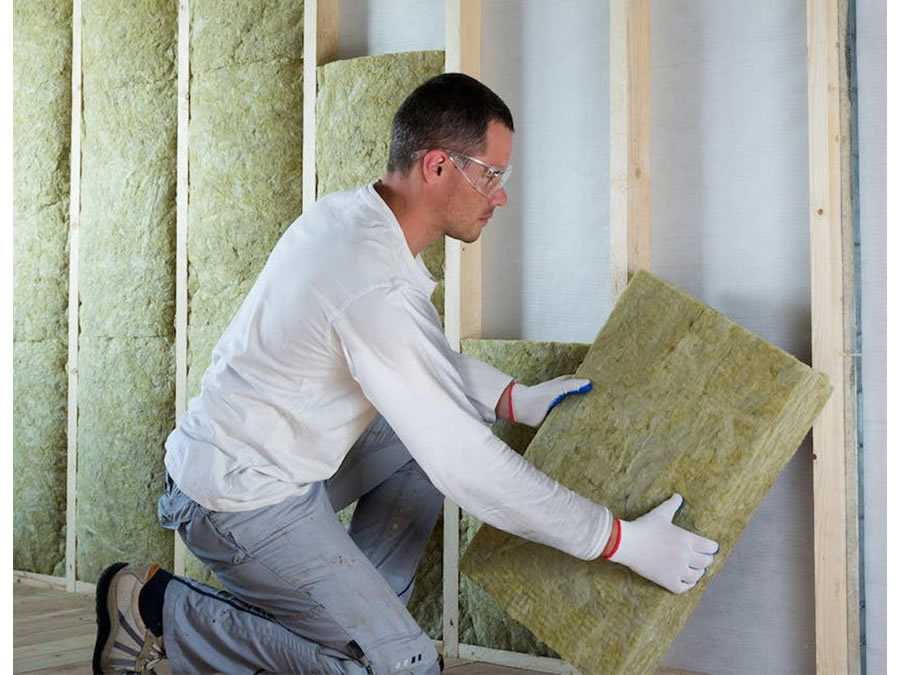
Step 2: Install Acoustic Mineral Wool
Once the stud framework is in place, the cavity should be filled with acoustic mineral wool.
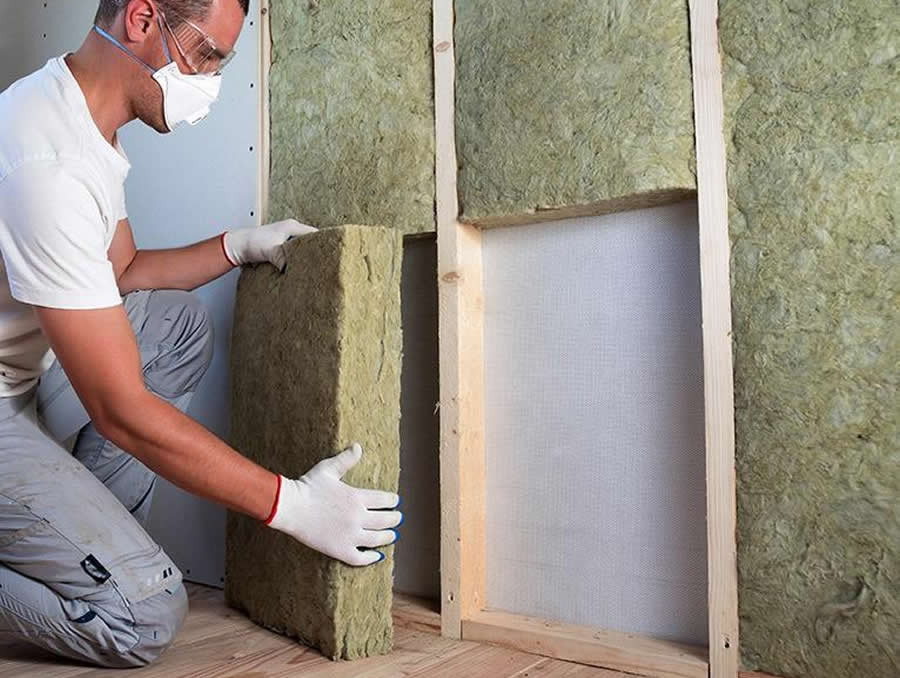
Acoustic mineral wool differs from standard thermal insulation.
Its dense fibrous structure helps absorb sound energy before it passes through the wall.
Key benefits include:
- Reduction of airborne noise.
- Improved speech privacy.
- Excellent fire resistance.
- Long-term acoustic stability.
This single upgrade often delivers a significant improvement.
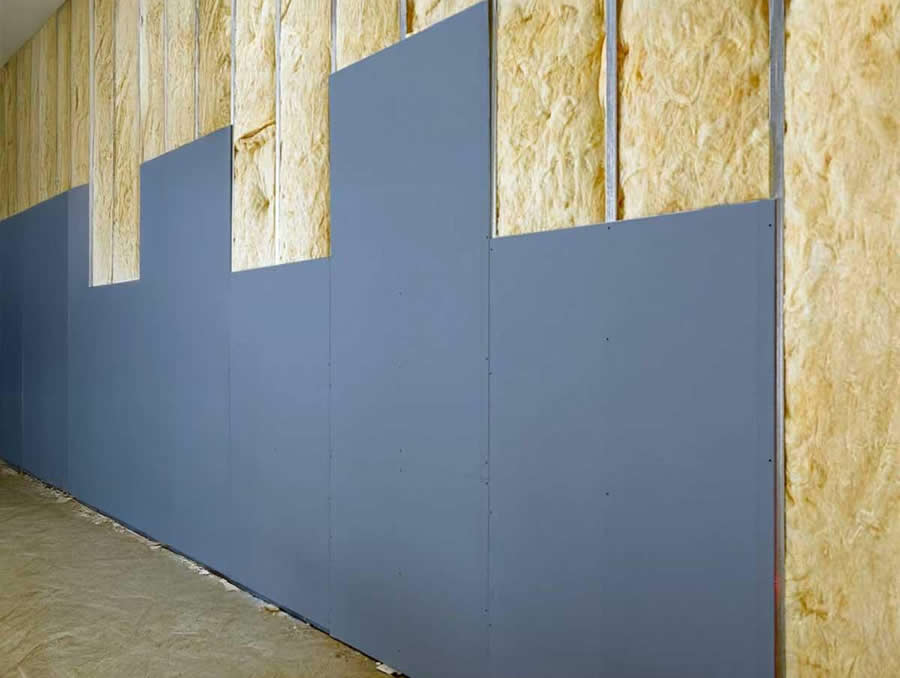
Step 3: Add Acoustic Plasterboard
The next stage involves increasing wall mass.
Acoustic plasterboard is specifically engineered to reduce sound transmission.
Compared with standard plasterboard, acoustic variants are denser and heavier.
This additional mass helps block sound waves more effectively.
For best results:
- Use acoustic-rated boards.
- Stagger joints where possible.
- Seal perimeter gaps carefully.
- Consider double-layer installations.
Step 4: Seal Air Gaps
Even a small gap can compromise an otherwise excellent soundproofing system.
Air gaps commonly occur around:
- Wall junctions.
- Electrical outlets.
- Door frames.
- Skirting boards.
- Service penetrations.
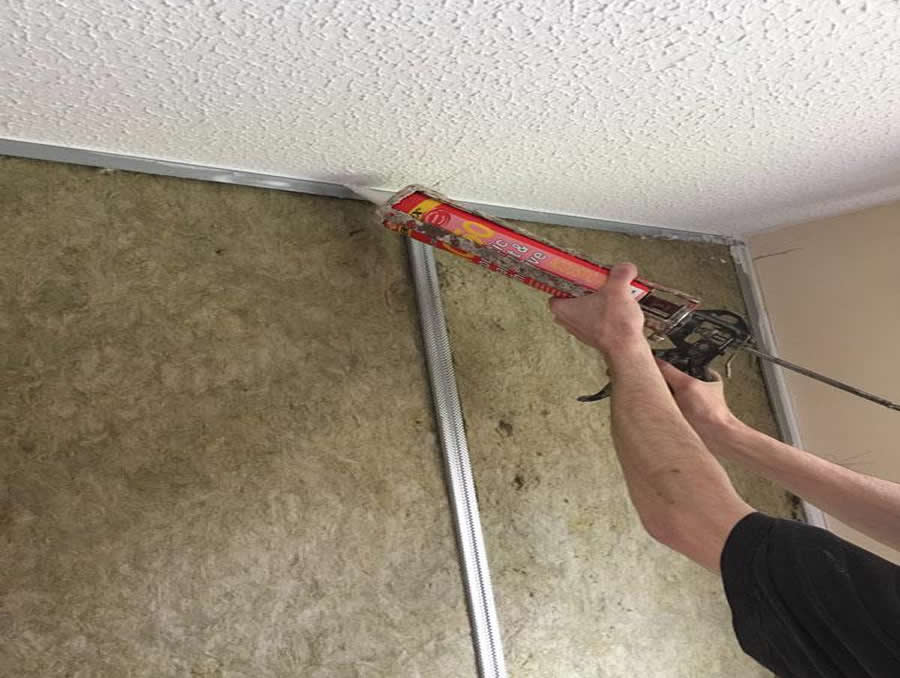
Using acoustic sealant helps maintain the integrity of the acoustic barrier.
The Importance of Door Selection
Many homeowners focus entirely on the wall itself while overlooking the door.
A lightweight internal door often becomes the weakest acoustic element.
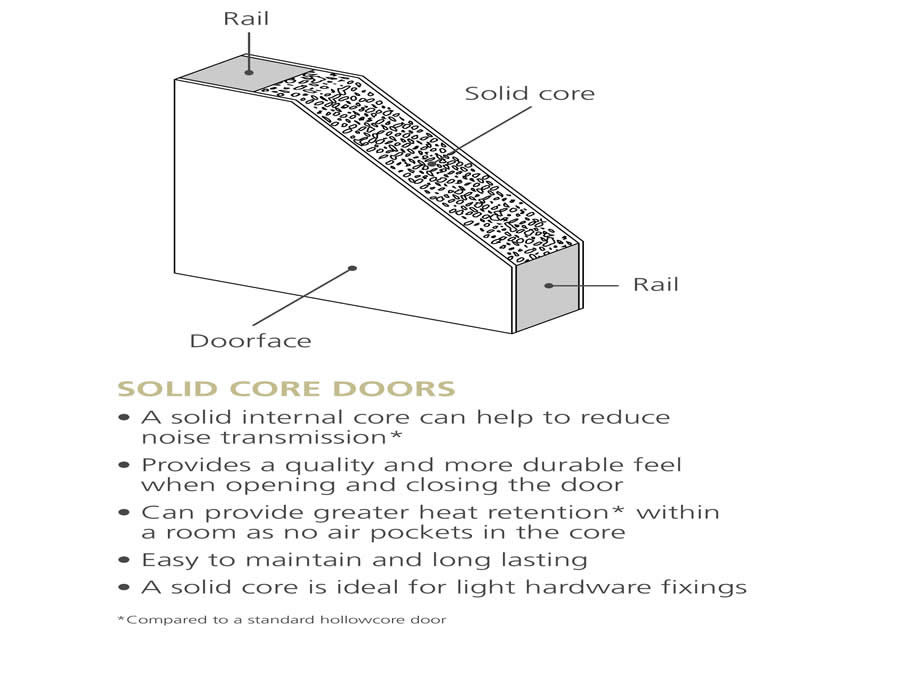
For improved privacy consider:
- Solid-core timber doors.
- Compression seals.
- Drop-down acoustic thresholds.
- High-quality door hardware.
Upgrading the door can produce surprisingly noticeable improvements.
Workshop and Office Combinations
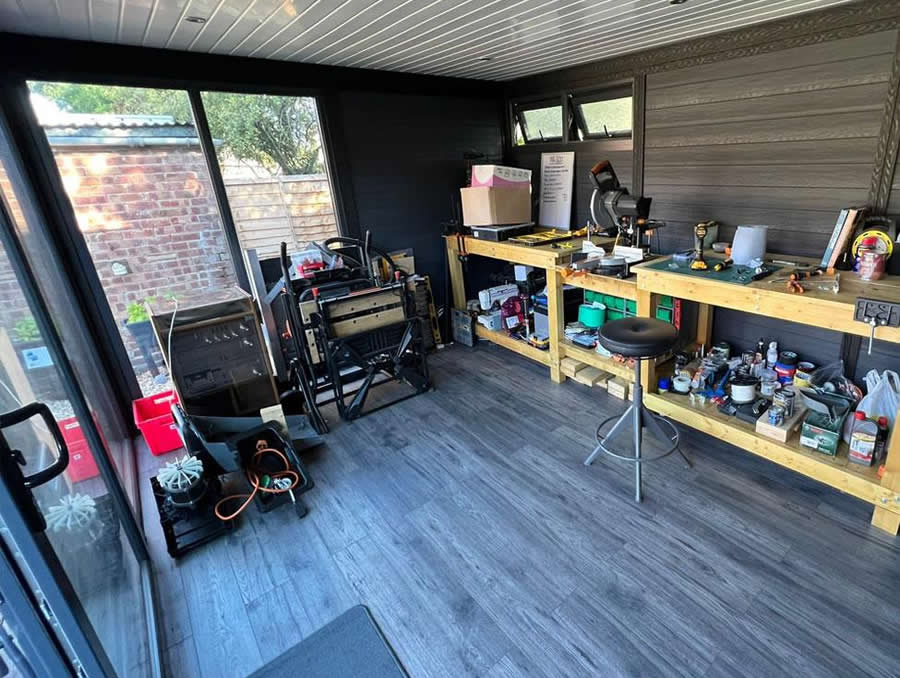
One of the most common applications for soundproofing is separating a workshop from a home office.
Power tools generate both airborne noise and structural vibration.
In these situations, combining:
- Acoustic insulation.
- Independent framing.
- Dense wall linings.
- Floor isolation measures.
can significantly improve working conditions.
Games Room and Office Combinations
Family entertainment spaces often generate intermittent bursts of noise.
Televisions, gaming systems and social gatherings can easily disrupt concentration in an adjacent workspace.
Acoustic wall upgrades provide an effective solution while maintaining the flexibility of a multi-room layout.
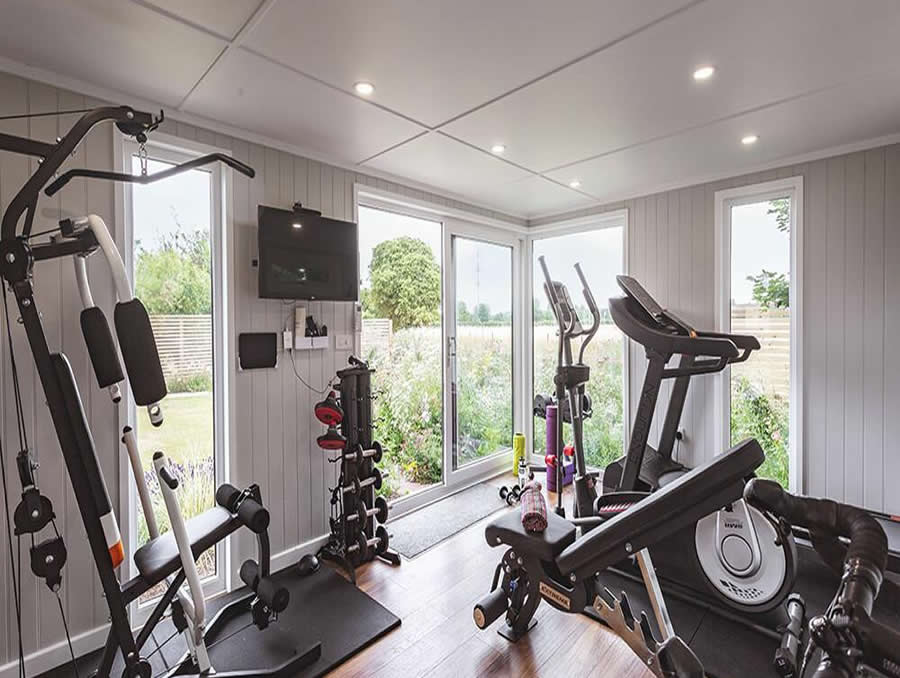
Home Gym and Office Combinations
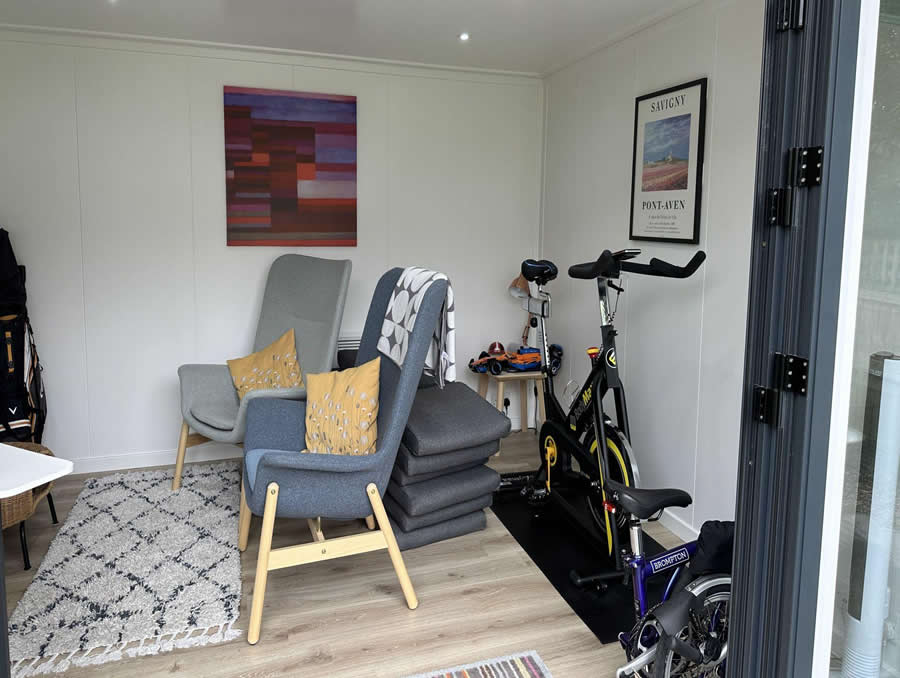
Exercise equipment introduces unique challenges.
Treadmills, rowing machines and weight training can generate significant vibration.
Additional measures may include:
- Rubber flooring systems.
- Equipment isolation pads.
- Floating floor details.
- Strategic equipment positioning.
How Much Sound Reduction Is Realistic?
Complete soundproofing is rarely achievable without specialist commercial systems.
However, most homeowners do not require total silence.
The goal is usually to:
- Reduce distractions.
- Improve privacy.
- Allow simultaneous room usage.
- Create comfortable working conditions.
A properly upgraded partition can dramatically reduce conversation levels and significantly improve acoustic separation.
Conclusion
Standard interlocking timber partition walls already provide a solid starting point for multi-room log cabins. However, homeowners seeking greater acoustic privacy can achieve substantial improvements through a combination of independent stud framing, acoustic mineral wool insulation and dense acoustic wall linings.
When combined with careful sealing and appropriate door upgrades, these techniques can transform a noisy multi-purpose cabin into a highly functional building where offices, workshops, gyms and family entertainment spaces coexist comfortably.
For buyers planning a quiet office alongside a more active room, investing in acoustic upgrades during construction is often one of the most valuable improvements that can be made to a multi-room garden building.