
Small Log Cabin Interior Design Ideas: How to Transform a Compact Cabin into a Garden Office, Creative Studio or Reading Retreat
One of the greatest advantages of small log cabin kits is their ability to transform even the smallest area of a garden into a highly functional living space. While larger cabins naturally provide greater flexibility, a carefully planned compact cabin can often feel surprisingly spacious when thoughtful interior design principles are applied.
Whether you are planning a productive garden office, an inspiring creative studio or a peaceful reading snug, the key is maximising every square metre without creating a cluttered environment. Strategic furniture selection, intelligent storage solutions and careful use of natural light can dramatically influence how spacious and comfortable a small cabin feels.
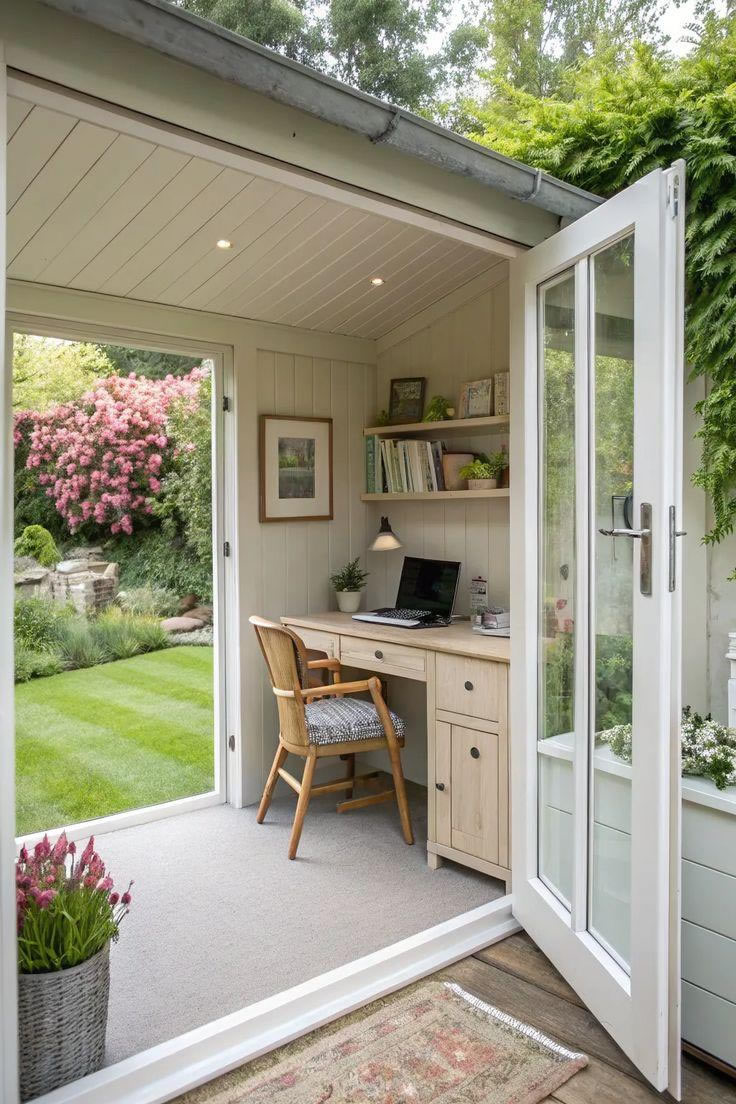
This guide explores practical design techniques that help homeowners transform a compact garden building into a versatile and enjoyable space while making the most of every available inch.
Why Small Cabins Can Feel Bigger Than You Expect
Many buyers initially worry that a small cabin footprint will feel restrictive. In reality, good design often has a greater influence on usability than overall floor area.
A well-planned 3x3m cabin can often feel more spacious than a poorly arranged 4x4m building.
Successful small-space design focuses on:
- Maintaining clear floor space.
- Reducing visual clutter.
- Maximising daylight.
- Using multi-functional furniture.
- Creating efficient storage solutions.
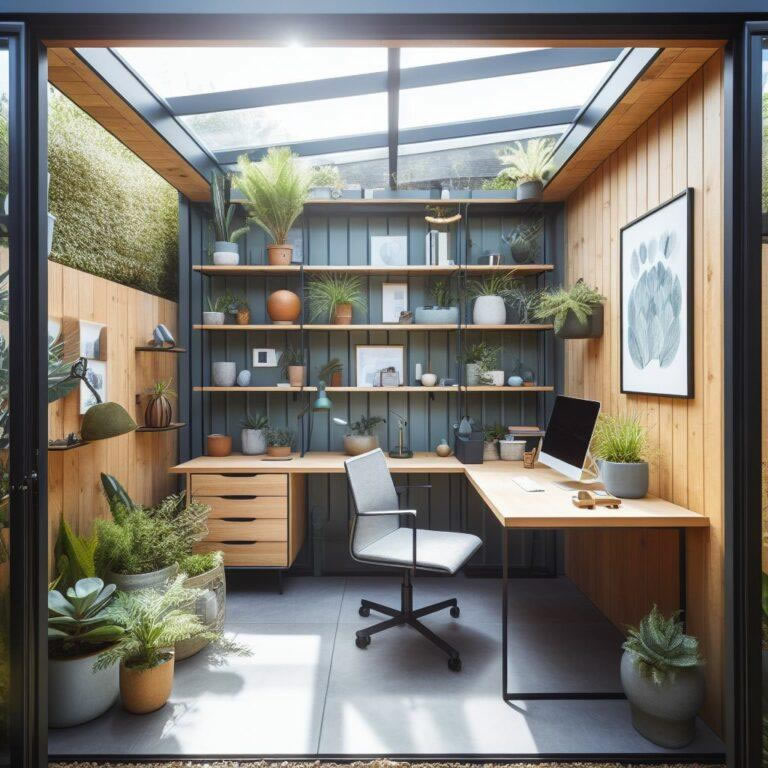
By prioritising these principles from the outset, even a modest garden building can feel bright, open and inviting.
Creating the Perfect Micro Garden Office
One of the most popular uses for small log cabins is as a dedicated home office.
A separate workspace helps create a clear distinction between home life and work while providing a quiet environment for concentration.
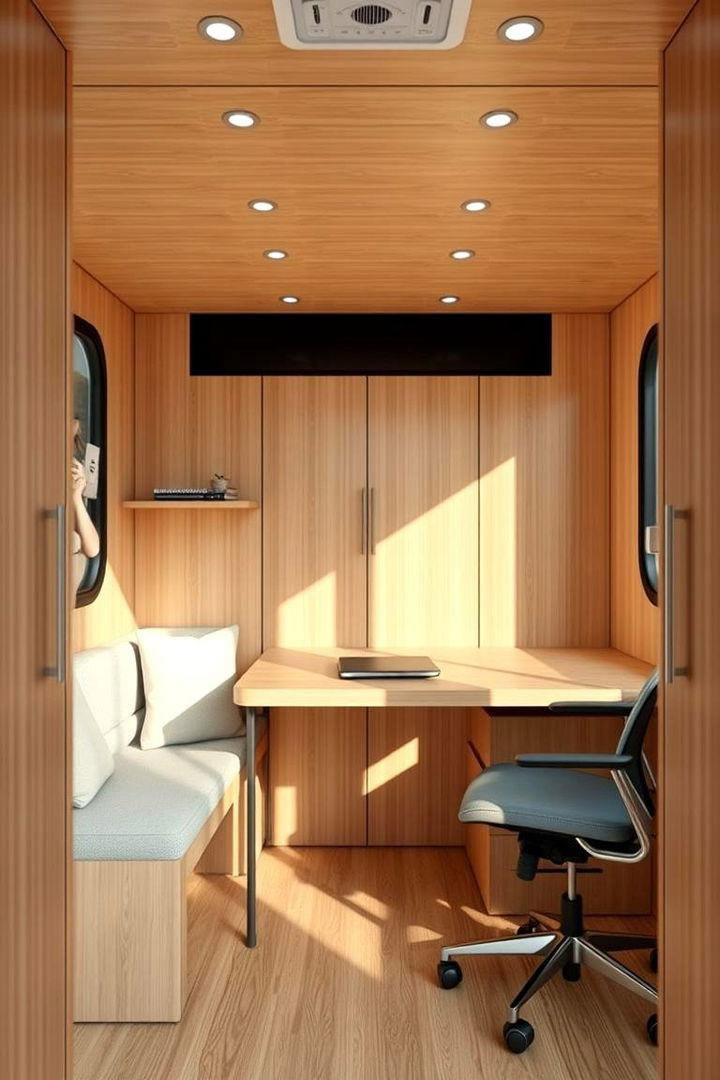
Use a Corner Desk
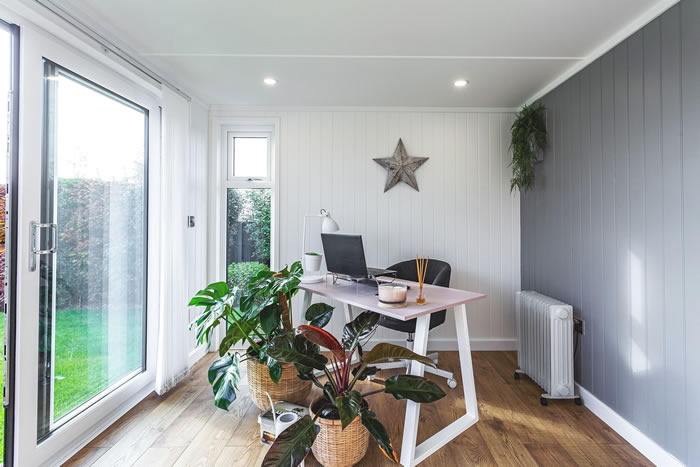
Corner desks are particularly effective in smaller cabins because they utilise space that might otherwise be wasted.
Benefits include:
- Increased work surface area.
- Improved circulation space.
- Better cable management.
- Enhanced storage opportunities.
Positioning a desk near a window can also improve wellbeing and productivity by providing natural daylight throughout the working day.
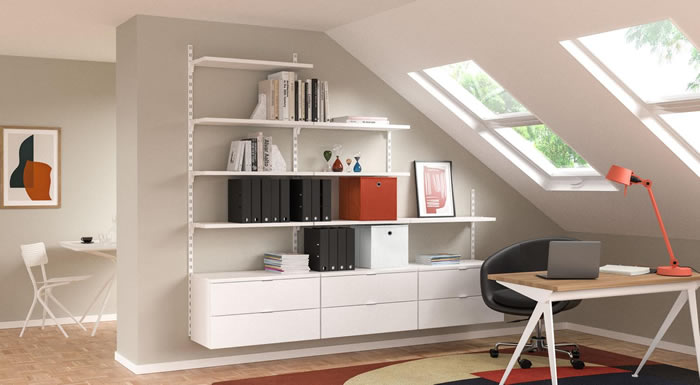
Install Wall-Mounted Storage
Floor-standing cabinets can quickly dominate a small office.
Wall-mounted shelving offers a more efficient solution.
Floating shelves help keep the floor clear while providing space for:
- Books.
- Documents.
- Office equipment.
- Decorative accessories.
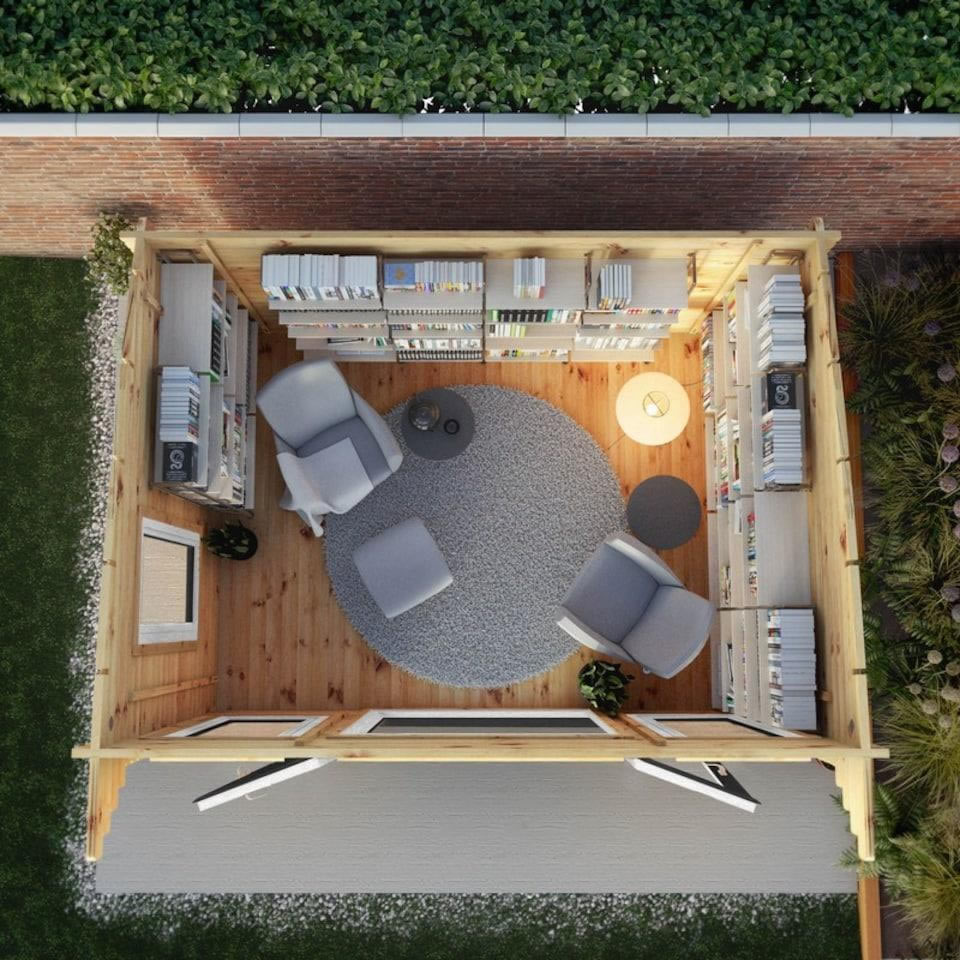
Keep Technology Minimal
Modern wireless technology makes it easier than ever to create a clean workspace.
Using compact equipment reduces visual clutter and preserves valuable desk space.
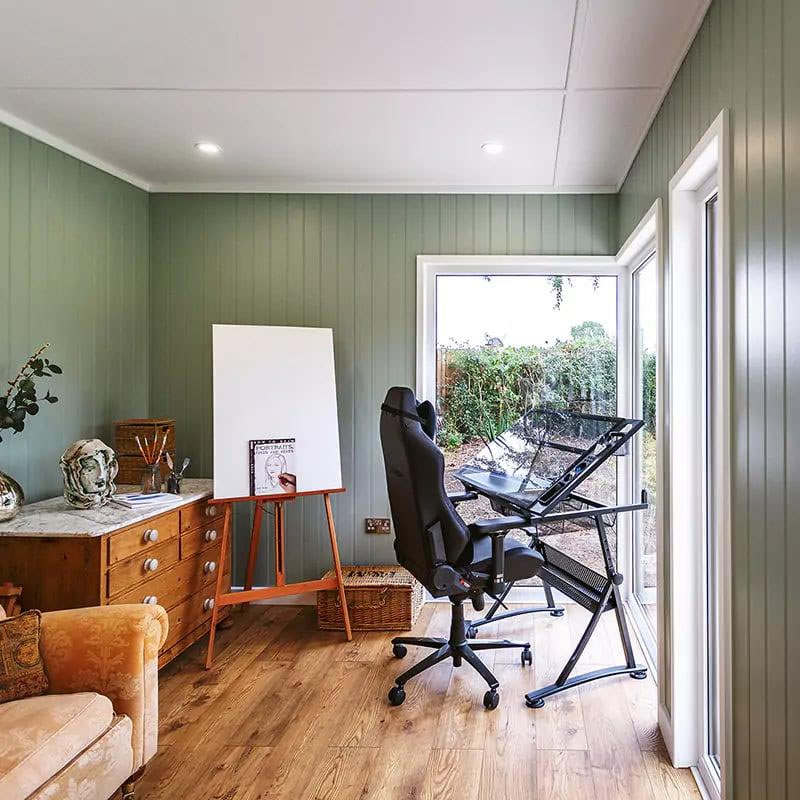
Designing a Minimal Creative Studio
Artists, designers, writers and makers often seek a dedicated creative environment that encourages focus and inspiration.
Small cabins are ideally suited to this purpose because they create a physical separation from everyday distractions.
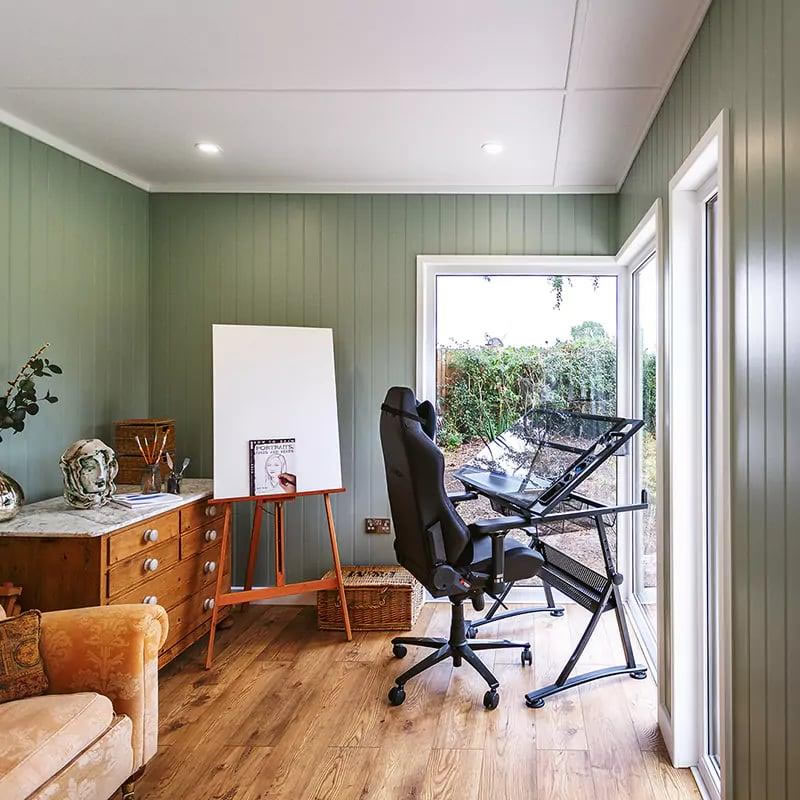
Prioritise Natural Light
Natural light is one of the most valuable design features in any creative workspace.
Large windows help:
- Improve colour accuracy.
- Reduce eye strain.
- Enhance mood.
- Create a stronger connection with the garden.
Whenever possible, position the primary work area adjacent to glazing rather than directly facing a wall.
Choose Flexible Furniture
Creative projects often require different working arrangements.
Foldable tables, mobile storage units and lightweight seating allow the room to adapt quickly to changing requirements.
This flexibility is particularly valuable within smaller cabins where space must serve multiple functions.
Utilise Vertical Storage
Walls represent a significant storage opportunity.
Using pegboards, shelving systems and hanging organisers can free valuable floor space while keeping tools and materials easily accessible.
Transforming a Cabin into a Reading Snug
Not every cabin needs to be productive.
For many homeowners, the ideal garden retreat is a comfortable space dedicated to relaxation.
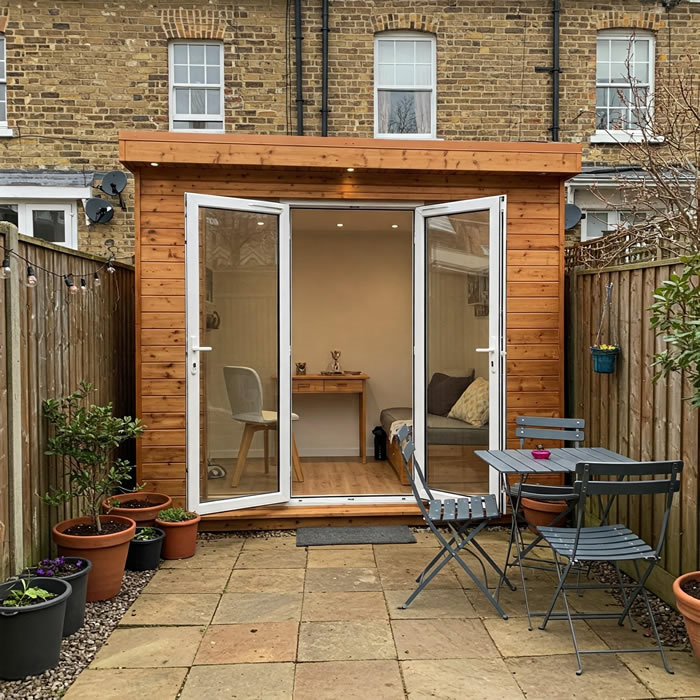
A reading snug provides a peaceful environment where books, natural surroundings and comfortable furniture take centre stage.
Select the Right Seating
Comfort should be the primary consideration.
Popular options include:
- Armchairs.
- Compact loveseats.
- Window seats.
- Reading recliners.
Position seating to take advantage of views across the garden whenever possible.
Use Built-In Storage
Books can quickly occupy a surprising amount of space.
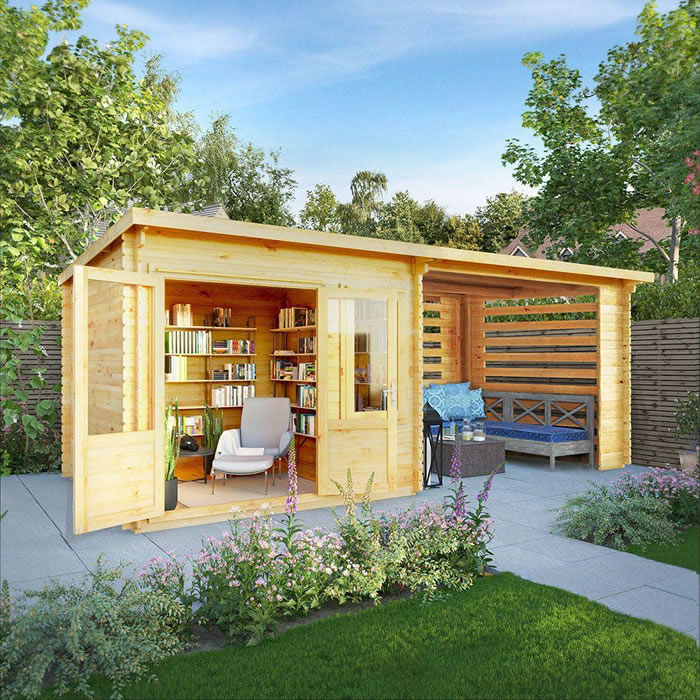
Built-in shelving around windows or along rear walls helps maximise storage capacity without reducing usable floor area.
Create Layers of Lighting
While natural light is desirable during the day, evening use requires thoughtful lighting design.
A combination of:
- Reading lamps.
- Wall lights.
- Warm LED lighting.
- Accent lighting.
can create a comfortable atmosphere without overwhelming the space.
The Power of Dual-Purpose Furniture
Multi-functional furniture is one of the most effective tools available when designing small interiors.
Examples include:
- Storage benches.
- Fold-down desks.
- Sofa beds.
- Nesting tables.
- Ottomans with hidden storage.
These solutions help maximise functionality while minimising clutter.
Making the Most of Natural Light
Natural light is arguably the most powerful design element in any compact cabin.
Large windows create the illusion of additional space by visually extending the room beyond its physical boundaries.
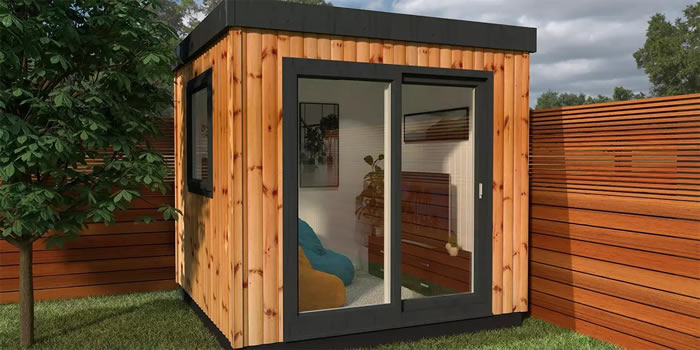
To maximise daylight:
- Choose larger windows where possible.
- Use light-coloured finishes.
- Avoid blocking glazing with furniture.
- Position desks and seating near windows.
- Consider dual-aspect glazing.
The result is a brighter and more welcoming interior.
Colour Choices for Small Cabins
Colour has a significant impact on perceived space.
Light tones generally help interiors feel larger.
Popular choices include:
- Soft whites.
- Warm greys.
- Natural timber finishes.
- Muted earth tones.
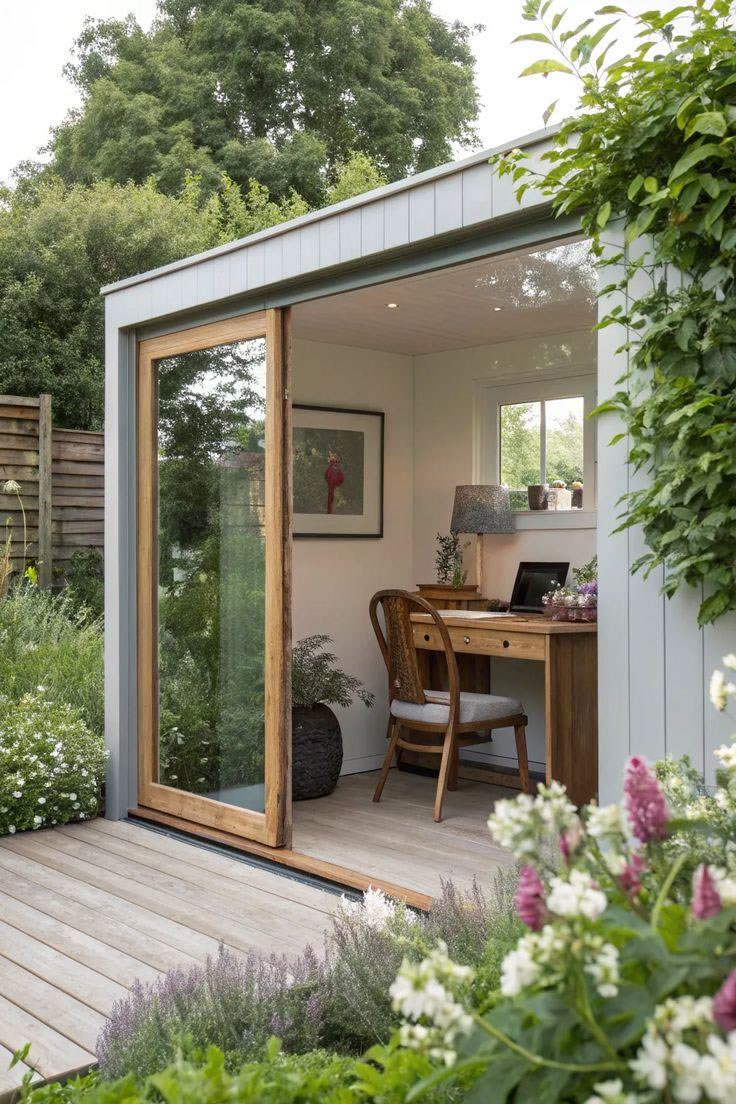
Strategic use of darker accents can add character without making the room feel enclosed.
Avoiding Common Small Cabin Design Mistakes
Several common mistakes can make compact cabins feel smaller than necessary.
- Oversized furniture.
- Excessive storage units.
- Poor lighting.
- Blocking windows.
- Ignoring vertical space.
- Overcomplicated layouts.
Simplicity often produces the most successful results.
Conclusion
A compact log cabin does not need to feel restrictive. Through careful planning, intelligent furniture selection and thoughtful use of natural light, even the smallest garden building can become a highly functional and attractive space.
Whether creating a productive garden office, a flexible creative studio or a relaxing reading retreat, the principles remain the same: maximise daylight, minimise clutter and ensure every item earns its place within the room.
By embracing space-saving solutions such as corner desks, wall-mounted storage and dual-purpose furniture, homeowners can transform a modest cabin footprint into a comfortable and inspiring environment that feels far larger than its dimensions suggest.
```