
Multifunctional Garden Buildings Guide for Bespoke Spaces
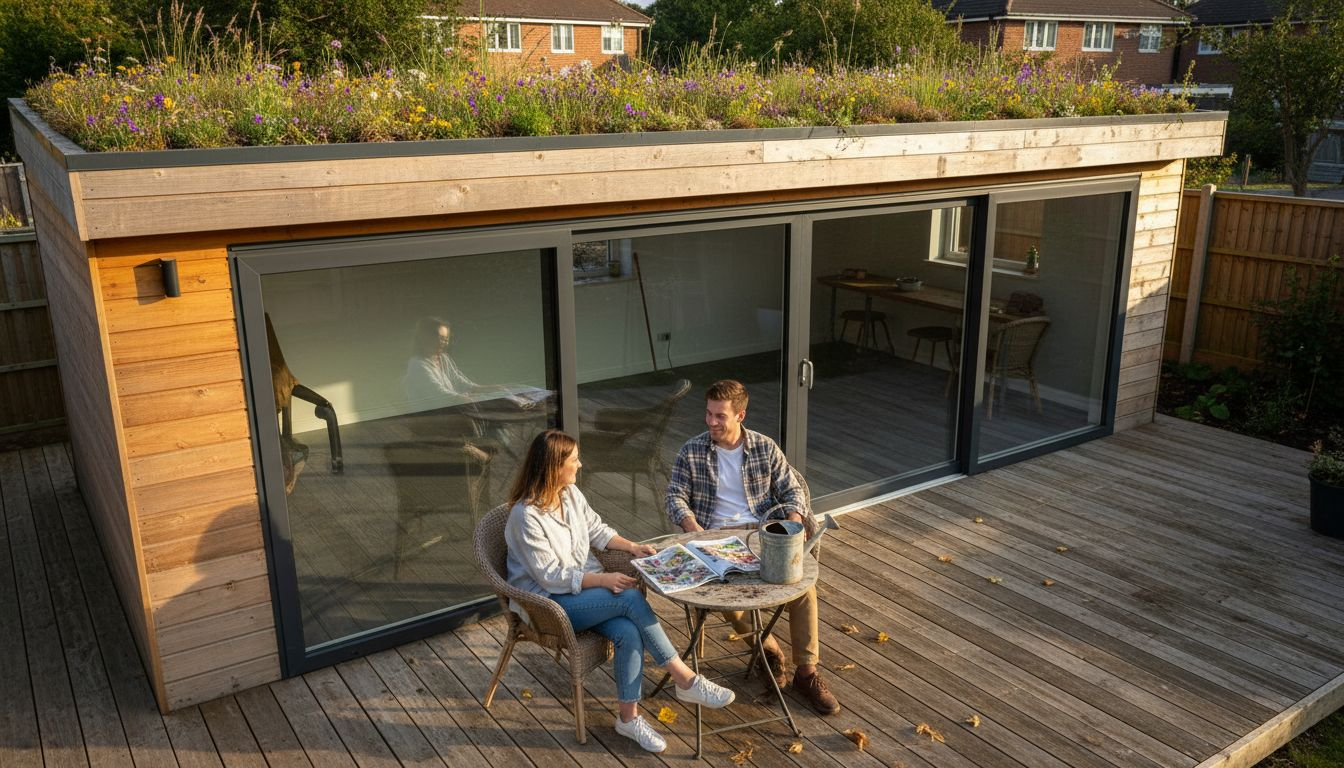
More than 45 percent of British homeowners now consider adding a bespoke garden building to expand their usable living space. As demands for flexible work and leisure areas continue to rise across the United Kingdom, finding smart ways to make your outdoor environment work for you matters more than ever. Whether you dream of a light-filled home office or a relaxing retreat, discover how a well designed multifunctional garden building can help you make the most of every square metre.
Table of Contents
- Stage 1: Assess Your Available Garden Space
- Stage 2: Define Your Building’s Main Functions
- Stage 3: Customise Your Garden Building Design
- Stage 4: Select Quality Materials And Features
- Stage 5: Install And Verify Multifunctional Usability
Quick Summary
| Main Insight | Detailed Explanation |
|---|---|
| 1. Assess your garden space accurately | Conduct a thorough garden survey to understand dimensions and identify permanent features, enhancing the planning process. |
| 2. Define your building’s primary functions | List potential uses such as a home office or art studio to create a versatile, multifunctional garden building. |
| 3. Customise design for personal aesthetics | Choose materials and design elements that complement your home and reflect your unique style, ensuring functionality. |
| 4. Select durable, sustainable materials | Prioritise high-quality, eco-friendly materials that enhance longevity and reduce environmental impact for your garden building. |
| 5. Verify usability post-installation | Conduct a comprehensive usability assessment to ensure the space meets your functional needs and can adapt over time. |
Stage 1: Assess your available garden space
Understanding your garden’s dimensions and potential is the crucial first step in creating a multifunctional garden building that seamlessly integrates with your outdoor environment. Before selecting any structure, you need a precise and strategic approach to measuring and evaluating your available space.
Start by conducting a comprehensive garden survey using precise garden planning techniques. Gather essential measuring tools like a long measuring tape, stakes, string, and a notepad. Measure the total area carefully, noting the length and width of your garden space. Remember that the average British garden spans around 16 square metres, so understanding your specific dimensions is key. Sketch a rough garden layout, marking permanent features like existing trees, pathways, flower beds, and utility areas that cannot be moved.
Evaluate the functional potential of your garden by considering sunlight exposure, soil conditions, and accessibility. Look for areas that receive adequate natural light and have stable ground suitable for a garden building. Consider how the structure will interact with existing landscaping and whether it will enhance or disrupt the current garden flow. Pay attention to boundary lines, underground utilities, and potential planning permissions required for your specific location.
Garden Planning Tip: Photograph your garden from multiple angles and use digital measurement apps to create a more accurate digital representation of your outdoor space.
Stage 2: Define your building’s main functions
Defining the primary functions of your garden building is crucial for creating a space that truly enhances your lifestyle and maximises your outdoor area. A thoughtful approach will help you design a multifunctional space that meets your specific needs and adapts to changing requirements.
Consider the multifunctional landscape approaches that can transform your garden building into a versatile living space. Begin by listing all potential uses such as home office, art studio, fitness room, relaxation retreat, or storage area. Think beyond a single purpose and explore how the space can serve multiple roles throughout different seasons and times of day. Urban garden planning suggests creating flexible areas that can transition between work, leisure, and personal activities.
Take a holistic approach by evaluating how each potential function aligns with your lifestyle, family needs, and long-term goals. Consider practical aspects like natural light, electrical requirements, insulation, and connectivity. Sketch out rough layouts that demonstrate how different zones within the garden building might interact and support various activities. This strategic planning ensures your multifunctional space remains adaptable and truly serves your evolving requirements.
Here’s a summary of key garden building functions and considerations:
| Function | Space Needs | Technical Features | Adaptability Benefit |
|---|---|---|---|
| Home office | Quiet, light area | Wi-Fi, plug sockets | Year-round productivity |
| Art studio | Natural light | Storage, water access | Creative flexibility |
| Fitness room | Open floor space | Impact flooring, power | Wellness all seasons |
| Storage area | Secure enclosure | Shelving, ventilation | Protects equipment/documents |
| Relaxation retreat | Private corner | Insulation, soft lighting | Improved mental wellbeing |
Strategic Planning Tip: Create a priority matrix ranking potential uses by frequency of use, importance, and potential for future adaptation to help clarify your garden building’s core functions.
Stage 3: Customise your garden building design
Customising your garden building design transforms a standard structure into a personalised space that reflects your unique style and practical requirements. This crucial stage allows you to create a truly bespoke environment that seamlessly integrates with your outdoor landscape and meets your specific needs.
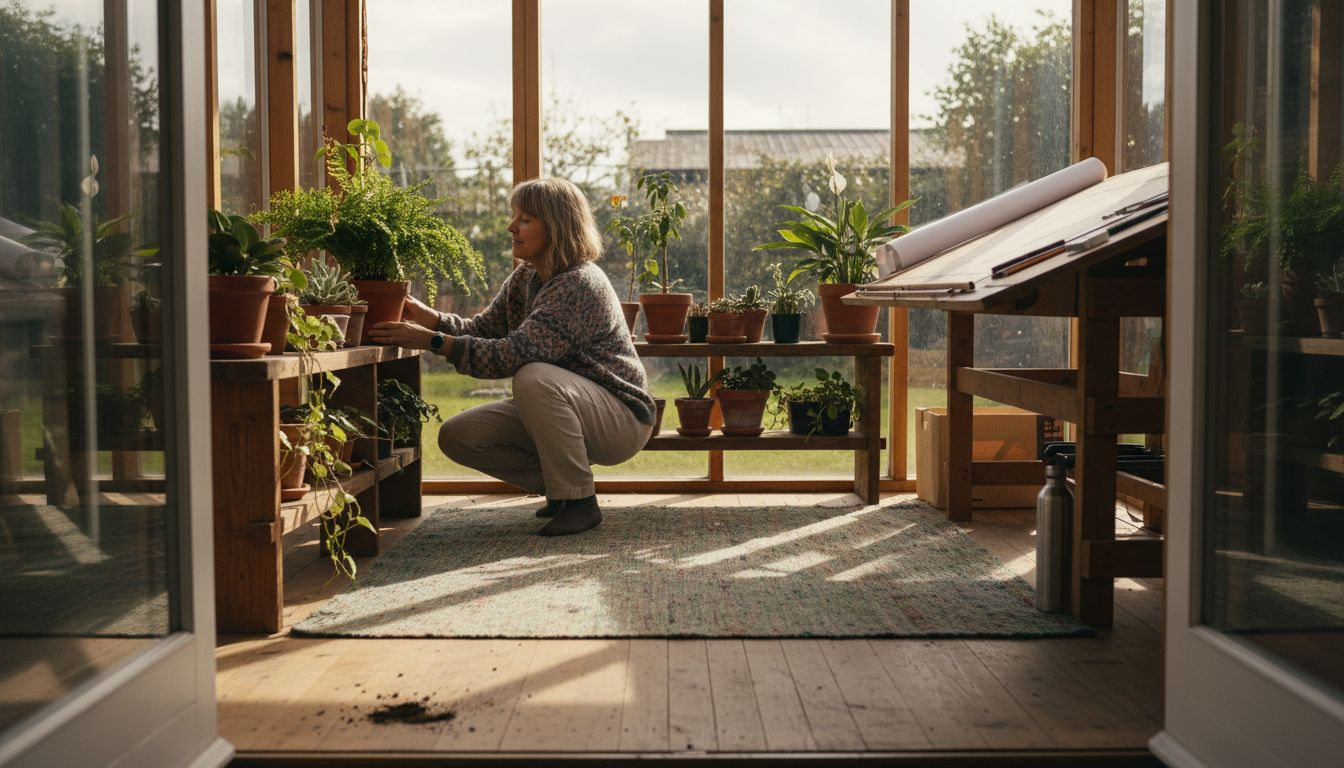
Begin by exploring garden design principles that emphasise individual expression and functional aesthetics. Consider the architectural style of your existing property and select design elements that complement your home’s character. Choose materials, colours, and finishes that create a cohesive look while addressing practical considerations like durability, maintenance, and weather resistance. Pay attention to details such as window placement, roofing options, and exterior cladding that can dramatically alter the building’s appearance and performance.
Think strategically about personalisation beyond visual elements. Evaluate internal configurations that support your identified functions from the previous stage. This might involve planning flexible interior layouts, selecting appropriate insulation, integrating electrical and technological infrastructure, and considering additional features like sliding doors, skylights, or external decking. Your goal is to create a garden building that not only looks exceptional but also provides maximum utility and adaptability for your lifestyle.
Design Strategy Tip: Create a mood board combining architectural inspirations, colour swatches, and functional requirements to visualise your customised garden building before making final design decisions.
Stage 4: Select quality materials and features
Selecting high-quality materials and features is a critical step in creating a garden building that will stand the test of time while meeting your functional and aesthetic requirements. Your choices will directly impact the durability, performance, and overall enjoyment of your bespoke outdoor space.
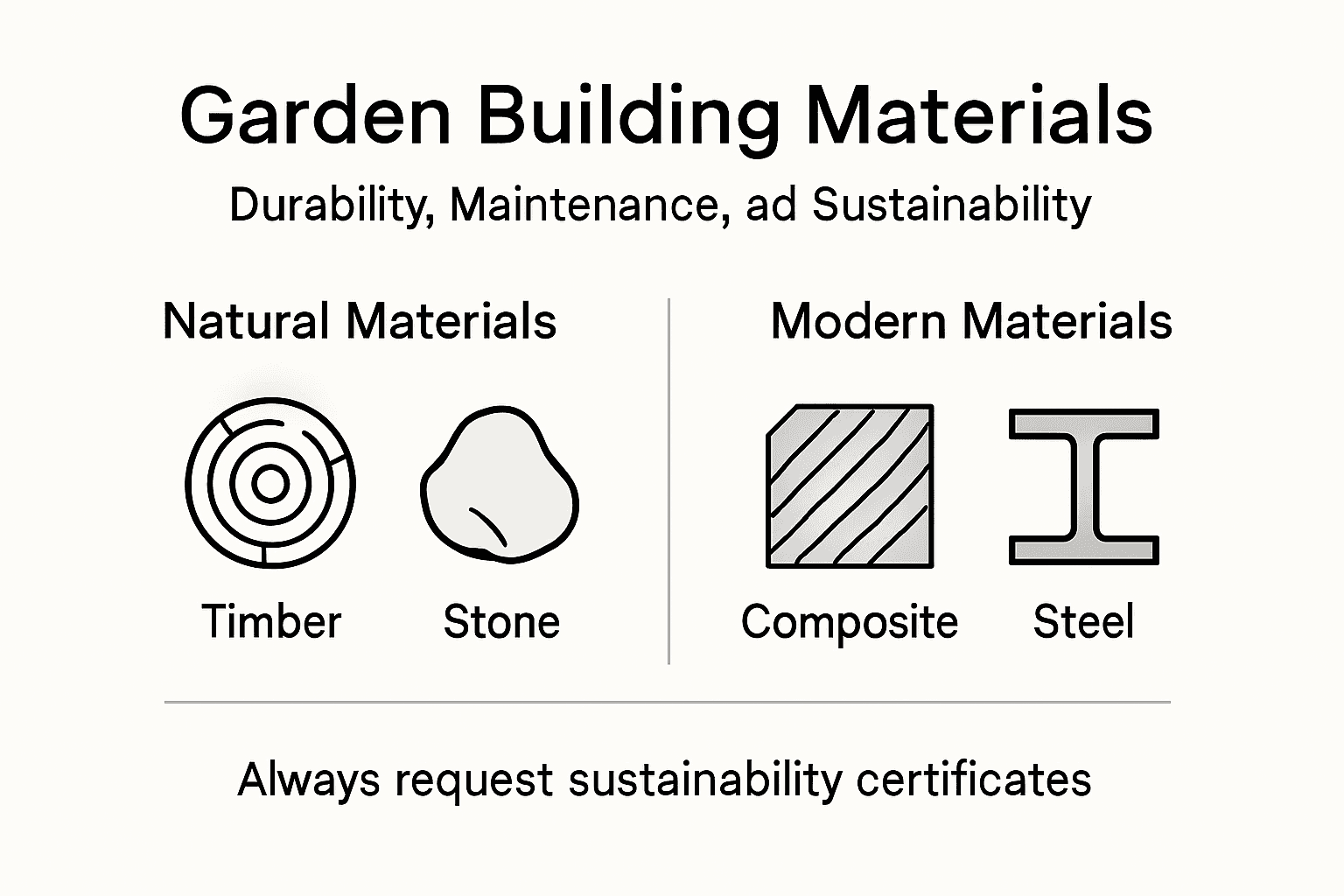
Explore natural building materials that offer sustainable and breathable options for your garden building. Prioritise timber sourced from responsibly managed forests, which provides excellent insulation and natural beauty. Consider materials like cedar or larch that naturally resist decay and require minimal maintenance. Look beyond traditional options and investigate innovative materials such as recycled steel, cork, or reclaimed wood that can add unique character while reducing environmental impact.
Beyond material selection, focus on features that enhance functionality and comfort. Invest in high-quality double glazed windows for optimal thermal performance, robust door mechanisms, and weatherproof exterior cladding. Consider additional elements like integrated electrical systems, smart technology connections, and insulation options that will transform your garden building from a simple structure to a versatile living space. Pay attention to details such as roof pitch, ventilation systems, and foundation type to ensure long-term performance and adaptability.
Compare common garden building materials and their benefits:
| Material | Durability | Maintenance Level | Environmental Impact |
|---|---|---|---|
| Cedar wood | Long-lasting | Low | Sustainably sourced |
| Larch timber | Naturally resistant | Minimal | Low carbon footprint |
| Recycled steel | Highly robust | Occasional checks | Uses reclaimed metal |
| Cork panels | Moisture resistant | Occasional wipe | Renewable resource |
| Composite cladding | Weatherproof | Occasional wash | Often recycled |
Material Selection Tip: Always request material samples and certificates of sustainability to compare quality, durability, and environmental credentials before making your final selections.
Stage 5: Install and verify multifunctional usability
Installing your garden building and ensuring its multifunctional usability represents the culmination of your carefully planned design process. This critical stage transforms your vision into a functional reality that will serve your needs for years to come.
Begin by meticulously reviewing building regulations and installation standards to guarantee compliance and safety. Professional installation is crucial for ensuring structural integrity and optimal performance. Work with experienced installers who understand the nuanced requirements of multifunctional garden buildings. Verify electrical connections, insulation quality, and weatherproofing to create a robust and adaptable space. Pay close attention to foundational work, ensuring level ground and appropriate drainage to prevent future structural issues.
Conduct a comprehensive usability assessment once installation is complete. Test each planned function systematically. Verify that workspace configurations support your intended activities, check technology integrations, and assess comfort levels across different seasons. Examine accessibility features to ensure the space accommodates various user needs and potential future requirements. This thorough verification process guarantees that your garden building truly delivers on its multifunctional potential, providing a flexible and efficient extension of your living space.
Installation Verification Tip: Create a detailed checklist of functional requirements before final sign-off and conduct a comprehensive walkthrough to identify any potential improvements or adjustments.
Create Your Perfect Bespoke Garden Building Today
Designing a multifunctional garden building can feel overwhelming when balancing space limits, diverse functions, and custom materials. If you want a garden building that truly adapts to your lifestyle while complementing your outdoor space, you need solutions that combine flexibility, quality, and personalised design options. From home offices to fitness rooms, the challenge lies in finding a structure that offers durability and effortless integration with your garden environment.
Explore bespoke garden building options tailored to your unique needs.
Unlock a garden building that not only meets your practical requirements but enhances your wellbeing year-round. Visit Log Cabin Kits to browse and customise your ideal garden space today. Don’t wait to create the versatile retreat your home deserves with expert guidance and premium craftsmanship just a click away.
Frequently Asked Questions
How do I assess the available space for a multifunctional garden building?
To assess the available space, conduct a garden survey using measuring tools to determine the length and width of your garden. Create a rough layout sketch that includes permanent features and consider sunlight exposure, soil conditions, and accessibility.
What are the key functions I should consider for my garden building?
List potential uses for your garden building, such as a home office, art studio, or fitness area. Think about how each function aligns with your lifestyle and create a priority matrix to evaluate their importance and adaptability.
How can I customise the design of my garden building?
Customise your garden building by choosing materials, colours, and finishes that complement your home and reflect your style. Consider the architectural style of your property and plan internal configurations that support your identified functions.
What materials should I select for my garden building?
Choose high-quality materials like sustainably sourced timber that offers durability and low maintenance. Investigate innovative options like recycled steel or reclaimed wood to enhance both sustainability and character in your building.
How can I ensure my garden building meets building regulations?
Review building regulations and installation standards to ensure compliance throughout the building process. Work with experienced installers and create a checklist of functional requirements to verify everything aligns with your intended uses before final sign-off.
What steps should I take after installation to verify usability?
After installation, conduct a thorough usability assessment by testing each planned function. Ensure workspace configurations support your intended activities and check comfort levels across different seasons, making adjustments as needed.