
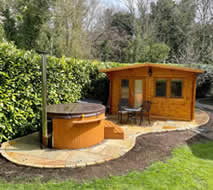
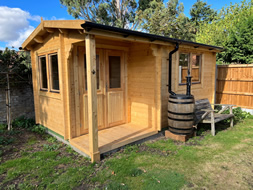
The British winter presents a unique set of challenges for outdoor buildings. Persistent rainfall, high humidity, driving winds, occasional snow, and repeated freeze-thaw cycles can place significant stress on any structure. For modern timber buildings such as insulated contemporary garden buildings, log cabins, garden rooms, home offices, garages, and workshops, effective weather protection is essential to ensure longevity, comfort, and energy efficiency.

Fortunately, advances in timber construction technology have transformed the performance of contemporary wooden buildings. Features such as interlocking timber wall systems, high-performance double and triple glazing, and EPDM rubber roofing membranes allow modern timber structures to withstand the demanding conditions of damp UK winters while remaining warm, dry, and comfortable.
This guide explores the engineering principles behind these technologies and explains how they work together to protect modern timber buildings throughout the colder months.
The Challenge of UK Winter Weather
Unlike regions that experience consistently freezing temperatures, the UK often endures prolonged periods of damp weather. Moisture rather than extreme cold is frequently the greatest threat to building performance.
Common winter challenges include:
- Persistent rainfall
- High atmospheric humidity
- Wind-driven rain
- Condensation formation
- Temperature fluctuations
- Occasional frost and snow
- Freeze-thaw cycles
Traditional timber structures often struggled with these conditions due to inadequate insulation, poor weather sealing, and less sophisticated construction methods. Modern timber buildings, however, are designed specifically to address these challenges.
How Interlocking Timber Walls Create a Weatherproof Structure
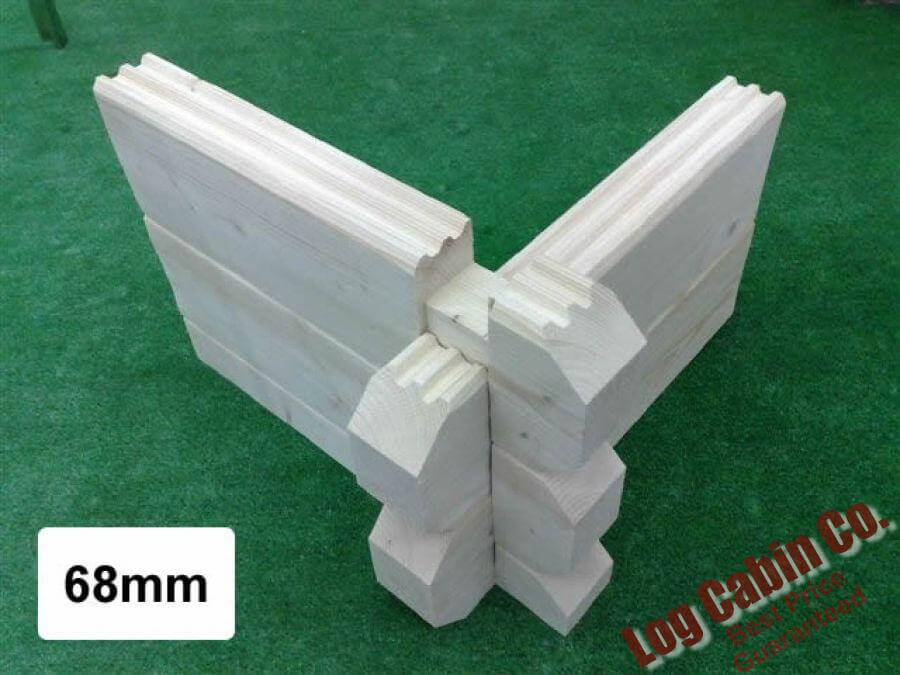
One of the most important innovations in modern timber construction is the interlocking wall system. Rather than relying on simple timber panels, contemporary log cabins and timber buildings are typically constructed using precision-machined wall logs that interlock at every corner.
Each timber section is manufactured with a tongue-and-groove profile that allows neighbouring boards to fit tightly together.
This design provides several important advantages.
Improved Weather Resistance
The interlocking system significantly reduces the number of direct pathways through which wind and rain can penetrate the building envelope.
As each log is securely connected to the next, gaps are minimised and weather resistance is greatly improved compared to older construction methods.
Structural Stability
Interlocking corners create a highly rigid structure that distributes loads evenly throughout the building.
During periods of strong winter winds, the entire wall system works together as a single unit, helping resist movement and maintaining structural integrity.
Natural Timber Expansion and Contraction
Timber is a natural material that responds to changes in moisture and temperature. Modern interlocking systems are designed to accommodate this natural movement without compromising weather resistance.
The precision-engineered joints allow slight seasonal movement while maintaining a tight weatherproof seal.
Enhanced Air Tightness
Reducing uncontrolled air leakage improves energy efficiency and internal comfort.
Modern interlocking walls help minimise draughts, making heating systems more effective and reducing energy consumption during colder months.
Wall Thickness and Thermal Performance
Modern timber buildings are available with various wall thicknesses, typically ranging from 28mm to 94mm or more.
Thicker wall logs provide:
- Improved thermal mass
- Greater structural strength
- Better acoustic performance
- Enhanced weather resistance
Many premium buildings use wall thicknesses of 44mm, 58mm, 70mm, or 94mm, providing significantly improved winter performance compared with thinner garden shed construction.
The thermal mass of thicker timber also helps moderate temperature fluctuations by absorbing and slowly releasing heat.
The Importance of Double and Triple Glazing
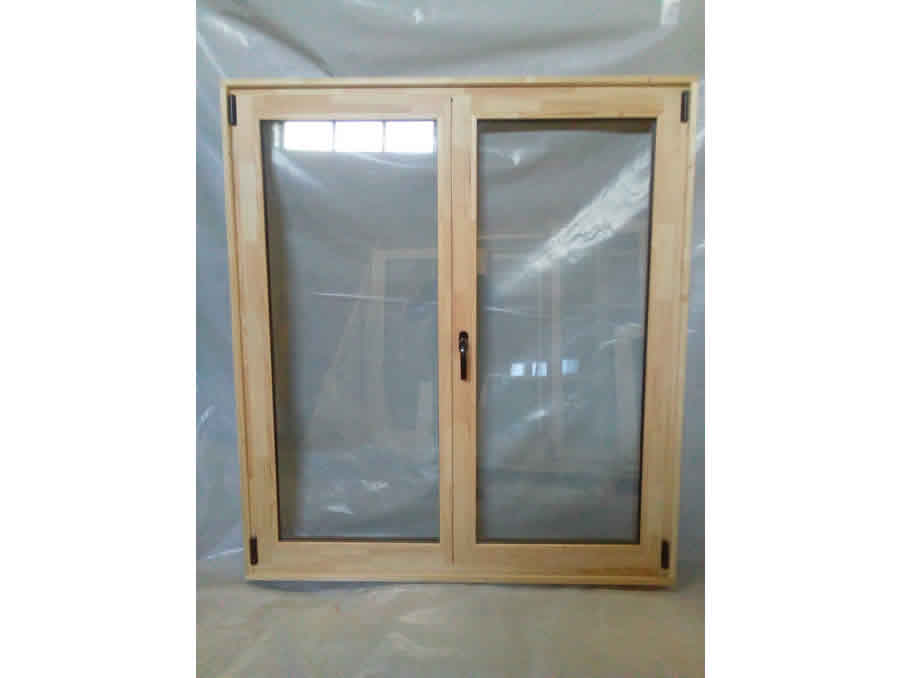
Windows often represent the weakest point in a building's thermal envelope. Heat naturally seeks the path of least resistance, and poorly insulated glazing can lead to significant heat loss.
Modern timber buildings increasingly utilise high-performance double or triple-glazed windows and doors to improve comfort and efficiency.
How Double Glazing Works
Double glazing consists of two panes of glass separated by a sealed air or gas-filled cavity.
This cavity acts as an insulating barrier that reduces heat transfer between the interior and exterior environments.
The benefits include:
- Reduced heat loss
- Improved energy efficiency
- Reduced condensation
- Enhanced acoustic insulation
- Improved occupant comfort
The Advantages of Triple Glazing
Triple glazing incorporates three panes of glass and two insulating cavities.
This additional layer further improves thermal performance and is becoming increasingly popular in premium garden rooms, home offices, and all-year-round timber buildings.
Triple glazing offers:
- Superior thermal insulation
- Lower U-values
- Reduced cold spots near windows
- Further condensation resistance
- Enhanced sound insulation
During damp UK winters, these benefits contribute significantly to overall comfort and building performance.
Reducing Condensation During Winter
Condensation is a common issue during colder months.
When warm indoor air comes into contact with cold surfaces, moisture can condense into water droplets.
Modern double and triple glazing helps reduce this problem by maintaining a warmer internal glass surface temperature.
As a result:
- Window condensation is reduced
- Interior finishes remain drier
- Mould growth risks are lowered
- Indoor air quality improves
This is particularly important for garden offices, workshops, and hobby rooms that may be occupied throughout winter.
EPDM Roofing: Modern Protection Against Rainfall

Roofing plays a critical role in protecting timber buildings from moisture ingress.
One of the most significant developments in recent years has been the widespread adoption of EPDM roofing membranes.
EPDM stands for Ethylene Propylene Diene Monomer, a highly durable synthetic rubber membrane designed for long-term waterproofing.
Why EPDM Roofing Is Ideal for UK Conditions
The UK's climate demands roofing systems capable of withstanding persistent rainfall and changing temperatures.
EPDM membranes offer several advantages:
- Exceptional waterproofing performance
- Resistance to UV radiation
- Excellent flexibility
- Minimal maintenance requirements
- Long service life
Unlike traditional felt roofing, EPDM does not become brittle over time and remains highly flexible even during cold weather.
Seamless Waterproof Protection
Many modern EPDM installations use large single-piece membranes.
By minimising seams and joints, the risk of water penetration is significantly reduced.
This creates a highly reliable waterproof barrier capable of protecting the building for decades.
Resistance to Freeze-Thaw Cycles
Winter weather often involves repeated freezing and thawing.
Some roofing materials can crack or deteriorate under these conditions.
EPDM remains flexible across a wide temperature range, allowing it to expand and contract without damage.
This flexibility helps preserve waterproof integrity throughout the year.
The Combined Building Envelope
The true effectiveness of a modern timber building comes from the interaction of multiple components working together.
The interlocking wall system, high-performance glazing, and EPDM roof collectively form a highly effective building envelope.
Together they:
- Prevent water ingress
- Reduce heat loss
- Control condensation
- Improve energy efficiency
- Enhance occupant comfort
- Increase structural durability
Each component supports the performance of the others, creating a building capable of delivering excellent year-round usability.
Long-Term Durability and Reduced Maintenance
Modern timber buildings are designed not only to survive winter conditions but to remain attractive and functional for many years.
By limiting moisture penetration and controlling internal environmental conditions, modern construction systems help reduce many of the issues historically associated with timber structures.
Benefits include:
- Reduced risk of rot
- Improved dimensional stability
- Lower maintenance requirements
- Longer service life
- Better preservation of finishes
Routine maintenance remains important, but the engineering advancements incorporated into contemporary timber buildings significantly improve long-term performance.
Conclusion
Modern timber buildings are vastly different from the simple garden sheds of previous generations. Through the use of precision-engineered interlocking wall systems, high-performance double and triple glazing, and advanced EPDM roofing membranes, today's timber structures provide outstanding protection against the damp and challenging conditions of UK winters.
Interlocking walls create a strong and weather-resistant shell, glazing systems improve thermal efficiency and reduce condensation, while EPDM roofing delivers exceptional waterproofing performance. Together, these technologies create comfortable, energy-efficient, and highly durable buildings capable of providing reliable service throughout the year.
Whether used as a garden office, workshop, garage, studio, or leisure space, a modern timber building equipped with these features can remain warm, dry, and protected even during the wettest British winter.