
Garden clutter quickly turns a beloved outdoor retreat into a stressful maze of misplaced tools and tangled hoses. For British homeowners passionate about gardening, organised storage solutions are the secret to reclaiming both space and peace of mind. By assessing what you have, sorting essentials, and choosing smart, weatherproof options, you’ll keep your tools tidy and accessible. This step-by-step guide helps you transform your garden shed or storage area into an efficient system tailored to your gardening habits.
Table of Contents
- Step 1: Assess Your Current Garden Storage
- Step 2: Clear And Categorise All Items
- Step 3: Designate Zones For Tools And Equipment
- Step 4: Install Storage Solutions Effectively
- Step 5: Organise Items For Quick Access
- Step 6: Review And Maintain Storage Order
Quick Summary
| Key Point | Explanation |
|---|---|
| 1. Conduct a thorough inventory | Assess all your garden tools and equipment to understand what you have and how they are stored. |
| 2. Sort and categorise tools systematically | Group your tools by function, making decisions about which to keep, remove, reuse, or donate. |
| 3. Create dedicated storage zones | Designate specific areas for frequently and infrequently used tools to enhance accessibility and organisation. |
| 4. Implement effective storage solutions | Choose and install suitable storage systems that maximise available space and ensure tool protection. |
| 5. Regularly review and maintain organisation | Schedule periodic checks to clean tools, assess storage conditions, and adjust your organisation as needed. |
Step 1: Assess your current garden storage
Evaluating your existing garden storage is the foundational step in creating a more organised outdoor space. Understanding exactly what items you currently have and how they are stored will help you develop a strategic approach to improving your garden organisation.
Start by conducting a comprehensive inventory of your garden tools, equipment, and miscellaneous items. Pull everything out of your current storage areas and sort them into categories. Examine each item and consider how frequently you use it. Garden tools like spades, rakes, and pruning shears should be easily accessible, while seasonal items can be stored less prominently. Understanding garden storage solutions helps ensure you select the right organisational strategy for your specific needs.
Take measurements of your existing storage spaces and the items you need to store. Consider the volume of equipment, their dimensions, and any special storage requirements for delicate or valuable tools. Note any items that are currently exposed to weather or not properly protected. This assessment will guide your future storage decisions and help you create a more efficient garden storage system.
Expert Advice Keep a running list of your garden tools on your smartphone to track inventory and prevent unnecessary duplicate purchases.
Step 2: Clear and categorise all items
Clearing and categorising your garden tools is a critical step in creating an organised and efficient storage system. By systematically sorting your equipment, you will streamline your gardening workflow and ensure every tool has a designated place.
Begin by grouping tools by functional categories including pruning, weeding, digging, planting, and clearing. Lay out all items and create distinct piles for each tool type. As you sort, assess each item critically using the four key decision criteria: keep, remove, reuse, or donate. Carefully examine the condition of each tool, checking for damage or rust. Prioritise functional tools that are in good working order and have been used within the past year.
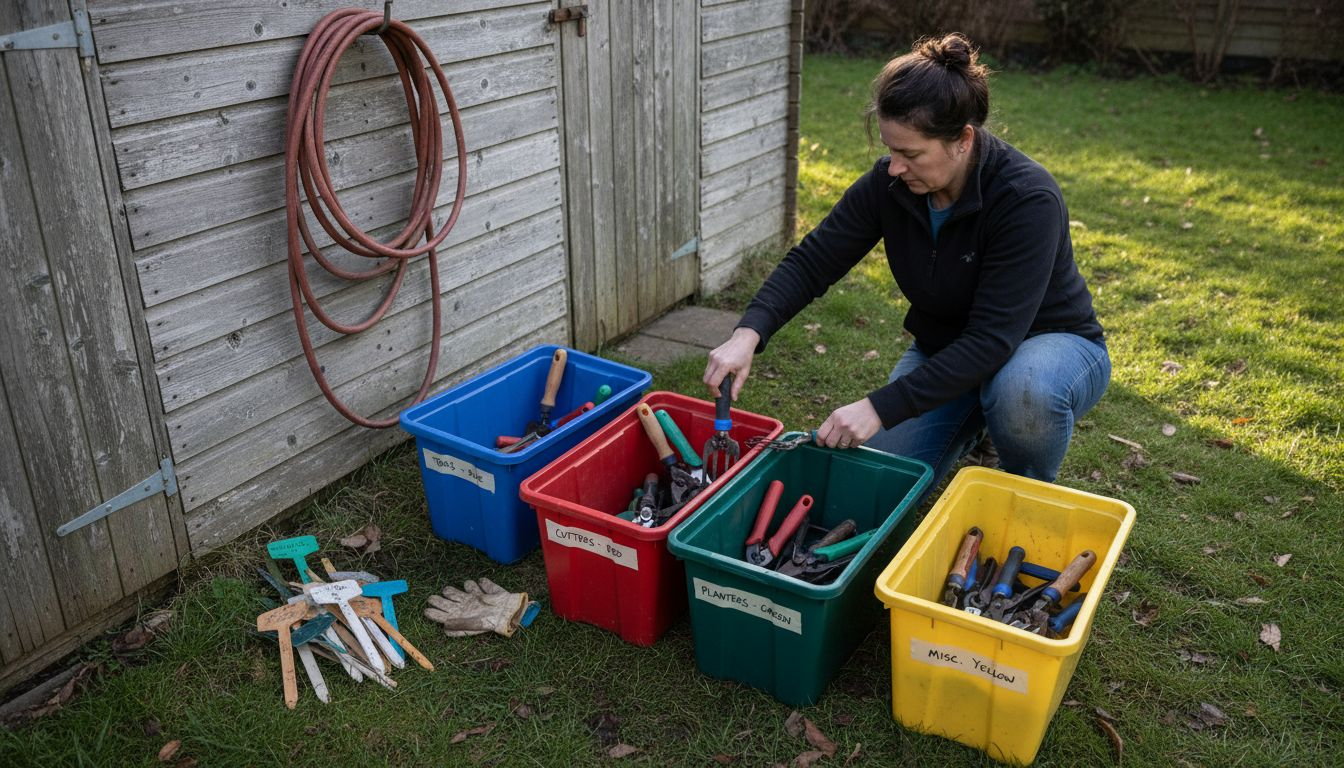
As you categorise, consider creating a dedicated storage zone for each tool group. Frequently used items should be placed in easily accessible locations, while seasonal or specialised tools can be stored in less prominent areas. Planning your garden clearance helps manage resources efficiently and maintains a systematic approach to tool organisation.
Expert Advice Create colour coded labels for each tool category to make future organisation and retrieval even faster and more intuitive.
Step 3: Designate zones for tools and equipment
Creating dedicated zones for your garden tools transforms your outdoor space into an efficient and organised environment. By strategically allocating specific areas for different types of equipment, you will enhance both functionality and accessibility.
Garden zoning helps maximise space and ensures every tool has a purposeful location. Start by mapping out your garden storage area and identifying potential zones based on tool frequency and usage. Frequently used implements like secateurs, gardening gloves, and hand trowels should be positioned closest to your primary working area. Consider installing wall mounted racks or pegboards to keep these essential tools within immediate reach.
Creating garden storage zones involves thinking vertically as well as horizontally. Utilise wall space, install hooks, and consider overhead storage solutions to maximise every available inch. Seasonal tools like snow shovels or summer pruning equipment can be stored in slightly less accessible areas, while daily gardening tools should remain prominently displayed and easy to grab.
Expert Advice Use colour coded tape or painted markers to clearly delineate different tool zones and prevent future organisational confusion.
Step 4: Install storage solutions effectively
Installing storage solutions is a critical phase in transforming your garden organisation strategy from concept to reality. Your carefully planned zones and categorised tools will only remain efficient if you implement smart storage methods that are both functional and accessible.
Garden storage solutions require thoughtful installation that maximises available space and protects your equipment. Begin by selecting robust wall mounting systems that can bear the weight of your tools. Invest in high quality brackets, ensuring they are securely anchored into wall studs or using appropriate wall plugs. For heavier implements like spades and rakes, consider heavy duty hooks that can support significant weight without bending or breaking.
Evaluate each storage solution for its practicality and ease of use. Pegboards offer versatile options for hanging tools, while closed cabinets protect sensitive equipment from moisture and direct sunlight. Ensure your chosen storage solutions allow for easy tool retrieval and have sufficient ventilation to prevent rust and dampness. Position your storage systems at a comfortable height that minimises strain when reaching for frequently used items.
Here is a comparison of common garden storage solutions and their main benefits:
| Storage Solution | Key Benefit | Best For |
|---|---|---|
| Wall-mounted racks | Saves floor space | Frequently used tools |
| Closed cabinets | Protects from weather | Sensitive equipment |
| Pegboards | Easy visibility and access | Small hand tools |
| Rolling carts | Mobile and versatile storage | Project-based tasks |
| Overhead shelving | Utilises vertical space | Seasonal items |
Expert Advice Always leave a small margin of extra space when installing storage systems to accommodate future tool acquisitions and prevent immediate overcrowding.
Step 5: Organise items for quick access
Strategic organisation is the cornerstone of an efficient garden storage system. By implementing smart retrieval methods, you will transform your storage area from a cluttered space into a streamlined workspace where every tool has its designated place.
Garden storage strategies focus on visibility and accessibility. Begin by grouping tools according to their function and frequency of use. Place frequently used implements like secateurs, gardening gloves, and hand trowels in the most accessible locations typically at eye level or on easily reached hooks. Consider using clear storage containers or transparent boxes that allow you to see contents instantly without rummaging.
Utilise vertical space by installing pegboards or rail systems that keep tools suspended and visible. Rolling carts can provide additional mobile storage for seasonal tools or projects that require multiple implements. Create a logical flow in your organisation system where related tools are stored near each other. For instance, keep pruning equipment together and ensure cutting tools are stored safely with blade guards or in protective sheaths to prevent accidental injury.
Expert Advice Invest in a label maker to create clear consistent labels that will help maintain your organisational system over time.
Step 6: Review and maintain storage order
Sustaining an organised garden storage system requires consistent attention and periodic assessment. Your initial organisation strategy will evolve as your gardening needs change, making regular reviews essential to maintaining an efficient workspace.
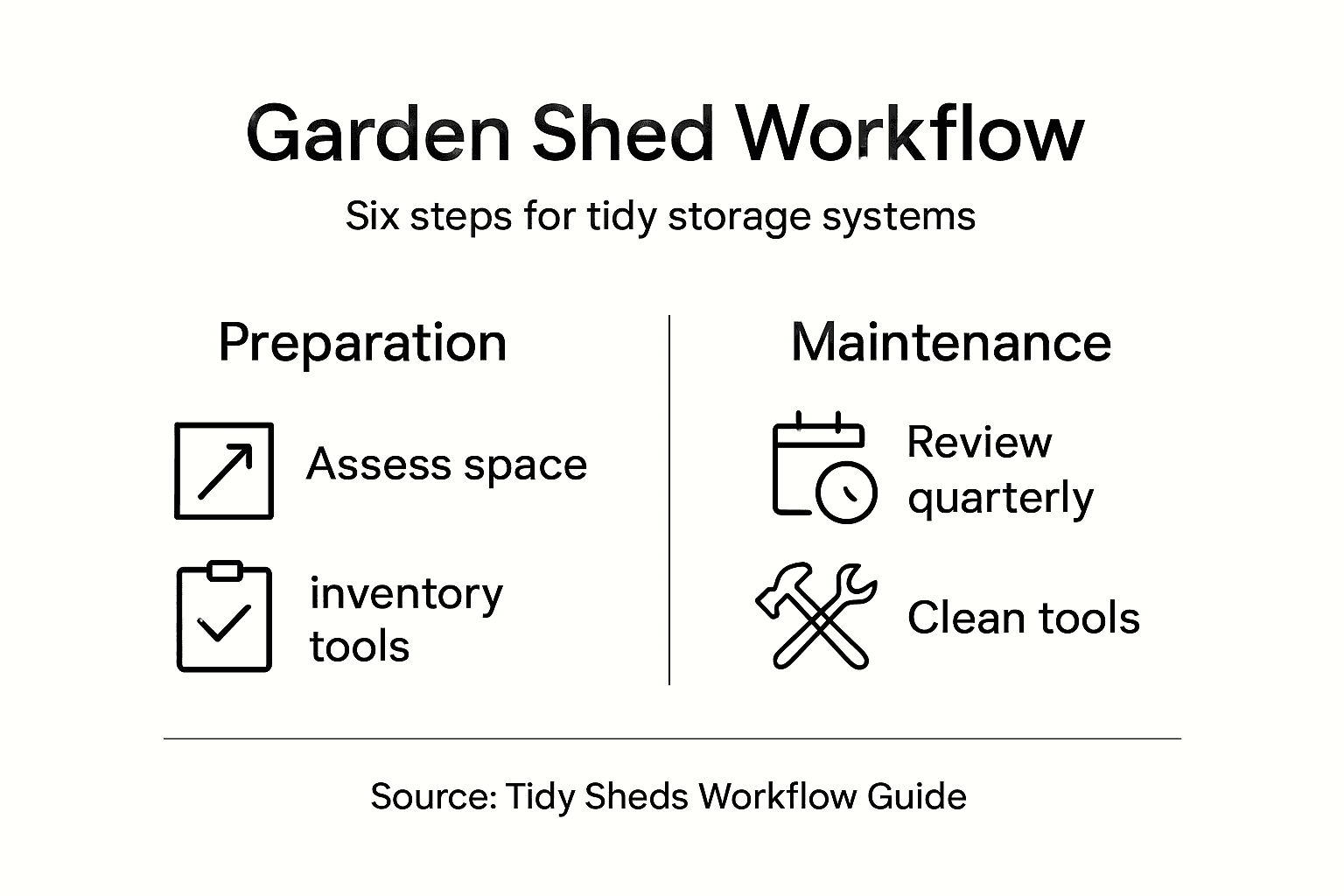
Garden shed storage maintenance involves systematic inspection and thoughtful adjustments. Schedule a quarterly review where you thoroughly examine your storage setup, checking for signs of wear on storage systems, assessing tool conditions, and evaluating whether your current arrangement still serves your gardening practices. Look for opportunities to refine your storage zones, removing tools that are no longer useful and creating space for new equipment.
During these review sessions, clean and inspect each tool carefully. Wipe down metal surfaces to prevent rust, sharpen cutting edges, and oil moving parts to maintain their functionality. Check storage units themselves for structural integrity, addressing any signs of moisture damage or structural weakness. Pay special attention to weather sealing and security features to ensure your valuable gardening tools remain protected throughout changing seasons.
Expert Advice Set a calendar reminder every three months for your storage maintenance review to ensure you never skip this important organisational task.
Use this summary table to schedule ongoing maintenance for your garden tools and storage:
| Task | Frequency | Purpose |
|---|---|---|
| Tool cleaning | Quarterly | Prevent rust and damage |
| Sharpen blades | Quarterly | Maintain tool efficiency |
| Check storage units | Quarterly | Ensure safety and durability |
| Review inventory | Every 3 months | Avoid clutter and duplicates |
| Assess weather sealing | Every 6 months | Protect tools from the elements |
Transform Your Garden Storage Into a Tidy, Functional Space
Struggling to organise your garden tools efficiently as described in the “Garden Storage Organisation Workflow for Tidy Sheds” article? Many gardeners face challenges such as cluttered tools, lack of dedicated zones, and insufficient storage options that hinder quick access and maintenance. The key pain points include creating distinct zones for equipment, installing durable storage solutions, and maintaining order to protect valuable tools. Our bespoke garden buildings provide the perfect canvas to put these strategies into action with customisable spaces designed for organisation and easy access.

Discover how a bespoke garden shed from Log Cabin Kits can help you implement dedicated zones and smart storage solutions tailored to your garden needs. Whether you want to maximise vertical storage or create secure, weatherproof cabinets you will find everything to keep your tools in top condition and ready to hand. Take the first step towards a clutter free garden by exploring our range of custom options and start transforming your garden shed today. Visit our website now and bring order and style to your outdoor space.
Frequently Asked Questions
How do I assess my current garden storage?
Assess your garden storage by conducting a thorough inventory of all tools and equipment. Pull everything out into an organised space, sort items into categories, and evaluate their condition and frequency of use. This will help you develop a clear picture of what you need to store and what can be removed or donated.
What is the best way to categorise my garden tools?
Categorise your garden tools by their function, such as pruning, weeding, or planting. Create distinct piles for each group, utilising criteria like condition and usage frequency to decide whether to keep, reuse, remove, or donate items.
How should I designate zones for my garden tools?
Designate specific zones for your tools by placing frequently used items in readily accessible areas near your primary working space. Consider using wall-mounted racks or pegboards to maximise your storage potential and create clear organisation zones for different tool categories.
What type of storage solutions should I install for optimal garden organisation?
Install storage solutions that suit the weight and size of your tools, such as wall-mounted racks for easy access or closed cabinets to protect sensitive equipment. Ensure the systems are well-anchored and easily accessible, allowing for efficient tool retrieval.
How do I maintain my garden storage system?
Maintain your garden storage system by performing regular reviews, ideally every three months. During these checks, clean tools, assess their condition, and evaluate your organisation to ensure everything remains in its designated place, making adjustments as needed for future changes in your gardening routine.
What should I do if I have duplicates of garden tools?
If you discover duplicates during your inventory review, consider removing the extra items. Decide whether to donate, sell, or recycle these duplicates, helping to declutter your storage and ensuring that your garden tools remain organised and functional.