
The purpose of tongue and groove logs explained
TL;DR:
- Tongue and groove logs provide essential structural stability and weatherproofing for garden cabins, beyond their aesthetic appeal. The interlocking joint reduces movement, seals against elements, and simplifies installation, resulting in lower maintenance demands. This joinery method is ideal for bespoke cabins, ensuring strength, precision, and long-term durability.
If you’ve been looking at garden log cabins and wondering why so many of them use tongue and groove timber, you’re not alone. Most people assume it’s just about looks. The truth is, the purpose of tongue and groove logs goes much deeper than that. This joinery system is what holds a cabin wall together, keeps the weather out, and makes the whole build far easier to put up. In this guide, you’ll find out exactly how it works, why it matters, and how it applies to your garden building project.
Table of Contents
- Key takeaways
- The purpose of tongue and groove logs
- Why tongue and groove logs perform better
- Tongue and groove vs other log profiles
- Uses of tongue and groove logs in garden buildings
- Maintenance and weatherproofing
- Martin’s take on tongue and groove
- Build with the right joinery from the start
- FAQ
Key takeaways
| Point | Details |
|---|---|
| More than aesthetics | Tongue and groove logs provide structural stability, not just a clean finish. |
| Built-in weatherproofing | The interlocking joint creates a tight seal that reduces draughts and water ingress. |
| Easier to install | The self-aligning design makes assembly straightforward, even for DIY builders. |
| Lower maintenance | Snug joints mean less sealing work over time compared with other log profiles. |
| Ideal for bespoke cabins | The system suits custom builds well, allowing precise, consistent wall construction. |
The purpose of tongue and groove logs
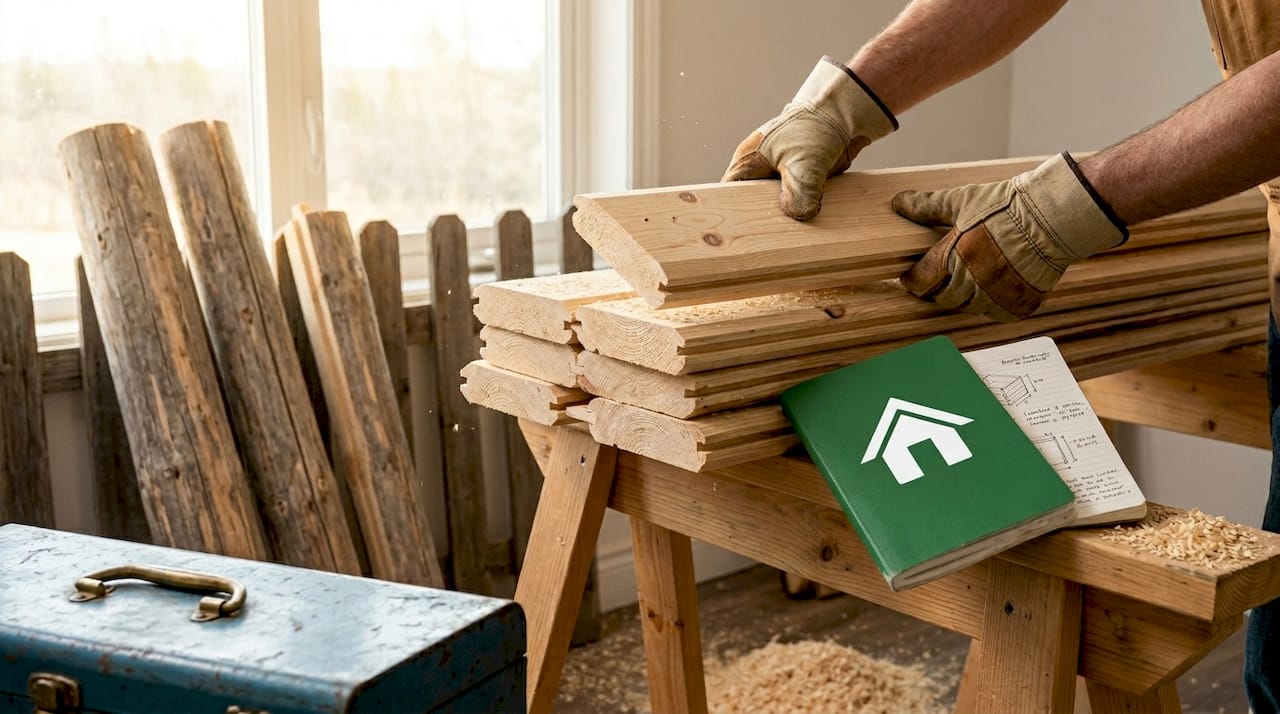
At its core, tongue and groove joinery is beautifully simple. One edge of a board is machined with a protruding ridge (the tongue) and the opposite edge has a slot cut into it (the groove). When you place two boards together, the tongue slots into the groove on the next board, locking them together in a tight, continuous join.
In garden log cabin construction, this system is used horizontally across the full length of each wall log. As the logs stack, every single one locks into the one above and below it. The result is a wall that behaves as one solid unit rather than a stack of loose timber.
Here’s why that matters practically:
- Reduced movement: Wood naturally expands and contracts with changes in temperature and humidity. The interlocking shape means the boards move together rather than independently, which prevents gaps appearing over time.
- No slipping or shifting: Because each log is physically held by the one next to it, the wall stays true even under load.
- Self-aligning during installation: The tongue guides each log into position, which speeds up assembly considerably.
- Structural integrity: Tongue and groove wood distributes stress more evenly across the wall than boards simply butted together.
Pro Tip: When fitting tongue and groove logs, always check that each board is fully seated before moving to the next. A partially engaged groove can cause alignment problems several rows up.
The timber used in garden log cabins is typically softwood, most commonly spruce or pine. Wall logs are usually available in thicknesses from 28mm up to 70mm or more, depending on the intended use. Thicker logs provide better insulation and a more substantial feel, but even the standard profiles benefit enormously from the T&G joint system.
Why tongue and groove logs perform better
Once you understand how tongue and groove joinery works, the benefits become obvious. But there are a few that even experienced DIYers tend to overlook.
Stability you can rely on
The interlocking design reduces movement and distributes weight evenly across the wall, which is why T&G cabins hold their shape over years of use. Other log profiles can allow boards to rock or shift slightly, which leads to visible gaps and, eventually, structural issues.
Weather resistance that’s built in
The tight fit between tongue and groove sections means there’s very little opportunity for wind or rain to penetrate. T&G joints create airtight connections that reduce draughts significantly, which also helps with heat retention if you’re using the cabin as a garden room or studio.
A cleaner, smarter finish
One of the most appreciated advantages of tongue and groove is that it allows hidden fastening through the tongue. Nails or screws are driven through the tongue at an angle, completely out of sight once the next board is fitted. This gives walls a smooth, uninterrupted surface with no visible fixings.
Reduced maintenance over time
This is the one most people don’t consider when planning a cabin. With traditional log profiles, gaps that form as timber dries out need to be filled with chinking or caulk regularly. With T&G, the snug joint needs only a minimal sealant bead along the length, and less of it over the lifetime of the building. That adds up to a meaningful saving in both time and money.
Tongue and groove vs other log profiles
It helps to understand where tongue and groove sits relative to other common joinery types. Here’s a straightforward comparison:
| Profile type | Joint fit | Sealing method | Aesthetic | DIY friendliness |
|---|---|---|---|---|
| Tongue and groove | Very tight, interlocking | Minimal caulk bead | Smooth, seamless | Excellent |
| Shiplap | Overlapping, moderate fit | Sealant or paint | Rustic, layered | Good |
| Square on square | Butt joint, loose fit | Chinking required | Traditional | Moderate |
Shiplap uses an overlapping profile that does provide some weather resistance, but it relies more heavily on paint or sealant to keep water out. T&G offers a tighter finish and suits modern garden rooms and studios particularly well, where you want a clean internal wall surface as well as solid weatherproofing.
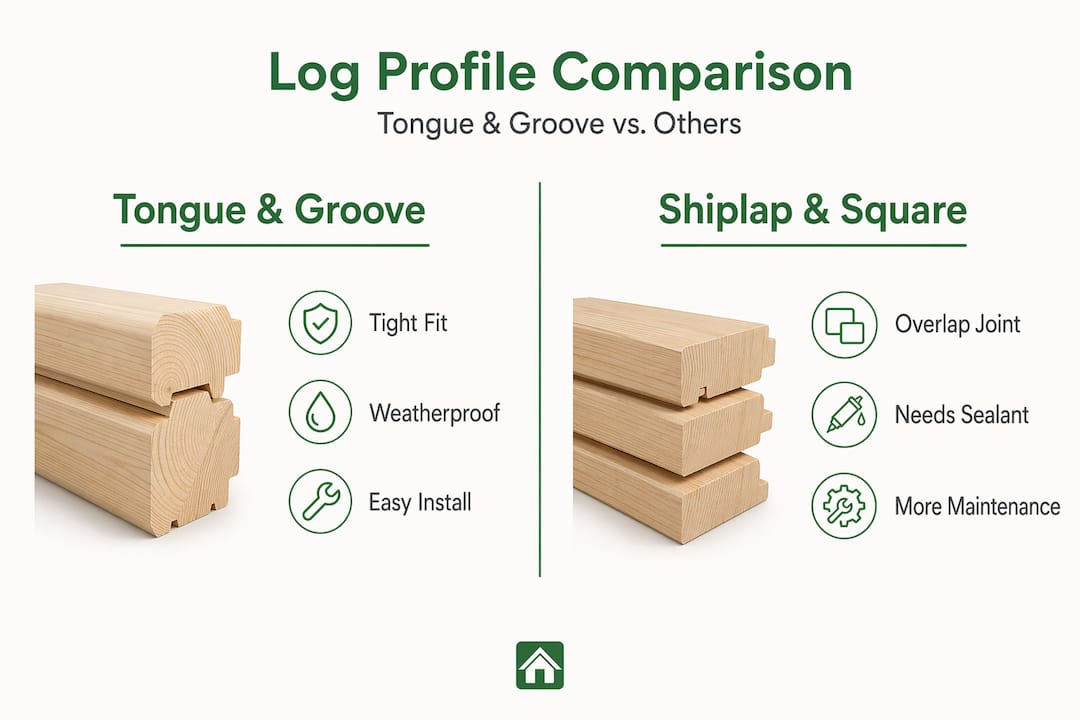
Square-on-square is the most traditional method, where logs simply sit on top of each other. It has its uses, but it requires far more maintenance because those butt joints open up as timber moves. The T&G profile does more of the work up front by locking the geometry in place, which means far less gap management down the line.
Pro Tip: If you’re comparing cabin kits and the wall log profile isn’t clearly stated, always ask. The difference between a T&G profile and a basic square-edge log is significant for both performance and long-term upkeep.
Uses of tongue and groove logs in garden buildings
The uses of tongue and groove panels and logs extend across almost every type of garden building. Here’s where you’ll most commonly find T&G construction doing its job well:
- Garden rooms and home offices: The tight wall construction helps maintain a comfortable temperature, making the space usable year-round with minimal heating.
- Garden workshops: Structural stability and reduced draughts make for a more practical working environment.
- Summer houses: The clean aesthetic of T&G walls suits the open, relaxed feel of a summer house without needing internal cladding.
- Bespoke log cabin builds: Manufacturers favour T&G timber in custom cabin kits because the interlocking system tolerates size adjustments well. You can alter wall lengths without compromising the joint integrity.
- Studios and hobby rooms: Where acoustic comfort and insulation matter, the tight T&G wall system performs noticeably better than open-jointed alternatives.
The beauty of T&G in bespoke cabin construction is consistency. Because every log is machined to the same precise profile, the wall system builds up evenly and predictably. If you’re planning a custom size or shape, choosing wall log thickness alongside the T&G profile is one of the most important decisions you’ll make early in the process.
Assembly time is also worth mentioning. Because the tongue guides each log onto the one below it, there’s far less measuring and adjusting during the build. Most garden cabin kits using T&G logs are designed so that a competent DIYer can assemble the walls in a single day, depending on cabin size.
Maintenance and weatherproofing
One of the long-term advantages of choosing T&G construction is that it genuinely reduces the upkeep burden. That said, it doesn’t eliminate it entirely. Here’s what to focus on:
- Annual inspection: Walk around the cabin each spring and check for any gaps that have appeared at the joints. T&G reduces this significantly, but it can still occur if the timber was not fully dried before installation.
- Sealant checks: Quality T&G profiles form snug joints that need only a thin bead of caulk. Check this bead every couple of years and reseal any sections that have cracked or pulled away.
- Timber treatment: T&G joinery works best when paired with proper wood treatment. Combining T&G with quality treatments can extend the life of a log cabin by years, protecting against moisture penetration and decay at the joint edges.
- Ventilation beneath the floor: Most problems with log cabin timber start at ground level. Good airflow under the base prevents moisture wicking up into the wall logs.
Pro Tip: Use a UV-resistant wood treatment on all exterior log surfaces before assembly, not just after. Getting the treatment into the tongue and groove profile before the boards interlock gives you far better protection at the joint line.
The good news is that T&G’s ease of installation extends to maintenance too. Because there are no exposed fasteners and the surface is smooth, cleaning and retreating the walls is a much quicker job than it would be with a profile that has visible fixings and irregular surfaces.
Martin’s take on tongue and groove
I’ve seen a lot of garden cabin projects over the years, and the ones that cause the most headaches almost always involve an underestimation of how much joinery type matters. People spend a lot of time thinking about cabin size and style, but the wall log profile rarely comes up until something goes wrong.
What I’ve found is that T&G really does make the process easier from day one. The self-aligning design means fewer mistakes during assembly, and the reduced sealing requirement means less ongoing work for the homeowner. That’s genuinely valuable.
The thing most people miss is the insulation benefit. A tight T&G joint isn’t just keeping rain out. It’s also holding warm air in. If you’re planning to use your cabin through autumn and winter, that matters a great deal.
My advice? Don’t treat T&G as a given just because it’s common. Choose it deliberately, because you understand what it’s doing for your build. And if you’re going bespoke, work with a supplier who machines their profiles precisely. A poorly cut T&G is worse than no T&G at all.
— Martin
Build with the right joinery from the start
If you’re planning a garden log cabin and you want a building that stays solid, looks great, and doesn’t demand constant maintenance, tongue and groove construction is the system to choose.
At Logcabinkits, every cabin in our range is built using quality T&G wall logs because we know how much difference the joinery makes. Whether you’re after a standard size or something bespoke and custom built to fit your garden perfectly, we can help. Browse our full range of garden log cabins online, and get in touch if you’d like advice on the right log thickness or cabin design for your project. We offer free UK delivery, and our team is always happy to talk you through the options.
FAQ
What is the purpose of tongue and groove logs?
Tongue and groove logs interlock to create stable, weatherproof walls in garden cabin construction. The joint system reduces movement between boards, minimises gaps, and seals out wind and rain far more effectively than non-interlocking profiles.
How does tongue and groove joinery work?
A ridge (the tongue) on one edge of each log fits into a slot (the groove) on the next, locking them together along the full length of the wall. This self-aligning connection makes assembly straightforward and holds the wall structure together as a single unit.
Are tongue and groove log cabins hard to maintain?
No. The tight joint means less sealant is needed compared with other log profiles, and the smooth surface makes retreating the timber quicker and easier. Annual inspection and a periodic caulk check are usually all that’s required.
What’s the difference between tongue and groove and shiplap logs?
Tongue and groove creates a tighter, fully interlocking joint, while shiplap uses an overlapping profile that relies more on sealant or paint for weather resistance. T&G generally offers a cleaner finish and lower long-term maintenance.
Can tongue and groove logs be used for bespoke cabin builds?
Yes. The consistent machined profile of T&G timber makes it particularly well suited to custom and bespoke cabin designs, where wall lengths and configurations need to be adjusted without compromising structural integrity.