Blog


Working from a spare bedroom rarely delivers the focus or comfort you need for a productive day. For UK homeowners eager to separate work life from home life while embracing greener choices, a bespoke garden office cabin offers a truly rewarding solution. Built with FSC-certified timber and natural insulation, these cabins create a dedicated and sustainable space tailored to your needs. Discover how a well-designed garden cabin brings harmony to your home, work, and outdoor environment with genuine year-round usability.
Table of Contents
- What Is A Garden Office Cabin?
- Different Garden Office Cabin Designs Explained
- Key Features Of Bespoke Cabin Builds
- Planning Permission And Regulations In The UK
- Costs, Value, And Environmental Impact Compared To Alternatives
- Common Pitfalls And Choosing The Right Supplier
Key Takeaways
| Point | Details |
|---|---|
| Purpose Built Workspace | A garden office cabin provides a dedicated work environment separate from home distractions, enhancing productivity and mental wellbeing. |
| Customisation Options | Bespoke design allows homeowners to tailor the cabin’s layout, insulation, and features to fit their specific working needs and garden space. |
| Planning and Regulations | Understanding planning permission and building regulations is crucial to avoid complications; suppliers can assist with navigating these processes. |
| Cost-Effectiveness | Compared to home extensions, garden office cabins offer a more economical solution for creating a functional workspace with less disruption and quicker installation. |
What Is a Garden Office Cabin?
A garden office cabin is a purpose-built, standalone structure positioned in your garden that functions as a dedicated workspace. Unlike converted garden rooms or makeshift home offices squeezed into spare bedrooms, a garden cabin provides a completely separate environment designed specifically for work. Think of it as bringing the boundaries between your professional and personal spaces back into balance. These cabins are typically constructed from timber, offering natural insulation and an aesthetically pleasing addition to your outdoor environment. The beauty of a bespoke garden cabin lies in its flexibility—you’re not limited to standard dimensions or layouts. Instead, you can tailor the design to match your property’s unique characteristics, your working style, and your aesthetic preferences.
What sets a garden office cabin apart from other outdoor structures is its purposeful design for productivity. It’s not a storage space or recreational area; every element exists to support your work. The essential elements of a garden office typically include proper insulation for year-round comfort, electrical installations for power and connectivity, adequate windows for natural light, and sufficient square footage to accommodate your desk, equipment, and any client meetings. A well-designed cabin transforms what could be a cramped corner of your home into a dedicated professional space where you can focus without household distractions. The separation—both physical and psychological—makes a tangible difference to your work output and mental wellbeing. You’re stepping into “work mode” when you walk through that door, rather than trying to maintain professional boundaries whilst surrounded by laundry, dishes, and the temptations of streaming services.
Customisation is key to choosing the right garden office cabin for your needs. Your cabin might feature a large picture window overlooking your garden, an open-plan interior with flexible zoning, or multiple rooms if you need client meeting spaces. Some homeowners include storage solutions built into the cabin walls, whilst others prefer a minimalist aesthetic. The joinery, timber finish, roof style, and even the foundation type can all be adjusted to suit your property’s character and your personal requirements. For homeowners in the UK aged 30-50 who’ve spent years navigating the demands of commuting or compromised home working conditions, a bespoke garden cabin represents genuine control over your working environment. You’re no longer at the mercy of an open-plan office or competing with family members for desk space.
Pro tip: Before commissioning your bespoke cabin, spend a week or two working from your garden at different times of day to observe light patterns, noise levels, and accessibility—this insight will inform your design choices and ensure your final cabin genuinely supports how you actually work.
Different Garden Office Cabin Designs Explained
Garden office cabins come in several distinct designs, each offering different benefits depending on your space, budget, and working requirements. The most common approach is the single-room cabin, a straightforward rectangular or square structure that houses your entire workspace. This design maximises usable floor space and keeps construction costs reasonable, making it ideal if you’re working alone and don’t need separate zones. Then there’s the multi-room cabin, which divides the interior into distinct areas such as a main workspace, meeting room, or storage zone. This approach suits professionals who hold client meetings or need physical separation between work functions. Between these two extremes sits the open-plan with zoning, where a single large interior uses furniture, shelving, or subtle level changes to define different working areas without permanent walls.
The aesthetic approach varies just as much as the layout. A traditional log cabin design uses stacked timber walls with a pitched roof, delivering that classic countryside appeal that many UK homeowners love. This style integrates beautifully into established gardens and feels like a genuine extension of your property rather than an industrial addition. Alternatively, a contemporary cabin features clean lines, large glazed sections, and modern materials like metal cladding or composite panels combined with timber. Some homeowners opt for a hybrid approach, blending timber cladding with modern windows and a flat or low-pitch roof for a transitional aesthetic. The roof style itself matters—pitched roofs shed water efficiently and provide attic storage potential, whilst flat roofs maximise interior headroom and create a more minimalist exterior profile. When considering garden office layout ideas, your chosen design should complement both your property’s character and your practical working needs.
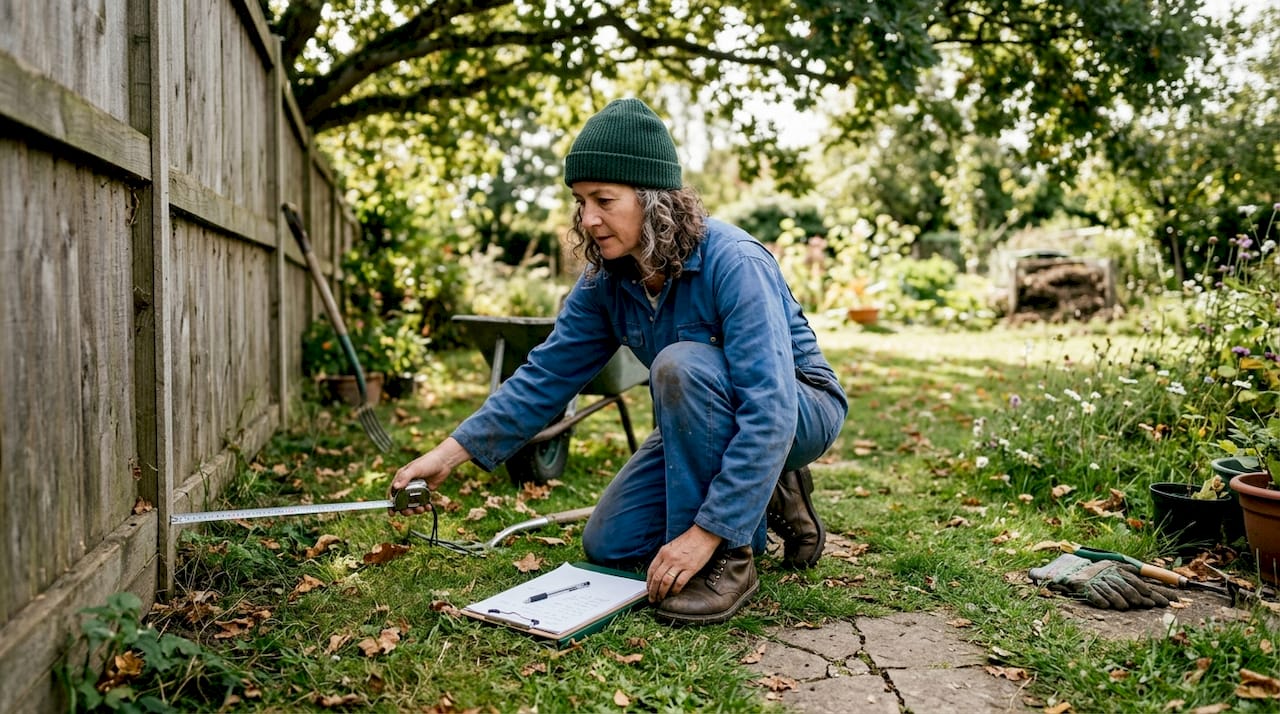
Size and configuration present another crucial decision point. A compact cabin of around 3m by 3m works perfectly for a single desk, chair, and basic storage—ideal for consultants or remote workers who just need a quiet focus space. A standard cabin measuring 4m by 5m or 5m by 6m accommodates a desk, visitor seating, filing storage, and room to move without feeling cramped. Larger professional cabins of 6m by 8m or beyond can include multiple workstations, a dedicated meeting area, or specialised storage. Your bespoke design means you’re not constrained by pre-fabricated dimensions; instead, you specify exactly what suits your garden’s dimensions and your working style. Consider future needs as well—a slightly larger cabin today prevents costly expansion later if your business grows or your working arrangements change.
Here’s how popular garden office cabin designs differ by layout, aesthetics, and suitability:
| Design Type | Typical Layout | Main Aesthetic | Best For |
|---|---|---|---|
| Single Room Cabin | One open workspace | Simple timber finish | Solo professionals seeking focus |
| Multi-Room Cabin | Divided work/meeting/storage | Flexible, custom design | Consultants hosting client meetings |
| Open-Plan Zoning | Large zone with partitions | Modern or hybrid style | Creative roles needing adaptable space |
| Traditional Log | Pitched roof and timber walls | Rustic countryside look | Gardens aiming for classic UK appearance |
| Contemporary Cabin | Sleek lines, big windows | Modern materials/finishes | Urban homeowners preferring minimalist |
Pro tip: Before finalising your design, create a scale drawing of your garden and test different cabin positions throughout the day to check how sunlight, sightlines from neighbouring properties, and access routes will actually work in practice.
Key Features of Bespoke Cabin Builds
Bespoke cabin builds distinguish themselves through customisation at every level, starting with the fundamental structure and extending right through to the smallest finishing details. Unlike off-the-shelf garden structures, a bespoke cabin begins with your exact specifications rather than forcing your needs into a pre-designed box. The foundation system can be tailored to your garden’s conditions, whether that means a concrete base, timber joists on concrete pads, or specialist solutions for sloping terrain. The timber itself offers choices too—you can specify the wood species, treatment level, and finish to match your property’s aesthetic and durability requirements. Wall thickness, insulation type, and ventilation systems all adapt to your climate zone and intended year-round use. The roof can be pitched at your preferred angle, flat for a contemporary feel, or somewhere between. These aren’t cosmetic decisions; they directly affect how your cabin performs, how long it lasts, and how comfortable you’ll be working inside during harsh weather.
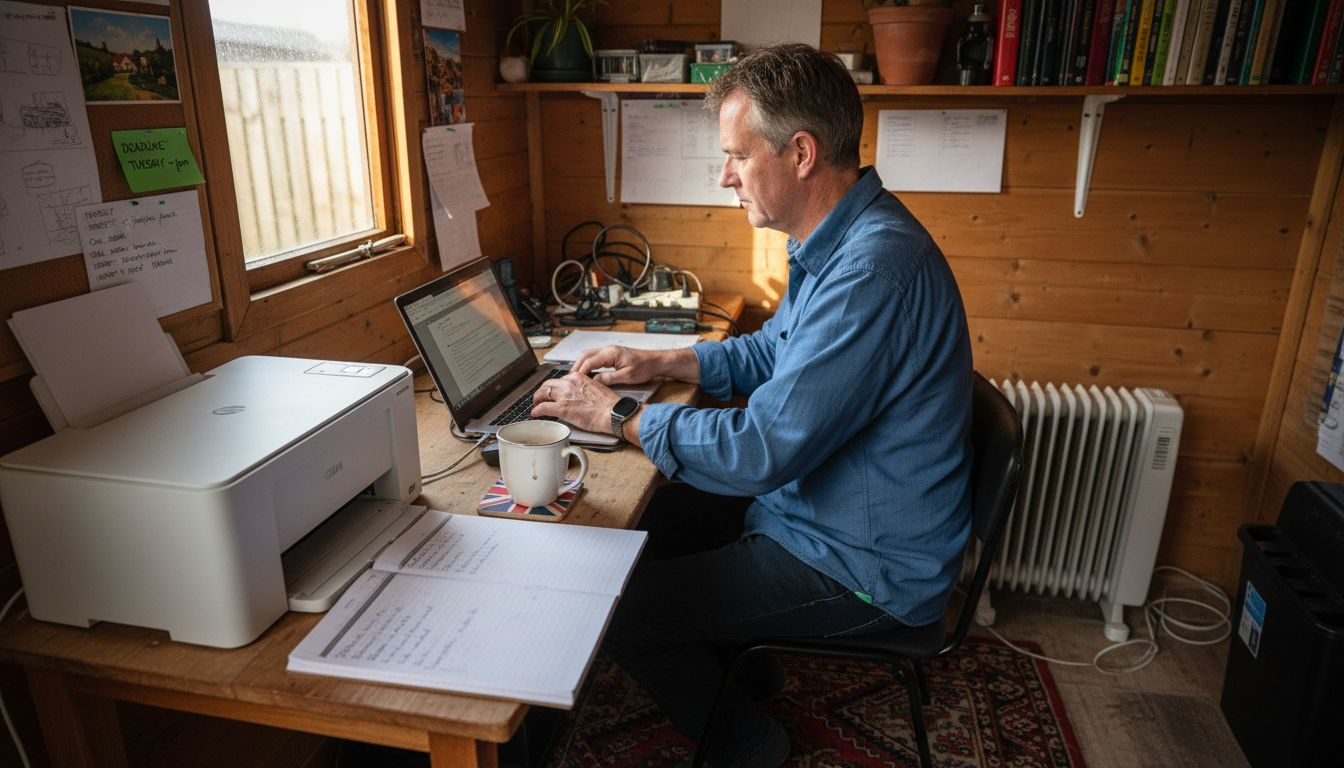
Interior customisation transforms the cabin from a basic box into a genuinely functional workspace. Electrical installations can be positioned exactly where you need them—multiple wall sockets in specific locations rather than wherever a standard design dictates. Insulation specifications vary based on whether you’re working year-round or seasonally; proper insulation combined with appropriate heating makes winter working bearable rather than miserable. Window placement and sizing become strategic decisions influenced by views you want to preserve, privacy concerns, and natural light patterns throughout the day. Some homeowners specify customisation options for garden cabins that include internal partition walls, built-in storage benches, shelving units integrated into the structure itself, or a porch entrance to manage weather exposure. Flooring choices range from practical timber to sealed concrete or even underfloor heating systems in premium installations. Acoustic considerations matter too—if you’re taking client calls, you might specify sound-dampening treatments that a standard cabin wouldn’t include.
The practical finishing touches separate a decent cabin from a genuinely impressive one. Guttering and drainage systems prevent water pooling around the structure and damaging the foundation. External cladding treatments protect timber and determine maintenance requirements over years of exposure. Ventilation solutions might include passive air vents, active extraction fans, or hybrid systems depending on your climate and intended use patterns. Door and window specifications go beyond just choosing the size—you’re selecting frame materials, glass types for thermal efficiency, handles, locks, and weatherproofing standards. Many homeowners add creature comforts like built-in shelving, desk surfaces that span entire walls, or raised platforms for equipment. The key is that every feature exists because you identified a genuine working need, not because it appeared on a standard checklist. This alignment between design and actual use is what transforms a garden cabin from a nice addition into a genuinely transformative workspace.
Pro tip: Create a detailed list of how you actually work before the design phase starts—document where equipment must sit, how many client visits you host annually, whether you need video-call-friendly backgrounds, and what storage items accumulate—then map these requirements directly onto your cabin design rather than discovering gaps after construction.
Planning Permission and Regulations in the UK
Navigating planning permission and building regulations might sound daunting, but understanding the rules isn’t nearly as complicated as it first appears. The key distinction is that these are two separate processes. Planning permission concerns whether your local council approves the cabin’s location, size, and visual impact on the neighbourhood. Building regulations, by contrast, focus on the structure’s safety, insulation standards, electrical safety, and compliance with construction standards. You may need one, both, or potentially neither depending on your specific circumstances. Most garden cabins in the UK fall within permitted development rights if they meet specific criteria. If your cabin is under 2.5 metres in height, positioned at least 2 metres from your property boundary, and occupies less than 50 per cent of your garden space, you typically won’t need planning permission. However, these are guidelines rather than guarantees—conservation areas, listed properties, and certain council jurisdictions have stricter rules. Understanding building regulations and planning permission requirements specific to your property prevents expensive mistakes or unwanted enforcement action from your local authority.
Building regulations apply more universally than planning permission. Any new structure that’s habitable or contains fixed electrical installations generally requires building regulation approval. This means your garden cabin almost certainly needs to meet these standards, which cover electrical installation safety, insulation values for thermal efficiency, ventilation adequacy, fire safety provisions, and structural integrity. The good news is that certified builders and suppliers already understand these requirements and factor them into their designs and construction methods. Your bespoke cabin builder should guide you through the submission process, providing plans and specifications that demonstrate compliance. You’ll typically need to apply to your local building control authority before work begins, and they’ll carry out inspections at various stages. Costs vary by region but expect to budget for application fees and inspection charges alongside your cabin construction costs. Skipping this step might seem like savings, but it creates genuine problems when you sell your property—buyers’ surveyors will flag non-compliant structures, and you’ll face negotiation difficulties or requests to rectify the work at your expense.
The practical reality for most UK homeowners is that professional cabin suppliers handle the regulatory complexity for you. They understand which situations require full planning permission applications, which qualify for permitted development, and what building regulation documentation you’ll need. Many councils now operate pre-application advice services where you can discuss your specific project before committing to formal applications—this costs a modest fee but clarifies requirements and potentially prevents rejection. Your property’s location, size, and local council area determine the exact pathway. Urban properties in conservation areas face stricter scrutiny than rural locations. Listed properties have additional heritage considerations. Rather than guessing, discussing your specific circumstances with your local planning authority or a surveyor costs far less than discovering problems mid-construction. The investment in clarity upfront prevents costly delays, remedial work, or enforcement action that could force you to remove a structure you’ve already paid for and had constructed.
Pro tip: Before committing to your cabin design, contact your local planning authority’s pre-application advice service with your garden measurements, intended use, proposed dimensions, and property photographs—their guidance will confirm which regulatory pathway applies to your situation and potentially identify any local variations that might affect your plans.
Costs, Value, and Environmental Impact Compared to Alternatives
When weighing a garden office cabin against other home working solutions, the financial comparison often surprises homeowners. A bespoke timber cabin typically costs between £8,000 and £25,000 depending on size, insulation specifications, and customisation level. This might seem substantial, but compare it to extending your house, which routinely costs £30,000 to £60,000 or more for equivalent square footage. An extension requires planning permission in most cases, involves building into your home’s structure, and disrupts your property for months during construction. A garden cabin arrives largely constructed, sits independently on your garden, and generates minimal disruption. Beyond the initial investment, a cabin costs significantly less to maintain than a brick extension and avoids the complexity of integrating utilities into your existing home systems. For remote workers, consultants, or business owners, the productivity gains and mental wellbeing improvements often translate to genuine financial returns within just a few years.
The environmental case for a bespoke garden cabin deserves serious consideration, particularly if sustainability matters to you. Timber cabins built with eco-friendly materials like FSC-certified timber and natural insulation substantially reduce embodied carbon compared to brick-and-mortar extensions. The manufacturing process for timber structures generates far fewer emissions than concrete production and energy-intensive brick manufacturing. A well-insulated cabin performs efficiently throughout the year, minimising operational energy consumption for heating and cooling. This contrasts sharply with poorly insulated home extensions that create thermal bridges and leaky spaces draining heating systems throughout winter. Quality timber from managed forests is genuinely renewable and biodegradable at end-of-life, whereas concrete foundations and brick walls persist for centuries. For homeowners in their 40s and 50s considering their environmental legacy, choosing a sustainably constructed cabin rather than an extension represents a meaningful decision that aligns working life with ecological responsibility.
Property value presents an interesting consideration. A well-designed garden cabin typically adds between 5 and 10 per cent to property value, particularly when marketed toward remote workers or business owners seeking ready-made office space. This means a £15,000 cabin investment on a £400,000 property could translate to £20,000 to £40,000 in added value. By contrast, many home extensions deliver lower return on investment because they’re highly personal to the original owner’s needs and aesthetic preferences. A cabin feels like a separate amenity that future occupants can use as office space, guest accommodation, or creative studio. The separation also means it doesn’t interfere with your home’s core living spaces, preserving the character of your property. You get immediate benefits through improved work quality and mental health, whilst simultaneously building an asset that genuinely appeals to future buyers.
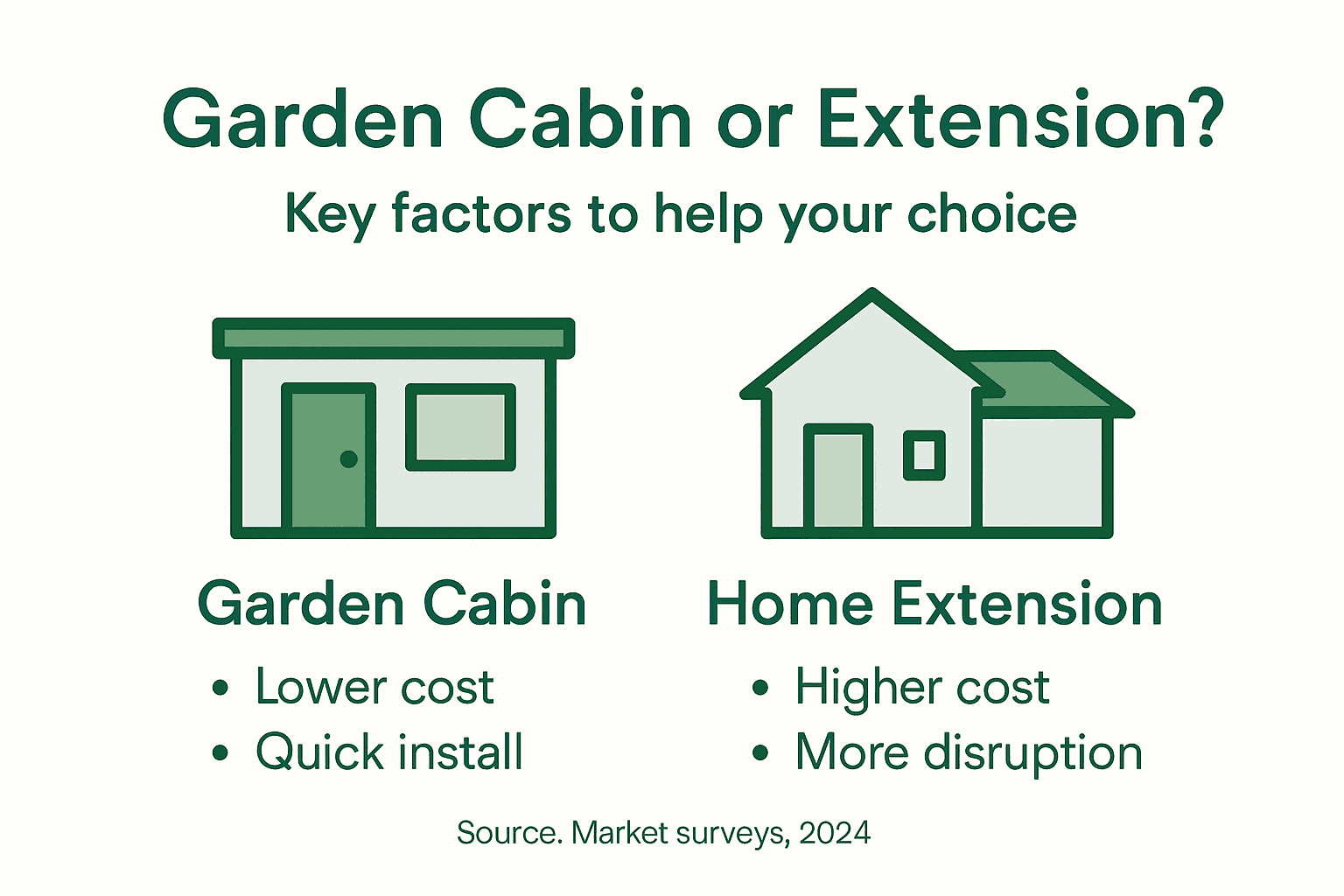
The comparison becomes even more compelling when you factor in flexibility. A cabin can be relocated if you move house, repurposed if your working needs change, or sold separately if circumstances shift. A home extension is permanently attached to your property. For a generation that values adaptability and isn’t certain about staying in one location forever, this flexibility holds real value.
Below is a quick comparison of garden office cabins and home extensions for cost, disruption, value, and sustainability:
| Aspect | Garden Office Cabin | Home Extension |
|---|---|---|
| Typical Cost | £8,000–£25,000 | £30,000–£60,000+ |
| Construction Time | Several days to weeks | Multiple months |
| Disruption Level | Minimal garden impact | Major home disruption |
| Added Property Value | 5–10% usually | Varies, often less ROI |
| Environmental Impact | FSC timber, low carbon | High emissions, concrete |
Pro tip: Request a detailed breakdown of running costs when planning your cabin, including heating expenses in winter, electricity usage, and annual maintenance budgets—this baseline lets you track the actual financial performance against your projections and identifies efficiency improvements if bills exceed expectations.
Common Pitfalls and Choosing the Right Supplier
The difference between a garden cabin that transforms your working life and one that becomes an expensive regret often comes down to supplier selection. Homeowners frequently stumble by prioritising price over expertise, ordering what appears to be a bargain cabin only to discover it lacks proper insulation, inadequate electrical provision, or poor ventilation that makes year-round use miserable. A cabin that works brilliantly in summer but turns into a freezing, damp box come November isn’t much of an investment. Similarly, many people underestimate regulatory complexity and select suppliers who don’t provide guidance on planning permission and building regulations compliance. You end up with a beautiful structure sitting in your garden that technically shouldn’t be there, creating headaches when you sell your property or face an enforcement notice. The common thread running through these pitfalls is choosing suppliers based on incomplete information rather than verified expertise. When ordering garden office units without proper insulation or year-round suitability, homeowners often realise too late that their investment won’t deliver the flexible workspace they envisioned.
The right supplier does far more than simply construct a cabin and leave it in your garden. They guide you through design choices informed by your specific working patterns, your property’s characteristics, and local regulatory requirements. They understand insulation values, ventilation standards, electrical safety codes, and building regulation requirements without you needing to become an expert yourself. They provide clear advice on whether planning permission applies to your situation and help you navigate the application process if needed. They manage construction scheduling and site logistics so your garden isn’t disrupted for longer than necessary. They offer aftercare support if issues emerge post-completion. Bespoke cabin specialists have invested time in understanding regulations across different UK regions because these rules genuinely vary. They know which local planning authorities are more flexible and which conservation areas require heritage-appropriate designs. This expertise prevents costly mistakes that budget suppliers simply won’t catch.
When evaluating potential suppliers, look for several concrete indicators of reliability. Verified customer reviews matter enormously—not just the quantity but the specificity of feedback. Reviews mentioning insulation performance, how well the cabin handles winter weather, build quality, and post-installation support reveal genuine user experience. Credentials and accreditations indicate professional standards; membership in trade associations, building regulation approvals, and insurance coverage provide real protection. Design consultation processes demonstrate commitment to your specific needs rather than pushing a standard template. Ask whether they’ll visit your property, discuss your working patterns, review local regulations specific to your postcode, and iterate designs based on your feedback. Transparent pricing with itemised breakdowns prevents surprise costs mid-project. References from recent projects let you see actual cabins and speak with homeowners who’ve completed similar projects. A supplier unwilling to provide references or customer contact details raises legitimate concerns.
Pro tip: Request three detailed quotes from different suppliers specifying identical specifications (dimensions, insulation values, electrical provision, finishes), then compare not just price but what’s included in each package—transport, installation, building regulation submission, and aftercare often explain significant price differences between seemingly similar options.
Discover Your Perfect Garden Office Cabin Today
If you have been struggling with the distractions of working from home or are seeking a dedicated workspace that matches your unique needs and style a bespoke garden office cabin is the solution you have been looking for. From the critical need for insulation and electrical installations to carefully planned layouts enabling client meetings and focused work our custom cabins provide a comfortable and professional environment separated from household chaos. Say goodbye to cramped spaces and hello to tailored designs that transform your garden into a productivity sanctuary.
Explore our range of bespoke garden log cabins at LogCabinKits.co.uk and take the first step toward a workspace that truly supports your working life and wellbeing. Benefit from expert guidance on planning permission, thoughtful customization options, and quality builds designed to last through every season. Why wait to improve your work environment with a cabin that adds real value to your home? Visit custom garden office cabins now and start designing your ideal workspace today.
Frequently Asked Questions
What is a garden office cabin?
A garden office cabin is a standalone structure built in your garden specifically designed for work. Unlike converted rooms inside your home, it offers a separate workspace that enhances productivity and defines boundaries between work and personal life.
What are the key features to consider when selecting a garden office cabin?
When choosing a garden office cabin, consider features such as proper insulation for year-round comfort, electrical installations for power and connectivity, adequate windows for natural light, sufficient space for your desk and equipment, and customisation options to match your working style and aesthetic preferences.
Do I need planning permission for a garden office cabin?
Planning permission typically isn’t required for garden office cabins under certain conditions: if the cabin is under 2.5 metres in height, situated at least 2 metres from your property boundary, and occupies less than 50% of your garden space. However, these guidelines can vary based on local regulations and specific property conditions.
How does a garden office cabin compare to a home extension?
A garden office cabin usually costs less than a home extension, requires less construction time, and creates minimal disruption to your home. Additionally, it adds value to your property without affecting the internal living space, allowing for flexibility and ease of future relocation if needed.
Recommended
- Transforming Your Work Life: Why a Garden Log Cabin is the Ultimate Home Office Solution – Log Cabin Kits to Buy Online
- How to Choose the Right Garden Office for UK Homes
- Smart Garden Offices: Transforming UK Home Working
- 7 Smart Garden Office Layout Ideas for UK Homeowners
- Property Boundaries – see property boundary – UK Trace