
Small Garden Cabins and UK Planning Rules: A Complete Guide to Permitted Development, Boundary Distances and the 2.5 Metre Height Rule
For many homeowners, small log cabins, garden offices or summer houses provide an affordable way to create additional usable space without the disruption and cost of a traditional extension. However, before investing in a garden building, it is important to understand how UK planning regulations apply to small structures, particularly those positioned close to boundary fences.
Fortunately, many garden buildings can be installed without applying for formal planning permission. By carefully selecting a modest footprint and ensuring the building remains below critical height thresholds, homeowners can often benefit from Permitted Development rights.
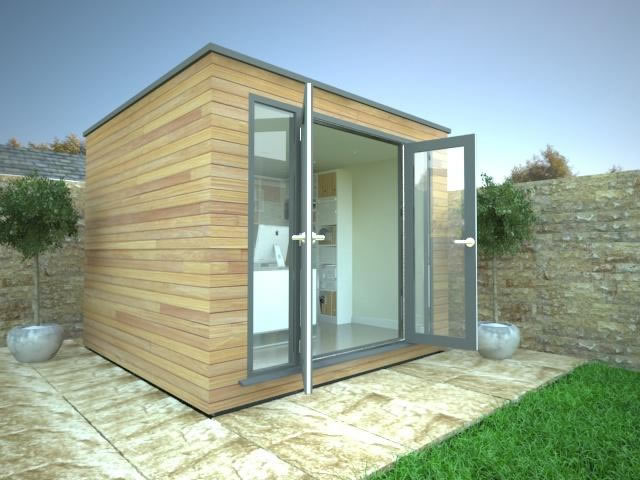
This guide explains how cabin size, building height and boundary positioning influence planning requirements, while outlining the key regulations that homeowners should understand before construction begins.
What Are Permitted Development Rights?
Permitted Development rights allow certain improvements and structures to be built without applying for full planning permission.
Many garden buildings fall within these rights, including:
- Log cabins
- Garden offices
- Summer houses
- Workshops
- Garden studios
- Storage buildings
- Hobby rooms
Provided the building complies with specific rules relating to height, usage and location, planning permission is often unnecessary.
Why Small Cabins Are Popular
Smaller cabins offer numerous practical advantages beyond planning flexibility.
Typical footprints include:
- 3m x 3m (9m²)
- 3m x 4m (12m²)
- 3m x 5m (15m²)
- 4m x 4m (16m²)
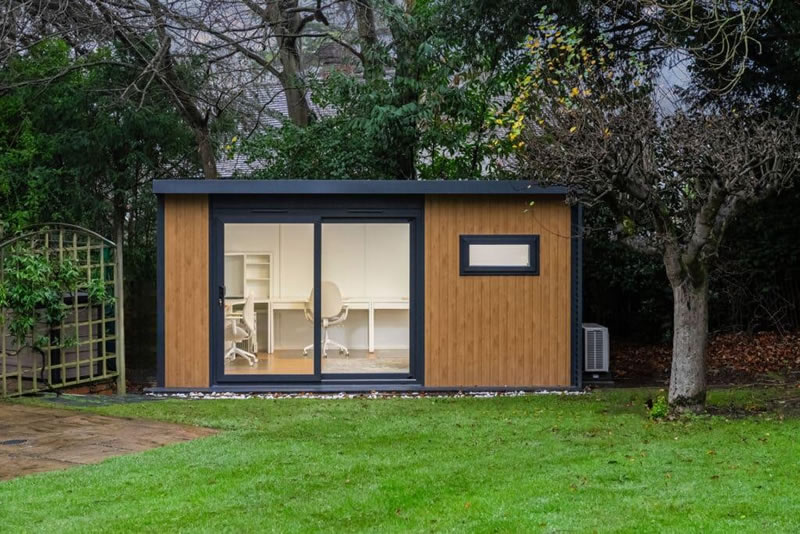
Structures under 15 square metres are particularly attractive because they generally avoid many of the more complex Building Regulations requirements while remaining large enough for practical use.
They are commonly used as:
- Home offices
- Craft rooms
- Reading rooms
- Home gyms
- Guest accommodation (non-sleeping use)
- Garden retreats
The Critical 2.5 Metre Height Rule
One of the most important planning regulations affecting garden buildings concerns proximity to property boundaries.
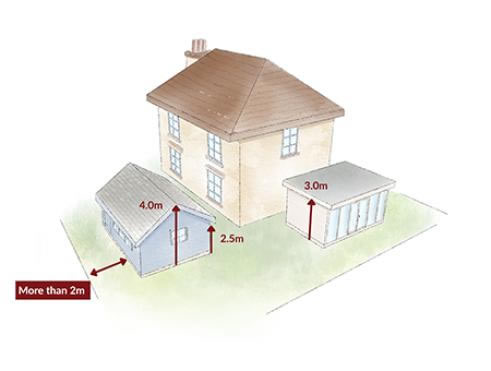
If any part of the building is situated within 2 metres of a boundary, the maximum overall height must not exceed 2.5 metres.
This applies regardless of whether the structure features:
- A flat roof
- A pent roof
- An apex roof
- A curved roof
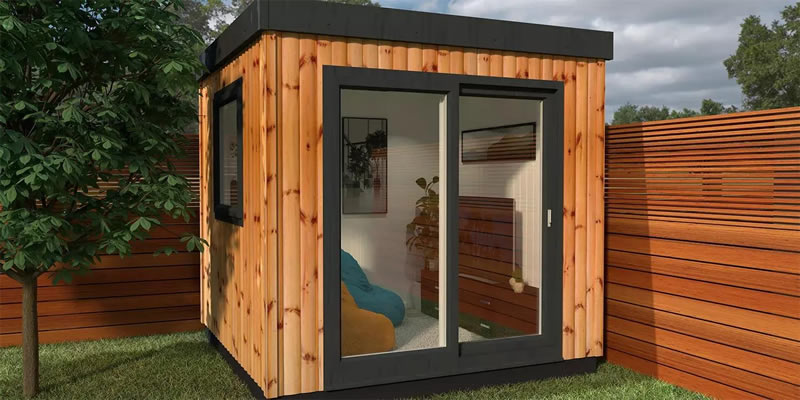
The highest point of the structure must remain below 2.5 metres when positioned within this boundary zone.
Understanding the 2 Metre Boundary Rule
The boundary measurement is taken horizontally from the nearest part of the building to the legal property boundary.
Boundaries may include:
- Timber fences
- Brick walls
- Hedges
- Neighbouring property lines
- Rear garden boundaries
Importantly, the visible fence is not always the legal boundary.
Homeowners should confirm boundary positions before preparing foundations.
Why Flat and Pent Roof Cabins Have Become So Popular
Contemporary flat roof and pent roof cabins are particularly well suited to the 2.5 metre height restriction.
These designs allow manufacturers to maximise internal headroom while remaining within permitted development limits.
Benefits include:
- Higher internal ceiling heights
- Large glazed elevations
- Modern aesthetics
- Improved usability
- Better planning compliance
For smaller gardens where buildings are often located near fences, modern roof styles provide an excellent solution.
Can You Build Right Next to a Fence?
In many cases, yes.
Provided the building remains below 2.5 metres overall height and satisfies all other Permitted Development criteria, it can usually be installed close to a boundary.
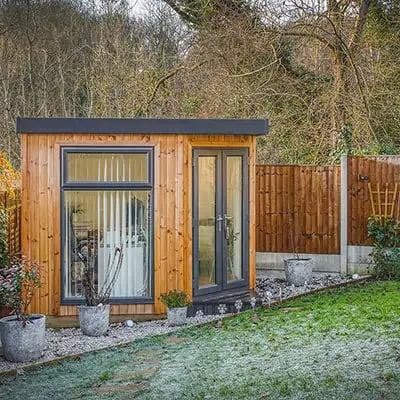
This is one reason why contemporary garden offices are frequently positioned in rear garden corners.
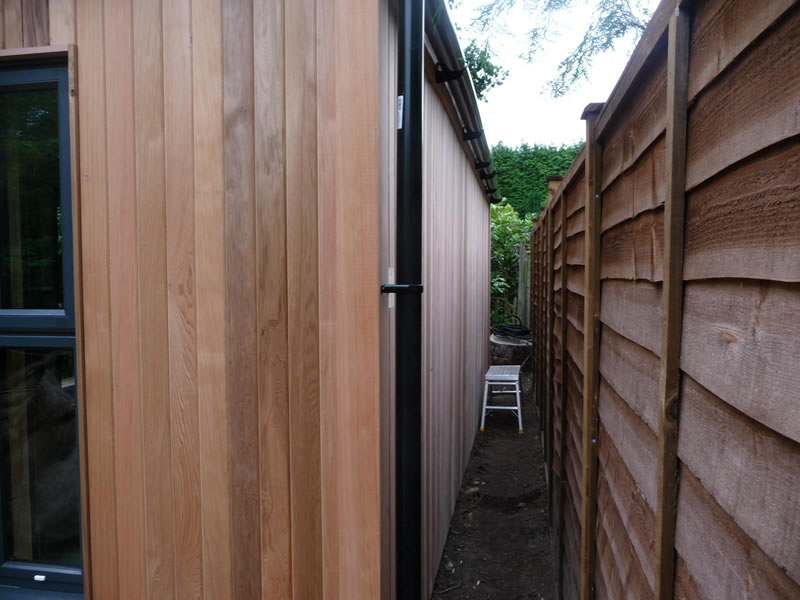
However, homeowners should still allow sufficient maintenance access where practical.
Understanding the 15 Square Metre Guideline
Building Regulations and planning permission are separate legal frameworks.
Many small garden buildings under 15 square metres enjoy simplified Building Regulations treatment.
Although each project should be assessed individually, structures below this threshold often avoid the need for formal Building Regulations approval provided they are used for purposes incidental to the enjoyment of the dwelling.
This makes smaller cabins especially attractive for homeowners seeking a straightforward installation process.
When Building Regulations May Still Apply
There are circumstances where Building Regulations requirements can still become relevant.
Factors may include:
- Sleeping accommodation
- Electrical installations
- Complex foundations
- Proximity to boundaries
- Heating systems
Professional advice should always be sought where uncertainty exists.
Other Permitted Development Restrictions
While the 2.5 metre rule receives most attention, additional limitations apply.
Garden buildings must not:
- Cover more than 50% of the garden area around the original house.
- Be used as separate self-contained accommodation.
- Be positioned forward of the principal elevation of the house.
- Be used primarily as a dwelling.
These restrictions remain important regardless of building size.
Conservation Areas and Listed Buildings
Additional controls may apply if the property is located within:
- Conservation areas
- National Parks
- Areas of Outstanding Natural Beauty
- Listed building curtilages
- Properties subject to Article 4 Directions
In such situations, planning requirements can differ significantly.
Choosing the Right Location
Careful positioning can help maximise both compliance and usability.
Factors to consider include:
- Sunlight exposure
- Garden views
- Boundary distances
- Access pathways
- Drainage
- Future maintenance access
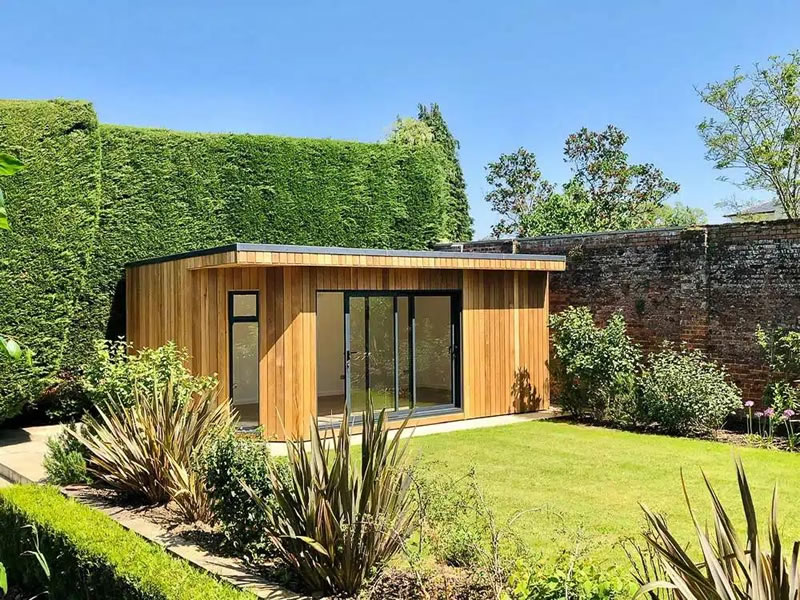
Positioning a building thoughtfully often improves its long-term practicality as much as selecting the right design.
Common Mistakes to Avoid
- Assuming all garden buildings are exempt from planning.
- Ignoring the 2.5 metre height restriction.
- Measuring from finished floor level instead of ground level.
- Confusing fence locations with legal boundaries.
- Failing to consider roof overhangs.
- Overlooking local planning restrictions.
Most planning complications arise from measurement errors rather than the building itself.
Frequently Asked Questions
Can I build a cabin within 2 metres of a boundary?
Yes. In most cases you can, provided the overall height remains below 2.5 metres and all other Permitted Development requirements are met.
Do I need planning permission for a 3m x 4m garden office?
Usually not, provided the building complies with Permitted Development rules and is used for purposes incidental to the enjoyment of the dwelling.
Does the 15 square metre guideline automatically exempt me from Building Regulations?
Not necessarily. The intended use, construction details and site conditions must also be considered.
Can I sleep in my garden cabin?
Occasional incidental use differs significantly from creating self-contained residential accommodation. Specialist advice should be obtained if sleeping accommodation is proposed.
Conclusion
For many homeowners, choosing a modest garden cabin footprint and maintaining an overall height below 2.5 metres creates a straightforward route to development without formal planning permission. Small buildings under approximately 15 square metres often provide sufficient space for offices, hobby rooms and leisure uses while benefiting from simplified regulatory requirements.
Understanding the relationship between boundary distances, height restrictions and Permitted Development rights is essential before construction begins. By carefully selecting the building location, confirming legal boundaries and ensuring compliance with height limitations, homeowners can often enjoy a practical and attractive garden building without the complexity of a formal planning application.
As with all construction projects, individual circumstances can vary, but for many properties a well-designed small cabin remains one of the simplest and most effective ways to create valuable additional space within the garden.